The Jade District on Portland's distant east side is a typical geography of wide streets and sprawl, but is also a relatively complete, self-contained community.


The area around 82nd and Division Street in Portland's east side is not what most people think of when they consider Portland. It has overly-wide streets, poor pedestrian connections, has plenty of automobile related uses, and is skipped by Portland's well-known light rail system.
The alternate reality is the Jade District is a relatively complete community, with local businesses, markets, and neighborhood groups, particularly for the Chiinese community.
“In a funny way, this is exactly the kind of neighborhood we’re supposed to be encouraging – a place where everything you want exists within easy reach. If you’re an immigrant, you can find your market, restaurants that have the food you know, people who speak your language,” said Thuy Tu, a civil engineer and consultant who has been working on Jade District improvements. “Everything is here for those communities that have already been displaced from their own country.”
The challenges moving forward for the area include seemingly simple improvements like better sidewalks, crosswalks and community gardens. Improved bus service is also being pursued. With these things bring fear of gentrification, something the Chinese community in Portland is all too familiar with, having seen it happen in that city's Chinatown, of all places.
FULL STORY: In East Portland, Trying To Build Community In A Planner's Nightmare

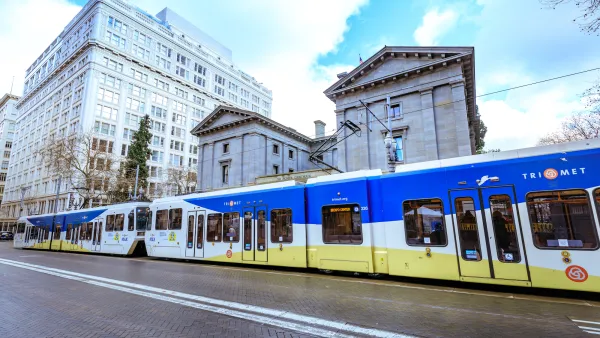
Big Business in Portland Doesn't Want to Pay for Metro Transportation Funding Measure
A heated dispute over a $5 billion Metro transportation funding ballot measure has erupted between climate activists and a group representing Portland's big business interests.
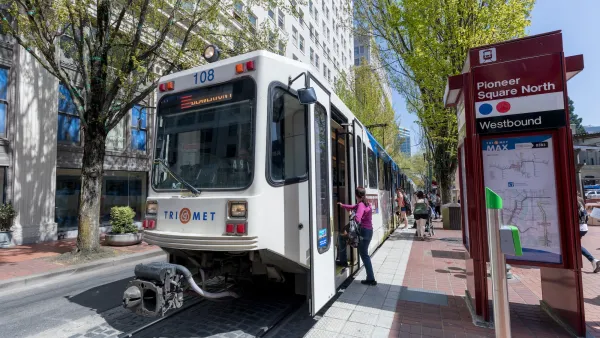
TriMet will eliminate 'Hand-to-Hand' paratransit service for half of its users
Roughly 300 Portland-area paratransit riders will lose access to a program that lets drivers escort them into their destination.
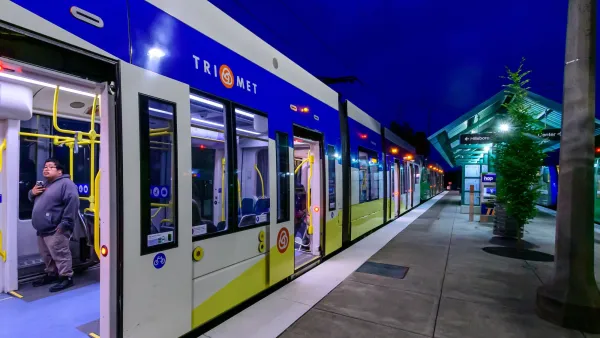
Portland transit announces deep service cuts, hundreds of layoffs
The TriMet agency is cutting service on multiple transit lines, reducing customer service phone hours and eliminating over 100 staff positions.

Planetizen Federal Action Tracker
A weekly monitor of how Trump’s orders and actions are impacting planners and planning in America.

The state-sanctioned urbicide of Austin
People don’t kill cities. Freeways do.

US to reduce Colorado River water deliveries to Mexico
A new Colorado Treaty amendment reduces Mexico’s Colorado River water allocation by 250,000 acre feet.

5 New England states march closer to 800 megawatt wind energy project
Securing federal approval for the project may be complicated under the Trump administration, which has historically been hostile towards domestic wind power.

Baltimore to break ground on $50 million Transit Priority Project
The project will bring faster bus trips, safer streets and better bike connections to Baltimore.

Airbnb launches $250 million 'last-dollar financing' housing accelerator, makes first investment in Austin
The company will put $6.4 million towards affordable housing development in Texas’ capital.

FREE Course: Walkable City 1: Why Walkability?
After describing his path towards focusing on walkability as the essence of good planning, Jeff Speck marches through his five principal reasons for making more walkable places.
Reinventing Malls: Planning Alchemy—Turning Gray Fields Into Gold
The course focuses on the opportunities and imperatives that shape reinvention of mall sites.

Eagle County Government
Harvard University Graduate School of Design
Nashville Planning Department
The Architects Foundation
University of Cincinnati Online
The Pocatello Development Authority
The Urban Renewal Agency of the City of Pocatello
Journal of the American Planning Association