As part of an interdepartmental effort, the city's planning department is embedding an explicit equity lens into how it considers the distribution of civic resources.


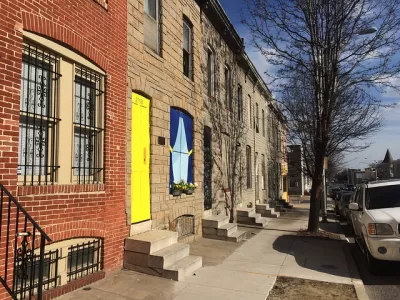
In response to a wave of violent crime, as well as racially charged incidents like the death of Freddie Gray, the city of Baltimore has undertaken an interdepartmental effort to understand the roots of urban inequality.
As Oscar Perry Abello writes, Baltimore "was the first city in the United States to pass an ordinance mandating separate neighborhoods for white and black households." Redlining ensued, resulting in a pattern of underinvestment that underscores today's problems.
After a "two-year internal soul-searching process," the planning department has developed an equity action plan to counter that legacy. Stephanie M. Smith, the planning department’s assistant director for equity, engagement, and communications, remarked, "This was a staff driven effort … acknowledging as staff that we inherited a legacy of decisions that have often been inequitable, often decisions from the planning agency itself, and we are in the present grappling with some of those decisions."
Abello writes, "Leveraging the planning department's role in the capital budget process is one of the five goals of the equity action plan. Using the data they've gathered on where city capital investment dollars have been spent, they can raise the equity question throughout the process."
Read the full story: Baltimore Reckons With Its Legacy of Redlining

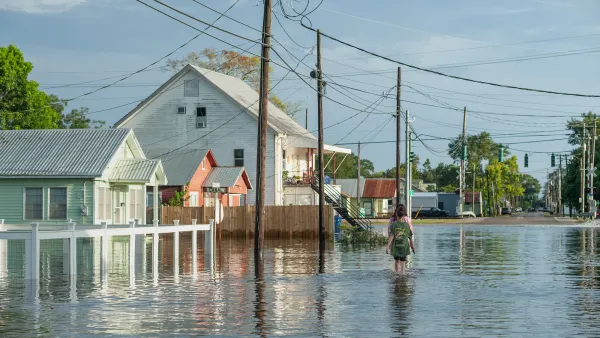
Study: Historically redlined neighborhoods face higher risk of extreme flooding
A new study indicates that structural disinvestment can translate into serious risk for vulnerable communities.

The Race Barriers of American Cities
The United States has a long and insidious history of erecting structures to control the movements of African Americans in urban and suburban spaces.
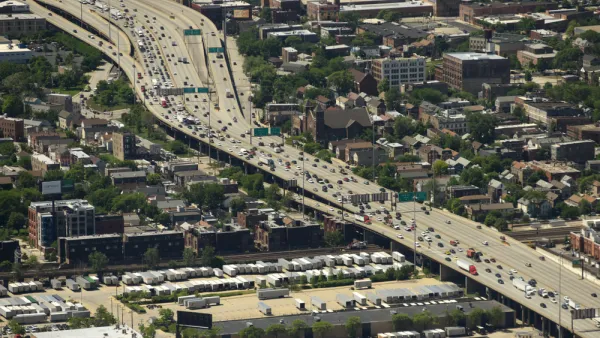
Land Use Regulation's Legacy of Racial Segregation
An investigative feature by Governing magazine blames the history of land use regulations like zoning and redlining for the racial segregation of contemporary communities all over the state of Illinois and the country.

Planetizen Federal Action Tracker
A weekly monitor of how Trump’s orders and actions are impacting planners and planning in America.

The state-sanctioned urbicide of Austin
People don’t kill cities. Freeways do.

US to reduce Colorado River water deliveries to Mexico
A new Colorado Treaty amendment reduces Mexico’s Colorado River water allocation by 250,000 acre feet.

Nation's most wind-powered state turns to coal as data centers increase energy demand
For the first time in decades, Iowa has increased its generation of coal power.

NYC cools commuters with city's first rain garden above a bus stop
New York City officials say the plants in the rain garden can absorb 16 gallons of rainwater during heavy storms.

Brightline West’s future may rely on $6 billion federal loan
The company has until Nov. 2 to make a $400 million equity investment into its proposed high-speed rail line.

FREE Course: Walkable City 1: Why Walkability?
After describing his path towards focusing on walkability as the essence of good planning, Jeff Speck marches through his five principal reasons for making more walkable places.
Reinventing Malls: Planning Alchemy—Turning Gray Fields Into Gold
The course focuses on the opportunities and imperatives that shape reinvention of mall sites.

Greater Baltimore Committee
Eagle County Government
Harvard University Graduate School of Design
The Architects Foundation
University of Cincinnati Online
The Pocatello Development Authority
The Urban Renewal Agency of the City of Pocatello
Journal of the American Planning Association