To help pay for their massive tax cut bill, Senate Republicans have proposed elimination of a small tax benefit that can save bike commuters $240 annually. Unlike the House tax bill, they don't touch parking and transit benefits.


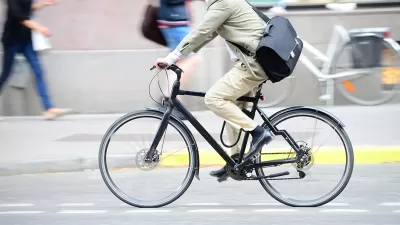
"The latest tax bill put forth by Senate Republicans includes the elimination of the Bicycle Commuter Act, which reimburses commuter cyclists for expenses of up to $20 a month," reports Andrew Dawson for Bicycling on Nov. 13. "That money can go toward the purchase of helmets, bike locks, and other items, as well as larger payments over time—paying off a new bike, for example.
"For some reason, the voters of this bill want to eliminate a not-costly benefit that has many other positive benefits associated with it," said Ken McLeod, policy director at the League of American Bicyclists, a Washington, D.C.-based advocacy group.
As noted in an earlier post on the House bill's elimination of the Federal Plug-In Electric Drive Vehicle Credit, it also takes away the transit and parking benefits for employers, but not employees, meaning that that some businesses might drop the benefit altogether, unless required by law, as is the case for larger employers in the Bay Area.
This has prompted the chairman of the Southern California Regional Rail Authority Board of Directors (Metrolink), Andrew Kotyuk, to write to U.S. Rep. Kevin Brady, Chairman of the House Ways and Means Committee, to retain the tax deduction benefit for businesses that provide transit passes to their employees, as reported in the National Association of Rail Passengers' Nov. 22 Hotline.
Overall, more than 280 companies in the LA metropolitan area offer tickets and passes to their employees.
In the letter, Kotyuk wrote that the bill would, “result in an effective tax hike for hundreds of businesses and thousands of employees," in Metrolink's Southern California service area. He argued that the elimination of the public transit tax deduction would undercut Metrolink's operating budget and could negatively impact service. About 20 percent of Metrolink's operating revenue comes from companies participating in the railroad's corporate partnership program.
"The bike commuter benefit can either be reinstated through an amendment in the Senate or when the House and Senate bills are reconciled in conference," McLeod said, writes Dawson. Similarly, the transit and parking benefits tax deductions for employers can also be restored in reconciliation.
FULL STORY: Commuter Cyclists Would Lose Big in Senate Tax Plan

Missing From the Climate-Energy Legislation: Bikes!
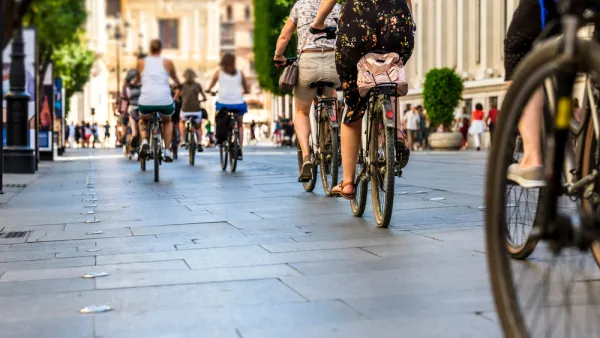
Missing from the Democrats' Inflation Reduction Act, the significant climate legislation which passed the Senate on a 51-50 party-line vote on Sunday with Vice President Harris casting the tie-breaking vote, is any mention of bikes.
Electric Vehicle Sales Would Take a Hit With GOP's Tax Cut
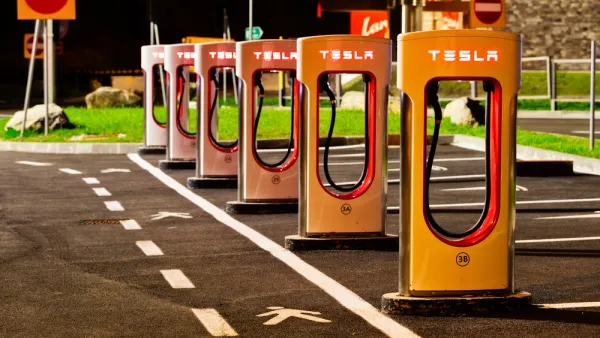
The House GOP tax plan, which Trump wanted to name the "Cut, Cut, Cut" bill, was intended to cut taxes, but it's also cutting credits, like the federal $7,500 electric vehicle tax credit. How much would its elimination affect EV sales?

Congressional Bill Would Offer a Bigger Tax Break for People Who Bike to Work
A bi-partisan bill till early in the federal legislative process would expand a very small tax incentive for people who ride a bike to work.

Planetizen Federal Action Tracker
A weekly monitor of how Trump’s orders and actions are impacting planners and planning in America.

The state-sanctioned urbicide of Austin
People don’t kill cities. Freeways do.

US to reduce Colorado River water deliveries to Mexico
A new Colorado Treaty amendment reduces Mexico’s Colorado River water allocation by 250,000 acre feet.

5 New England states march closer to 800 megawatt wind energy project
Securing federal approval for the project may be complicated under the Trump administration, which has historically been hostile towards domestic wind power.

Baltimore to break ground on $50 million Transit Priority Project
The project will bring faster bus trips, safer streets and better bike connections to Baltimore.

Airbnb launches $250 million 'last-dollar financing' housing accelerator, makes first investment in Austin
The company will put $6.4 million towards affordable housing development in Texas’ capital.

FREE Course: Walkable City 1: Why Walkability?
After describing his path towards focusing on walkability as the essence of good planning, Jeff Speck marches through his five principal reasons for making more walkable places.
Reinventing Malls: Planning Alchemy—Turning Gray Fields Into Gold
The course focuses on the opportunities and imperatives that shape reinvention of mall sites.

Eagle County Government
Harvard University Graduate School of Design
Nashville Planning Department
The Architects Foundation
University of Cincinnati Online
The Pocatello Development Authority
The Urban Renewal Agency of the City of Pocatello
Journal of the American Planning Association