The much-reported Las Vegas Autonomous bus got into a fender bender on its first day of service, the Las Vegas police department concluded the other vehicle was at fault.



Hours into its first day of service, Las Vegas' first autonomous bus got into a collision another vehicle. The much-anticipated bus (including on this site) did what it was supposed to do, a representative for Keolis stated. "To be fair to the shuttle, the fender bender Wednesday was caused by the other driver — in this case a delivery truck that backed into the front of the shuttle, which stopped after it sensed it was in danger of collision," Hayley Tsukayama reports for the Washington Post.
While some see this early crash and some by other driverless cars as a reason for caution, others say the technology will unlock safety gains. "[A] recent study from the RAND Corporation, published earlier this week, made an impassioned case for the government to allow driverless cars onto the road even if they’re not yet 'perfect,'" Tsukayama reports.
Read the full story: A driverless bus got into a crash during its first day on the job

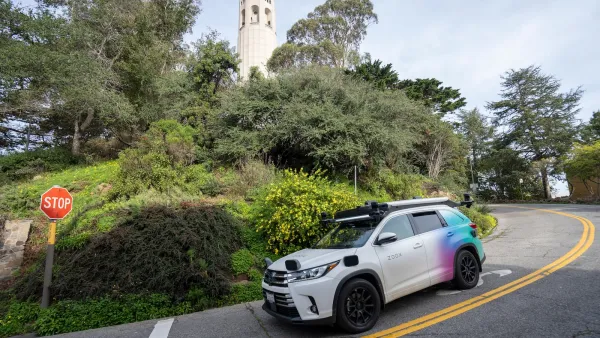
Feds want to make brake pedals optional in AVs
A proposed rule change would no longer require carmakers to include manual brake pedals or steering wheels in fully self-driving cars.
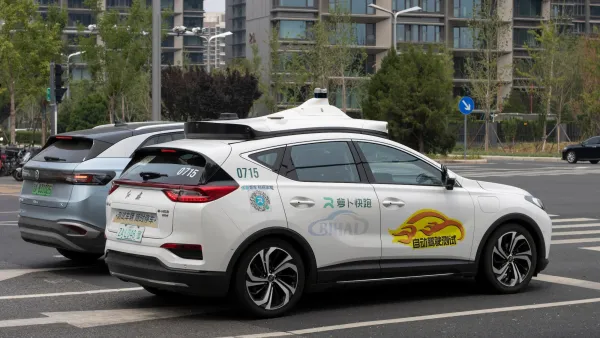
China suspends new AV licenses after 'major chaos'
A malfunction of Baidu autonomous vehicles prompted the Chinese government to stop issuing new licenses to AV operators. Could the U.S. learn from their actions?
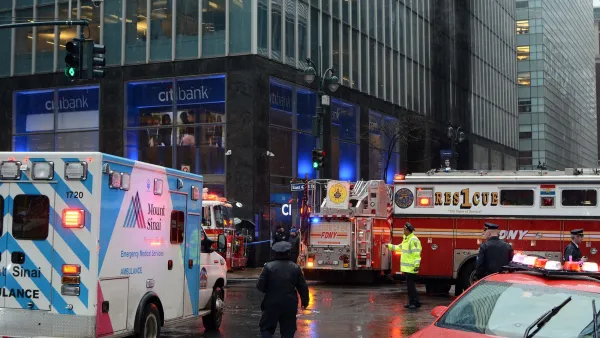
Waymo's troubles with emergency vehicles are getting worse
In one case, first responders waited 53 minutes to reach a Waymo support representative during an emergency.

Planetizen Federal Action Tracker
A weekly monitor of how Trump’s orders and actions are impacting planners and planning in America.

Amtrak, CN end decades-long dispute with eight-year agreement
The new operating agreement establishes an updated framework for the companies to work together, including processes to resolve disputes.

Northwest rail fans eager for Sept. 30 debut of Amtrak’s Airo fleet
Get ready for that new train smell and more seats. But they won’t go faster or run more frequently on the Cascades route in Washington and Oregon.

Brightline Florida files for bankruptcy
The transit company is over $5 billion in debt.

St. Louis Metro to test if single-car trains can reduce operating costs, maintain rider satisfaction
The pilot program will run from October to spring 2027, and begin with one single-car train operating on Metrolink’s Red and Blue lines.

Pennsylvania is building data centers in abandoned mines
Housing data centers in mines provides an alternative to destroying local forests and may spare residents from data centers’ noise and air pollution.

FREE Course: Walkable City 1: Why Walkability?
After describing his path towards focusing on walkability as the essence of good planning, Jeff Speck marches through his five principal reasons for making more walkable places.
Reinventing Malls: Planning Alchemy—Turning Gray Fields Into Gold
The course focuses on the opportunities and imperatives that shape reinvention of mall sites.

City of Thousand Oaks
City of Wisconsin Rapids
Harvard University Graduate School of Design
The Architects Foundation
University of Cincinnati Online
The Pocatello Development Authority
The Urban Renewal Agency of the City of Pocatello