Not everyone likes the proliferation of back-in angle parking in St. Louis, but the city is committed


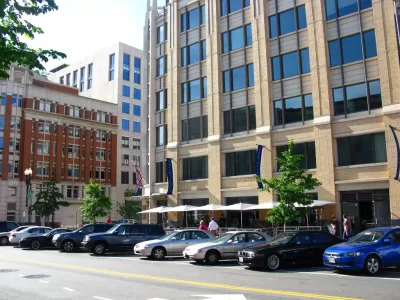
An abundance of wide streets is one of the reasons driving St. Louis traffic planners to add more back-in angle parking in the city. However, it is causing anxiety among some drivers who dislike the practice, and some go out of their way to park elsewhere.
The city cites more efficient use of public space and traffic calming as reasons to stripe more than 500 spaces across the city in recent years. It's also generally safer to back in to a space rather than back out. Businesses generally like them as well, due to the fact that more parking is created than typical parallel spaces. So, despite anxiety from some drivers, back-in angles parking appears here to stay in St. Louis.
Read the full story: Back-In Angle Parking Is in St. Louis to Stay. We'd Better Get Used to It
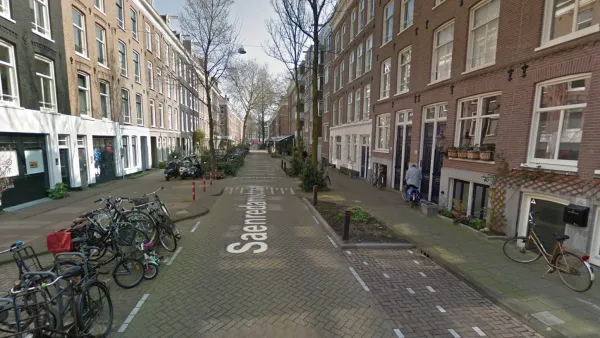
Watch: How to Remove Thousands of Parking Spaces
What the city of Amsterdam will gain by removing cars from on-street parking space.
Parking Meter Tests Provoke Frustration in St. Louis
Locations around St. Louis are testing new parking meters, leading to confusion and tickets. The changes are part of an ongoing test of new systems that will eventually yield an overdue overhaul of the city's parking technology.

Move over, LA: St. Louis gears up for Olympics, invests millions in downtown redevelopment
The Missouri city will host the 2028 Olympic soccer group stage and knockout matches.

Planetizen Federal Action Tracker
A weekly monitor of how Trump’s orders and actions are impacting planners and planning in America.

California plans to bury El Niño’s downpour
If the state plays its cards right, it may be able to store a billion acre-feet of El Niño’s water in aquifers.

Desperate measures: Advocates weigh draining Lake Powell to fill Colorado River
Draining the reservoir could reduce evaporation losses by a couple hundred thousand acre-feet.

Mamdani’s pied-à-terre tax survives legal challenge
A panel of judges found that the plaintiffs failed to demonstrate injury as a result of New York City's implementation of the tax.

Eastern Nebraska is running out of electricity
Data centers and electrification are straining eastern Nebraska’s grid, throttling economic development.

Seattle passes record-breaking transit services expansion
Proposition 1 will double the city’s transit tax to add 95,000 more bus trips and preserve 180,000 bus trips annually.

FREE Course: Walkable City 1: Why Walkability?
After describing his path towards focusing on walkability as the essence of good planning, Jeff Speck marches through his five principal reasons for making more walkable places.
Reinventing Malls: Planning Alchemy—Turning Gray Fields Into Gold
The course focuses on the opportunities and imperatives that shape reinvention of mall sites.

City of Rosemead
Rutgers University, Edward J. Bloustein School of Planning and Public Policy
One Hundred Miles
University of Michigan School for Environment and Sustainability (SEAS)
Hunter College, City University of New York (CUNY)
The Architects Foundation
City of Cambridge
Montrose County
The Pocatello Development Authority