There's an economic cost for making pedestrians wait at stoplights, according to a new study.


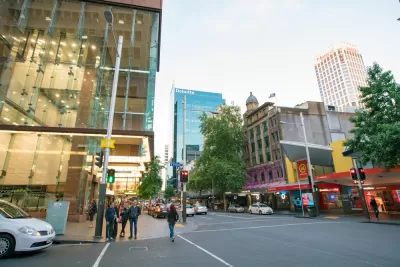
"Pedestrian congestion" is costing Auckland $186 million every year, reports James Pasley.
Pasley is sharing the results of a new study called "Investigating the Economic Value of Walking in the Auckland City Centre," which was presented to the Auckland Council recently. The study put a monetary value on the time pedestrians spend waiting at stoplights.
Commuters in Auckland have been choosing non-automobile modes of transportation at levels not seen since the 1950s, according to the article. In many parts of the city center, pedestrians far outnumber cars. Planners in the city have already responded: "Six out of eight of the key objectives in Auckland's 20-year "city centre masterplan" were around improving pedestrian connections in the city," reports Pasley.
Hat tip to Angie Schmitt.
Read the full story: Auckland's poor pedestrian flows cost $186m every year
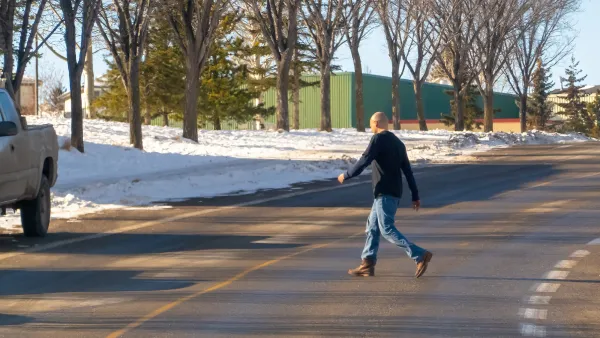
Study: Midblock pedestrian crossings are more common than we think
One in six crossings in the study took place outside of a marked crosswalk.
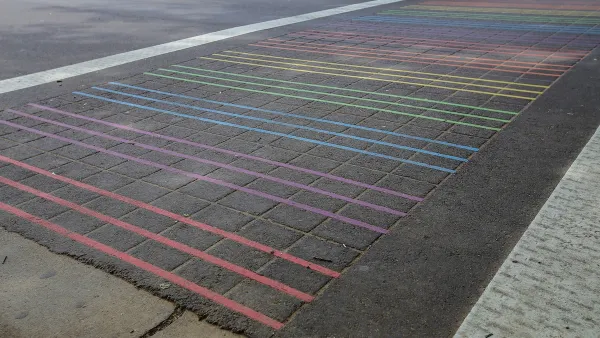
Sacramento Isn’t Giving up on Rainbow Crosswalks
A city program will fund artist-created crosswalks near two elementary schools as part of its effort to eliminate traffic deaths.
NYC Congestion Pricing Under Threat — Again
President Trump is attempting to make good on a campaign promise to kill New York City’s congestion pricing program, but the mechanism for ending it remains unclear.

Planetizen Federal Action Tracker
A weekly monitor of how Trump’s orders and actions are impacting planners and planning in America.

Washington state to charge fee to drivers with fuel-efficient cars
Revenue from the fee will go towards supporting the state’s highways.

Illinois considers spending $1 billion in taxpayer money on data center
A quantum computing campus and data center are currently under construction in Chicago.

Trump has changed his mind on congestion pricing — maybe
The Trump administration is offering $100 million in grants so cities can implement their own traffic control programs.

‘Demolition of our heritage:’ Some US tribes speak out against BAAJA
A coalition of indigenous groups in the United States are concerned about provisions in the bill that may weaken their ability to halt large energy projects.

How LA’s new mayor plans to tackle affordable housing crisis
Mayor-elect Nithya Raman has proposed overhauling the city’s permitting process.

FREE Course: Walkable City 1: Why Walkability?
After describing his path towards focusing on walkability as the essence of good planning, Jeff Speck marches through his five principal reasons for making more walkable places.
Reinventing Malls: Planning Alchemy—Turning Gray Fields Into Gold
The course focuses on the opportunities and imperatives that shape reinvention of mall sites.

City of Charlotte
City of Rosemead
Rutgers University, Edward J. Bloustein School of Planning and Public Policy
University of Michigan School for Environment and Sustainability (SEAS)
Hunter College, City University of New York (CUNY)
The Architects Foundation
University District Partnership