Regular "emissions events" at Texas heavy industrial facilities cause a lot of unauthorized pollution. But few consequences mean the companies responsible don't have to crack down.


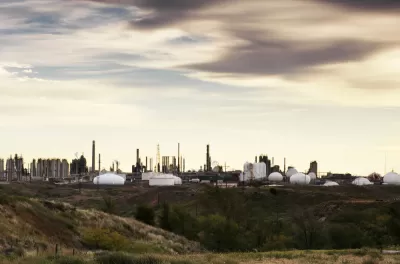
At Texas refineries and other high-pollution sites, lots of excess emissions are entering the atmosphere (and adjacent lungs) with few consequences. According to a report in the Texas Tribune by Kiah Collier and Ryan Murphy, "thousands of such rogue releases occur at Texas industrial sites each year. They are known generically as 'emissions events'—a term that refers to both malfunctions or 'upsets' and unplanned 'maintenance, start-up or shutdown' activities."
"Last year, there were 3,723 of these rogue releases at 774 industrial sites across the state, according to the Tribune's analysis. That's more than 10 per day on average." In 2016, those emissions events accounted for 57.9 million pounds of excess air pollution.
The Texas Commission on Environmental Quality usually administers a slap on the wrist, and is often incapable of doing more. "The companies [...] save huge amounts of money by delaying maintenance and upgrades that would've prevented the emissions in the first place. And knowing the state probably won't do anything about them means they have no incentive to do so."
Read the full story: A Pass to Poison

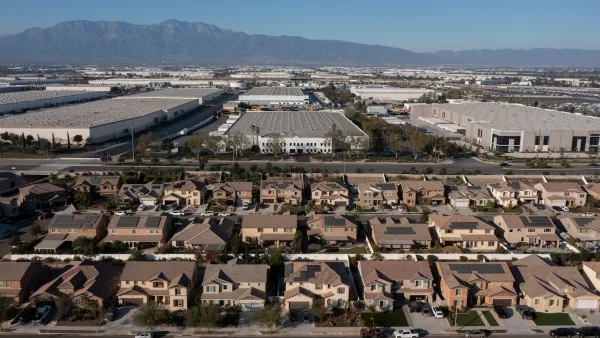
New California Law Regulates Warehouse Pollution
A new law tightens building and emissions regulations for large distribution warehouses to mitigate air pollution and traffic in surrounding communities.
The Climate Outlook for 2024
This year could mark a turning point for climate policy and energy systems.
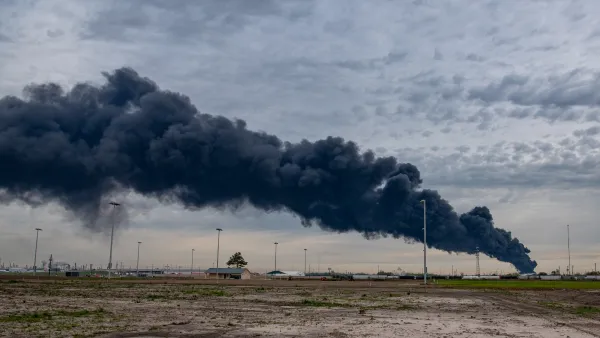
EPA Grant Will Fund Air Pollution Tracking in Houston
The city wants to monitor air quality and measure cancer-causing emissions near two petrochemical plants, one of which announced plans for expansion last year.

Planetizen Federal Action Tracker
A weekly monitor of how Trump’s orders and actions are impacting planners and planning in America.

Amtrak, CN end decades-long dispute with eight-year agreement
The new operating agreement establishes an updated framework for the companies to work together, including processes to resolve disputes.

Judges permit Denver to divert 77,000 acre feet from the Colorado River for reservoir expansion
Overuse and climate change have caused the Colorado River’s water levels to plummet.

NYC DOT wants faster, more permanent street upgrades
The city is examining ways to build more concrete infrastructure without getting entangled in 'decades-long' projects.

'Something we’ve never seen before:' rising utility rates could strain city finances nationwide
Data centers, climate change and other factors have caused utility rates in the United States to increase by 38% since 2020.

Trump to overrule local leaders, lease millions of acres of America’s Pacific Island territories’ seafloors to mining companies
International law says that the Indigenous people of America’s territories have a right to prior and informed consent regarding projects that impact their countries.

FREE Course: Walkable City 1: Why Walkability?
After describing his path towards focusing on walkability as the essence of good planning, Jeff Speck marches through his five principal reasons for making more walkable places.
Reinventing Malls: Planning Alchemy—Turning Gray Fields Into Gold
The course focuses on the opportunities and imperatives that shape reinvention of mall sites.

Harvard University Graduate School of Design
KFH Group Inc.
Greater Baltimore Committee
The Architects Foundation
University of Cincinnati Online
The Pocatello Development Authority
The Urban Renewal Agency of the City of Pocatello