By 2040, Detroit will be bigger, more urban, older, and whiter predicts a report from the New Urban Institute that looks at trends, challenges, and assets of the Michigan city.


Fifty years ago, Detroit saw riots and uprisings that caused the National Guard to be called in. A report from the New Urban Institute looks at what the city may look like in the future. "The Motor City has been rebounding—slowly and unevenly, for sure—but rebounding nonetheless. The question now is: what direction are the city and its surrounding areas headed in now?" Tanvi Misra asks in CityLab.
According to work done by the New Urban Institute, the city will be aging (like the country overall). It will grow fastest within the city limits and the white population growth will be the largest in terms of raw numbers. "While households of other racial groups will grow at faster rates, whites will remain the biggest group in the region," Misra reports.
Read the full story: What Will Detroit Look Like in 2040?


Texas, the Bellwether State
With its rapid economic growth, dynamic cities, and increasingly diverse population, Texas could offer a model for the future of the United States.
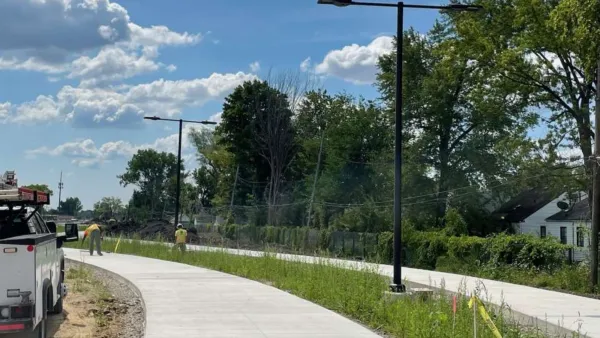
Detroit greenway brings revival — and fears of displacement
The planned Joe Louis Greenway is already bringing change to the neighborhoods near it.

Wisconsin's declining population reduces housing needs by almost 50%
The state's working age population declined by over 25,000 people between 2020 and 2024.

Planetizen Federal Action Tracker
A weekly monitor of how Trump’s orders and actions are impacting planners and planning in America.

Amtrak, CN end decades-long dispute with eight-year agreement
The new operating agreement establishes an updated framework for the companies to work together, including processes to resolve disputes.

Northwest rail fans eager for Sept. 30 debut of Amtrak’s Airo fleet
Get ready for that new train smell and more seats. But they won’t go faster or run more frequently on the Cascades route in Washington and Oregon.

Brightline Florida files for bankruptcy
The transit company is over $5 billion in debt.

St. Louis Metro to test if single-car trains can reduce operating costs, maintain rider satisfaction
The pilot program will run from October to spring 2027, and begin with one single-car train operating on Metrolink’s Red and Blue lines.

Pennsylvania is building data centers in abandoned mines
Housing data centers in mines provides an alternative to destroying local forests and may spare residents from data centers’ noise and air pollution.

FREE Course: Walkable City 1: Why Walkability?
After describing his path towards focusing on walkability as the essence of good planning, Jeff Speck marches through his five principal reasons for making more walkable places.
Reinventing Malls: Planning Alchemy—Turning Gray Fields Into Gold
The course focuses on the opportunities and imperatives that shape reinvention of mall sites.

City of Thousand Oaks
City of Wisconsin Rapids
Harvard University Graduate School of Design
The Architects Foundation
University of Cincinnati Online
The Pocatello Development Authority
The Urban Renewal Agency of the City of Pocatello