Mayor Gimenez is citing frugality as the reason behind a decision that favors bus rapid transit over an earlier proposal for new rail lines.


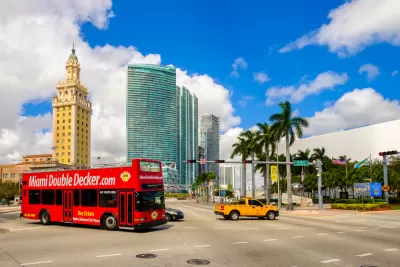
Douglas Hanks reports: "Miami-Dade can’t afford to build more rail lines and should invest millions in transit dollars creating modernized express bus systems running north and south, Mayor Carlos Gimenez said Monday."
Instead of rail lines, Mayor Gimenez is proposing a $534 million proposal for bus rapid transit routes. The proposal would "indefinitely defer the Metrorail expansion promised voters in 2002 during a referendum for a half-percent transportation tax that currently generates about $250 million a year," according to Hanks. That potentially defunct expansion, called the SMART plan (short for Strategic Miami Area Rapid Transit), is detailed in article by Michael Vasquez from April 2016.
The article by Hanks provides a lot more detail on the political debate surrounding the city of Miami's transit investments. The bus rapid transit plans are a departure from earlier statements by Mayor Gimenez, who unveiled the SMART plan during his re-election campaign last year, and aired a television ad under the headline "More Rail Lines."
Hat tip to Rachel Dovey for sharing the article and adding more context on the political cause for transit in one of the country's most congested cities.
Read the full story: We can’t afford to build new rail lines, Miami-Dade mayor says
Transit Debate Coming to a Head Soon in Miami-Dade
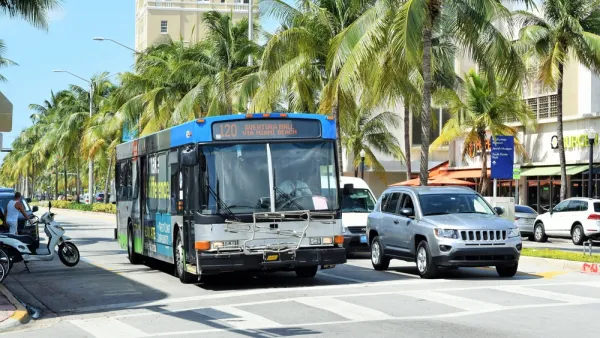
A new network of buses, designed with the bus priority features, has been proposed in Miami. The catch: it would come at the expense of a promised rail extension program.
Monorail Doesn't Measure Up for Los Angeles, Says Editorial Board
The editorial board of the Los Angeles Times is unimpressed by a plan to build a monorail between the Westside and the San Fernando Valley in the city of Los Angeles.
Major Transit Openings Expected in 2021
All the heavy rail, light rail, bus rapid transit, and commuter rail projects expected to open in North American in 2021.

Planetizen Federal Action Tracker
A weekly monitor of how Trump’s orders and actions are impacting planners and planning in America.

California plans to bury El Niño’s downpour
If the state plays its cards right, it may be able to store a billion acre-feet of El Niño’s water in aquifers.

Desperate measures: Advocates weigh draining Lake Powell to fill Colorado River
Draining the reservoir could reduce evaporation losses by a couple hundred thousand acre-feet.

Chicago voters approve permanent festival grounds, penalty for vacant property owners
Currently, major summer and fall festivals take over public parks for weeks at a time, drawing criticism from nearby residents

NYC votes to cut outdoor dining red tape, speed up permitting
New York City also voted to allow the Department of Transportation to begin work on urgent projects before notifying elected officials.

California appears to reject Prop. 45
The proposition would have expanded the projects that qualify for a streamlined environmental review, effectively paring down the California Environmental Quality Act.

FREE Course: Walkable City 1: Why Walkability?
After describing his path towards focusing on walkability as the essence of good planning, Jeff Speck marches through his five principal reasons for making more walkable places.
Reinventing Malls: Planning Alchemy—Turning Gray Fields Into Gold
The course focuses on the opportunities and imperatives that shape reinvention of mall sites.

City of Rosemead
Rutgers University, Edward J. Bloustein School of Planning and Public Policy
One Hundred Miles
Hunter College, City University of New York (CUNY)
The Architects Foundation
University of Cincinnati Online
City of Cambridge
Montrose County
The Pocatello Development Authority