A new network of buses, designed with the bus priority features, has been proposed in Miami. The catch: it would come at the expense of a promised rail extension program.


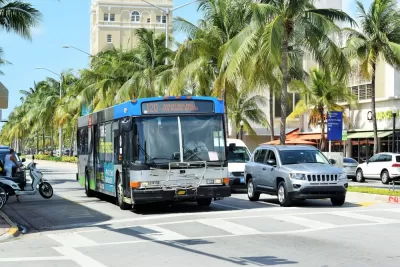
Douglas Hanks reports: "A showdown is rolling down the tracks for South Dade transit, with the county mayor ready to build a $300 million network of modernized buses designed for group boarding, advanced ticketing and other features aimed at imitating a commute on Metrorail but at about a quarter of the cost."
According to Hanks, the scheme is likely to provoke a political battle with local leaders around the region, who want a promised Metrorail extension project estimated at $1 billion. According to an earlier article by Hanks, the plan in question was proposed in 2002, "[pledging] to extend Metrorail along the South Dade Busway, a 20-mile stretch of highway reserved for buses running to Florida City, the local coalition insisted Miami-Dade agree to fund a study on how to build light rail instead.
"The two sides have been sparring for several years, but on July 19 Mayor Carlos Gimenez is set to ask for the first definitive vote on the issue," adds Hanks.
Hat tip to Rachel Dovey, whose coverage of the bus system proposal includes more details on the 16-year transit battle that precedes the current events.
Read the full story: Miami-Dade has a $300 million plan for modern buses in South Dade. Next up: a fight

Miami to Launch America's First Fully Electric Bus Rapid Transit Line
The project, led by Miami-Dade County, will link Dadeland South to Florida City via a 20-mile dedicated lane.
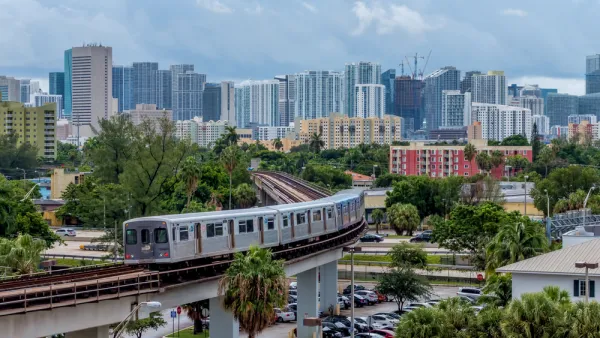
Miami Doubling Down On Rapid Transit
Autonomous vehicles replacing fixed transit may be on the minds of many in the transportation world, but that's not stopping cities from upgrading and building around their transit lines.
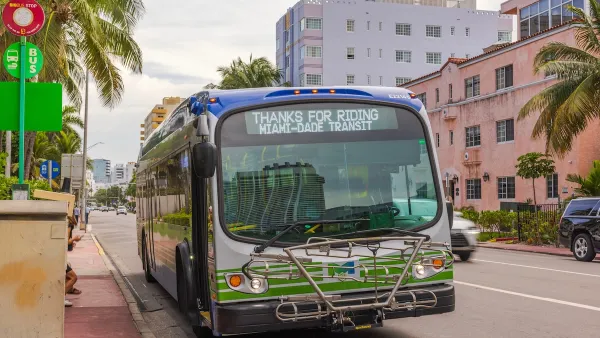
More money, less service: Miami-Dade slashes bus routes after hiking fare
The department is facing a multi-million dollar funding gap.

Planetizen Federal Action Tracker
A weekly monitor of how Trump’s orders and actions are impacting planners and planning in America.

California plans to bury El Niño’s downpour
If the state plays its cards right, it may be able to store a billion acre-feet of El Niño’s water in aquifers.

Desperate measures: Advocates weigh draining Lake Powell to fill Colorado River
Draining the reservoir could reduce evaporation losses by a couple hundred thousand acre-feet.

Chicago voters approve permanent festival grounds, penalty for vacant property owners
Currently, major summer and fall festivals take over public parks for weeks at a time, drawing criticism from nearby residents

NYC votes to cut outdoor dining red tape, speed up permitting
New York City also voted to allow the Department of Transportation to begin work on urgent projects before notifying elected officials.

California appears to reject Prop. 45
The proposition would have expanded the projects that qualify for a streamlined environmental review, effectively paring down the California Environmental Quality Act.

FREE Course: Walkable City 1: Why Walkability?
After describing his path towards focusing on walkability as the essence of good planning, Jeff Speck marches through his five principal reasons for making more walkable places.
Reinventing Malls: Planning Alchemy—Turning Gray Fields Into Gold
The course focuses on the opportunities and imperatives that shape reinvention of mall sites.

City of Rosemead
Rutgers University, Edward J. Bloustein School of Planning and Public Policy
One Hundred Miles
Hunter College, City University of New York (CUNY)
The Architects Foundation
University of Cincinnati Online
City of Cambridge
Montrose County
The Pocatello Development Authority