A House of Representatives committee has different ideas about the spending priorities of the federal government when it comes to issues like a proposed border wall and the Great Lakes.


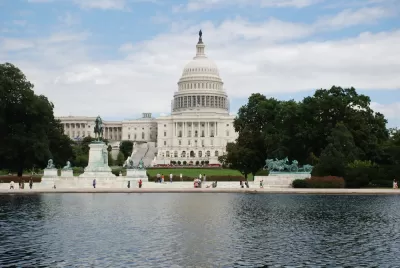
News of action from the House Appropriations Committee this week moved forward budgetary considerations for two important infrastructure and environmental spending programs—both with key differences from the ambitions expressed by the very speculative "America First: A Budget Blueprint to Make America Great Again" proposal released by the Trump Administration in May 2017.
First, the "U.S. House Appropriations Committee released legislation today fully funding a Great Lakes restoration program, rejecting a proposal from President Donald Trump to eliminate the $300 million committed each year to the effort," reports Todd Spangler for Detroit Free Press. The legislation is the 2018 Interior and Environment Appropriations bill and it also "restores much of the $2.4 billion proposed to be cut from the budget of the U.S. Environmental Protection Agency, which had been targeted for a reduction of nearly a third."
Meanwhile, Andrew Taylor reports for the Associated Press that the same committee also released its $44 billion homeland security funding bill on the same day, including $1.6 billion in funding for a proposed wall along the U.S-Mexico border. That bill means Mexico will not be paying for the wall, as President Trump promised many times during the 2016 presidential election.
As noted by Spangler, the 2018 Interior and Environment Appropriations bill is "one of several that would fund government for the fiscal year beginning Oct. 1," and it "still has to be voted on in committee and passed by the full chamber before being considered in the Senate." For the purposes of the Great Lakes Restoration Initiative, at least, that is good news for its chances of survival.
Read the full story: $300 million for Great Lakes protected in funding bill, thwarting Trump
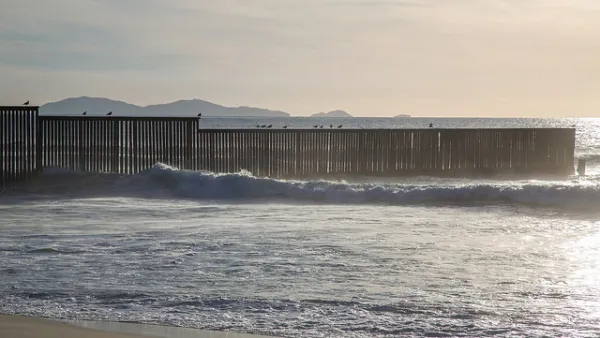
Department of Homeland Security Will Skip Environmental Review for the Border Wall
Also, the House of Representatives has approved the funding president trump wants for the wall, but the Senate is likely to balk.
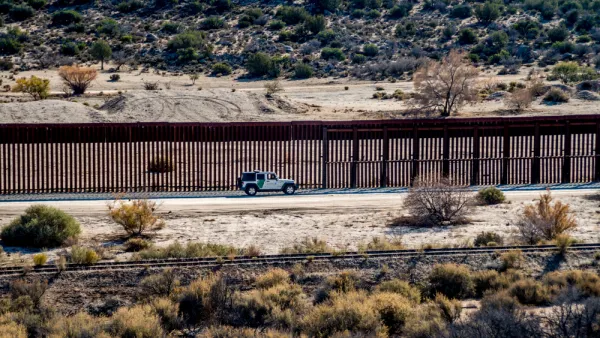
Border Wall Plans Following the Path of Least Resistance
Planning of President Trump's proposed border wall is moving along very quietly, and quickly, at a federal wildlife refuge in Texas.

Trump Budget's Devastating Effect on the EPA and Two of America's Greatest Water Resources
President Trump's budget for 2018 has the U.S. Environmental Protection Agency take the steepest hit—31 percent. Funding for two vital programs, the Great Lakes Restoration Initiative and Chesapeake Bay Program, will have their funds eliminated.

Planetizen Federal Action Tracker
A weekly monitor of how Trump’s orders and actions are impacting planners and planning in America.

Eastern Nebraska is running out of electricity
Data centers and electrification are straining eastern Nebraska’s grid, throttling economic development.

Study reveals best places in the U.S. for cycling, walking
New research from Streetlight Data examines bicycle and pedestrian miles per capita in the 100 largest U.S. cities by population.

DSA members accuse Mamdani of 'abandoning values' over housing redevelopment
New York City's mayor plans to replace about 2,000 units of public housing with private, mixed-income housing.

All sides of BRT debate unhappy with CDOT’s most recent move
The Colorado Department of Transportation is no longer considering center-running bus lanes for Colorado Boulevard.

Massachusetts bogs generate both power, and cranberries
Putting solar panels above farmland is one way Massachusetts is advancing toward its goal of net-zero carbon emissions by 2050.

FREE Course: Walkable City 1: Why Walkability?
After describing his path towards focusing on walkability as the essence of good planning, Jeff Speck marches through his five principal reasons for making more walkable places.
Reinventing Malls: Planning Alchemy—Turning Gray Fields Into Gold
The course focuses on the opportunities and imperatives that shape reinvention of mall sites.

City of Rosemead
Rutgers University, Edward J. Bloustein School of Planning and Public Policy
One Hundred Miles
University of Michigan School for Environment and Sustainability (SEAS)
Hunter College, City University of New York (CUNY)
The Architects Foundation
City of Cambridge
The Pocatello Development Authority
The Urban Renewal Agency of the City of Pocatello