The ecology of mountains around the world is changing as summer plants bloom earlier and forests march up hill to newly temperate ground.


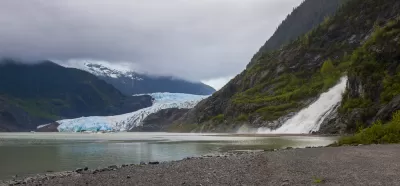
Scientists are unsure why mountains are getting hotter so much faster than lower lands, but they do have theories. "They suspect that the accelerated mountain warming is due to an effect documented in the Arctic—loss of albedo. The peaks are losing their shiny white blanket of snow and ice that reflects the sun's radiation back to space," Bob Berwyn writes in Pacific Standard.
The effects have been noted on mountains around the world. "Forests are moving uphill, glaciers are vanishing, and plants are blooming several weeks earlier than just 30 years ago," Berwyn reports. Changes to mountain eco-systems mean big changes in the water cycle, and "about half the world's population depends on mountains for drinking water supplies, irrigation, mining, hydropower, agriculture, and recreation—including many people who live far away from mountains."
Read the full story: MOUNTAINS ARE WARMING TWICE AS FAST AS THE REST OF THE WORLD

Planning Trends for 2026: States and Cities Take Initiative, Passenger Rail Gains Steam, and the Costs of AI Revealed
With federal funding for everything from transportation projects to housing assistance under threat, city and state governments are poised to take a stronger role in building strong, resilient local economies and public services.
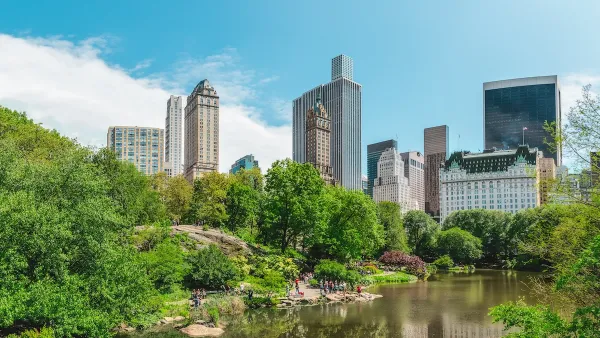
Public Parks as Climate Resilience Tools
Designed with green infrastructure, parks can mitigate flooding, reduce urban heat, and enhance climate resilience, offering cost-effective solutions to environmental challenges while benefiting communities.
New Yorkers Face New Climate Risks
A two-acre fire in a city park prompted city officials to ban grilling while urging residents to conserve water to limit the impact of a historic drought.

Planetizen Federal Action Tracker
A weekly monitor of how Trump’s orders and actions are impacting planners and planning in America.

Amtrak, CN end decades-long dispute with eight-year agreement
The new operating agreement establishes an updated framework for the companies to work together, including processes to resolve disputes.

Judges permit Denver to divert 77,000 acre feet from the Colorado River for reservoir expansion
Overuse and climate change have caused the Colorado River’s water levels to plummet.

NYC DOT wants faster, more permanent street upgrades
The city is examining ways to build more concrete infrastructure without getting entangled in 'decades-long' projects.

'Something we’ve never seen before:' rising utility rates could strain city finances nationwide
Data centers, climate change and other factors have caused utility rates in the United States to increase by 38% since 2020.

Trump to overrule local leaders, lease millions of acres of America’s Pacific Island territories’ seafloors to mining companies
International law says that the Indigenous people of America’s territories have a right to prior and informed consent regarding projects that impact their countries.

FREE Course: Walkable City 1: Why Walkability?
After describing his path towards focusing on walkability as the essence of good planning, Jeff Speck marches through his five principal reasons for making more walkable places.
Reinventing Malls: Planning Alchemy—Turning Gray Fields Into Gold
The course focuses on the opportunities and imperatives that shape reinvention of mall sites.

Harvard University Graduate School of Design
KFH Group Inc.
Greater Baltimore Committee
The Architects Foundation
University of Cincinnati Online
The Pocatello Development Authority
The Urban Renewal Agency of the City of Pocatello