E-commerce and its delivery trucks are a big problem for narrow streets, homes, and retailers that don't have loading docks.



Changes in logistics mean more trucks, which has created problems that range from slowing down transit to endangering the lives of pedestrians.
"Because so few of the city’s buildings have internal loading areas, drivers have no choice but to park at the curb, even if it means stopping traffic," Inga Saffron reports in the Philadelphia Inquirer. This is particularly difficult in cities like Philadelphia that have narrow streets, the very streets that slow down traffic and have been proven to be safer for pedestrians and drivers. Trucks can also block sight lines and bike lanes. "Parked trucks can reduce visibility for other drivers and greatly increase the danger to pedestrians and bicyclists," Saffron writes.
There are some strategies to mitigate these issues, "Mandating night deliveries, especially for drugstores and high-volume stores like Target, could not only reduce congestion but also save energy," Saffron reports, but with E-commerce steadily growing around 15 percent a year, this problem isn't going away any time soon.
Read the full story: How the delivery economy is disrupting Philadelphia's street grid

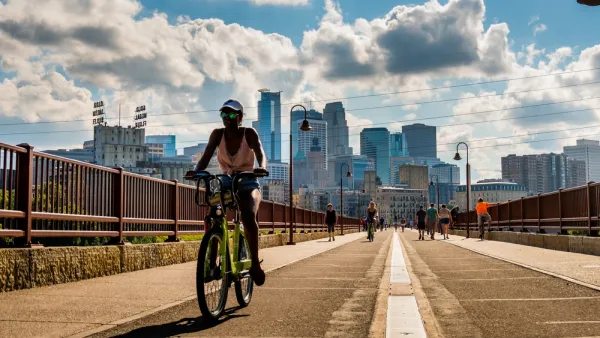
Study: Biking Brings Happiness
A Minneapolis study showed cyclists experienced the highest rates of satisfaction during their commute.
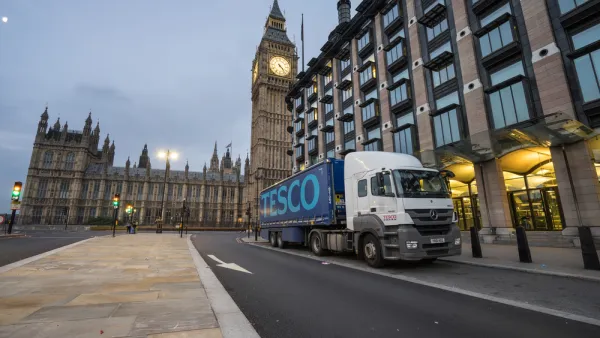
Making the Most Dangerous Trucks Illegal in London
Commercial vehicles, and heavy trucks in particular, cause a disproportionate number of pedestrian and cyclist fatalities, London Mayor Sadiq Khan is proposing to ban the most dangerous trucks from entering the city.
How Safe is Biking while Rocking Out (with Headphones)?
Joseph Stromberg examines the question of how safe it is for bikers to wear headphones—a common practice for which there is no safety data.

Planetizen Federal Action Tracker
A weekly monitor of how Trump’s orders and actions are impacting planners and planning in America.

California plans to bury El Niño’s downpour
If the state plays its cards right, it may be able to store a billion acre-feet of El Niño’s water in aquifers.

Chicago breaks ground on $3 billion megadevelopment
The new neighborhood, titled Foundry Park, will one day host 3,700 residences.

California High-Speed Rail Authority CEO resigns after $600,000 scandal
Under Ian Choudri, the authority used taxpayer dollars to fund first class flights and trips to nightclubs.

Want to study the Missouri River? Soon, you may need unanimous approval from 10 states
Legislation would require 10 governors’ permission to study or build projects moving water outside the basin.

Desperate measures: Advocates weigh draining Lake Powell to fill Colorado River
Draining the reservoir could reduce evaporation losses by a couple hundred thousand acre-feet.

FREE Course: Walkable City 1: Why Walkability?
After describing his path towards focusing on walkability as the essence of good planning, Jeff Speck marches through his five principal reasons for making more walkable places.
Reinventing Malls: Planning Alchemy—Turning Gray Fields Into Gold
The course focuses on the opportunities and imperatives that shape reinvention of mall sites.

City of Rosemead
Rutgers University, Edward J. Bloustein School of Planning and Public Policy
One Hundred Miles
Hunter College, City University of New York (CUNY)
The Architects Foundation
University of Cincinnati Online
City of Cambridge
Montrose County
The Pocatello Development Authority