A proposed mosque in Bernards Township will move forward, after the DOJ sued the town for using zoning ordinances to undermine Muslims' religious freedom.


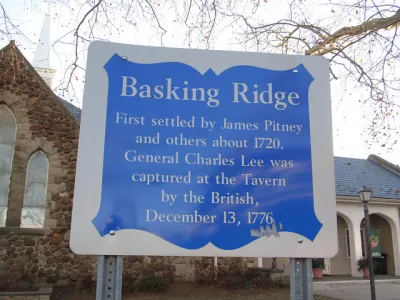
"After five years, 39 public hearings, and two lawsuits, the Islamic Society of Basking Ridge in New Jersey will finally be able to build a new mosque," reports Emma Green in The Atlantic.
When it proposed the mosque in 2012, the Islamic Society became the target of explicitly Islamophobic treatment from community members and was met with prevarication from officials. The plan was finally rejected, ostensibly on the basis of parking.
The group sued the township—and so did the Department of Justice, arguing under the Religious Land Use and Institutionalized Persons Act, which Green explains "prohibits local communities from using vague ordinances and bureaucratic procedures to discriminate against religious groups." Now, though the township denies any wrongdoing, it has agreed to settle both cases, and the proposed mosque will move forward.
This case was a particularly nasty and controversial example of a local board discriminating against a religious group that wanted a place to worship. But while the Bernards Township case is distinctive, it’s in no way unique. Religious discrimination in the U.S. often happens in the most quotidian settings, including debates over zoning ordinances.
Over the last decade, opposition to new mosques swelled throughout the United States, and the DOJ has intervened with local planning boards multiple times. In March, Bayonne, NJ—just 30 miles from Bernards—rejected a proposed mosque and community center citing zoning concerns.
Read the full story: A New Jersey Mosque Wins in a Religious-Discrimination Lawsuit—Over Parking Lots
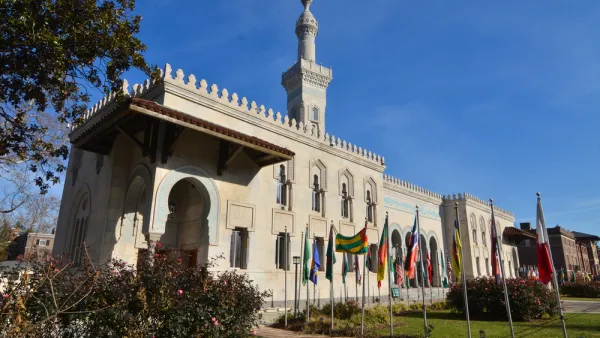
Department of Justice Steps in to Halt Religious Discrimination Through Zoning
As the U.S. Department of Justice takes action to protect the religious freedoms of Muslims in the United States, zoning decisions have proven a particularly common source of anxiety among Muslim communities.
New York State Attorney General Calls Out Town for Potential Religious Land Use Discrimination
Hasidic Orthodox Jewish developers allege the town of Forestburgh, New York, altered zoning regulations to dissuade them from building homes on a site that had received previous approval under different ownership; state officials appear to agree.
Denied Mosque Rezoning Violated Religious Land Use and Institutionalized Persons Act
The city of Des Plaines, Illinois has entered into a consent decree with the Justice Department to ensure it acts in accordance with the law regarding future zoning requests from religious institutions.

Washington state to charge fee to drivers with fuel-efficient cars
Revenue from the fee will go towards supporting the state’s highways.

Illinois considers spending $1 billion in taxpayer money on data center
A quantum computing campus and data center are currently under construction in Chicago.

Trump to blast ‘hydrocarbon highway’ through ‘world’s longest art gallery’
Environmental and historic preservation groups are suing to stop the project.

NYC, state sue feds over mixed-immigration-status housing assistance rule
The state’s lawsuit argues that the rule change violates the Administrative Procedure Act.

Michigan to turn neighborhood into virtual power plant
Residents will soon be able to divert their excess energy to the grid in exchange for compensation.

Data center, mining project swarm to long-awaited Alaska railroad line
The state-owned railroad approved final plans for the spur line this week; the project is expected to cost $311 million, mostly funded by the federal government

FREE Course: Walkable City 1: Why Walkability?
After describing his path towards focusing on walkability as the essence of good planning, Jeff Speck marches through his five principal reasons for making more walkable places.
Reinventing Malls: Planning Alchemy—Turning Gray Fields Into Gold
The course focuses on the opportunities and imperatives that shape reinvention of mall sites.

City of Charlotte
City of Rosemead
Rutgers University, Edward J. Bloustein School of Planning and Public Policy
University of Michigan School for Environment and Sustainability (SEAS)
Hunter College, City University of New York (CUNY)
The Architects Foundation
University District Partnership