A shake-up at the U.S. Department of Agriculture will likely impact the delivery of support and programs from the federal government to rural communities.


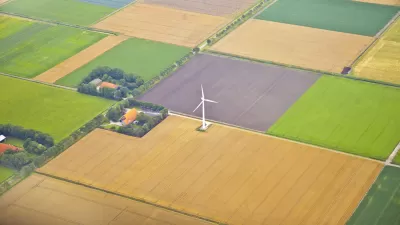
Dan Nosowitz shares news of changes at the U.S. Department of Agriculture (USDA) likely to impact federal support for rural communities.
Nosowitz reports that USDA Secretary Sonny Perdue recently abolished the position of Under Secretary of Rural Development—a position that oversees the Office of Rural Development and its $216 billion budget.
In the place of the Under Secretary of Rural Development, the "heads of four departments within the Rural Development agency—the Rural Utilities Service, the Rural Business Service, the Rural Housing Service, and the Chief Risk Office—will report directly to [the USDA Secretary]," according to Nosowitz.
The USDA called this reorganization an elevation of rural development, but the advocacy group Campaign for Renewed Rural Development has written a letter to members of Congress [pdf] stating their strong opposition to the reorganization. Here's a summary of the main arguments od that letter's opposition to the reorganization:
- "In its current position as a core USDA Mission Area overseen by an Under Secretary, RD is part of the USDA subcabinet; the reassignment would remove it from the subcabinet and rescind the decision-making power that comes with being a core USDA Mission Area."
- "Under Secretaries are confirmed by the U.S. Senate and held directly accountable to Congress for their office, scope and mission – special assistants are not."
- "Demoting RD and removing Congressional accountability will have a direct impact on our nation’s ability to care for the underserved and compete in a global market."
The letter also raises alarms about possible policy and budget developments that could further impact rural communities: "President Trump’s 'skinny budget' proposal to Congress included the elimination of the Community Development Block Grant (CDBG) program, the entire portfolio of Rural Business Cooperative Service programs and the Rural Water Wastewater Program."
FULL STORY: Farm Advocates Fear USDA Is Destroying Aid To Rural America


Trump Budget Would Cut PILT Funding to Rural Communities
Sparsely-populated rural counties with large amounts of public land stand to lose the most if the Trump Administration succeeds in cutting funding to the Payment in Lieu of Taxes (PILT) program.

Trump Budget's Devastating Effect on the EPA and Two of America's Greatest Water Resources
President Trump's budget for 2018 has the U.S. Environmental Protection Agency take the steepest hit—31 percent. Funding for two vital programs, the Great Lakes Restoration Initiative and Chesapeake Bay Program, will have their funds eliminated.
New from the U.S. Department of Agriculture: $10 Billion Rural Investment Fund
As pension funds and institutional investors, faced with low interest rates, are searching for non-traditional investments, the U.S. Department of Agriculture will play matchmaker for a new $10 billion rural investment fund.

The state-sanctioned urbicide of Austin
People don’t kill cities. Freeways do.

US to reduce Colorado River water deliveries to Mexico
A new Colorado Treaty amendment reduces Mexico’s Colorado River water allocation by 250,000 acre feet.

New Jersey’s second-largest city bans standalone data centers
Jersey City will continue to allow co-location facilities, such as those meant for research institutions that store their own data.

Amtrak not solely to blame for New Jersey commuter rail's unreliability, report finds
A new study from the Garden State Initiative found that NJ Transit’s budget grew 20% across a 4 year period, but reliability declined significantly over the same period.

EPA erases limits on planet-warming pollution from power plants
Under Monday’s plan, power plants would still have some limits on how much mercury, arsenic and other contaminants they can emit.

Phoenix announces new on-demand transit service, more frequent RAPID buses
Both new services will launch in October, and are part of Phoenix's Project Effective Access Solutions for Easing Congestion.

FREE Course: Walkable City 1: Why Walkability?
After describing his path towards focusing on walkability as the essence of good planning, Jeff Speck marches through his five principal reasons for making more walkable places.
Reinventing Malls: Planning Alchemy—Turning Gray Fields Into Gold
The course focuses on the opportunities and imperatives that shape reinvention of mall sites.

Eagle County Government
Harvard University Graduate School of Design
Nashville Planning Department
The Architects Foundation
University of Cincinnati Online
The Pocatello Development Authority
The Urban Renewal Agency of the City of Pocatello
Journal of the American Planning Association