Pasadena is revising its zoning regulations to accommodate more accessory dwelling units. This open letter to the city's Planning Commission includes sound suggestions, applicable everywhere.


Accessory dwelling units (ADU) can be a big part of the solution to California's housing crisis. They incrementally increase housing supply. They also increase density, utilize existing infrastructure, and are not as likely as new multi-family residential projects to trigger massive community resistance. However, Pasadena's existing ADU ordinance did more to prevent than facilitate the orderly construction of ADUs. Recent changes in state law brought on by AB 2299 and SB 1069 are intended to alleviate the housing crisis in California by making it easier to build ADUs. Accordingly, Pasadena has started the process of revising its obsolete ADU ordinance. Planner and resident Jonathan Bell was a critic of the first draft of the revised ordinance, which he said was full of "poison pills" having the practical effect of severely limiting ADU construction - and making it expensive. He did so in an open letter. Now a more refined draft is before the city. In another open letter, Bell acknowledges the improvements but says there is still work to be done on the revisions. The letter identifies principles that have far wider applicability than just in Pasadena, including:
- Don't limit ADUs to houses on big lots: Not only does it cut down on the number of eligible lots, but also on the middle class property owners most motivated to build ADUs.
- Allow ADUs in a number of zoning designation areas to increase the number of ADUs.
- Allow ADUs in historic districts.
- Don't encumber ADU's with requirements meant to hide their existence.
- Facilitate garage-over ADU's, including reasonable height restrictions.
- Allow ADU square footages sufficient to accommodate families.
- Waive residential impact fees for ADUs
Bell concludes by reminding the Pasadena Planning Commission that restrictions that make it too difficult to build ADUs result in ADUs that are built "informally," i.e., without permits. He cites both the high number of "informal" dwelling units in Los Angeles County, as well as the many disadvantages of an unknown quantity of "informal" dwelling units. Utmost among these disadvantages: housing that does not meet safety requirements. Bell warns:
The Ghost Ship fire in Oakland and Aviles Family tragedy in Long Beach are vivid reminders of the dangerous consequences of unpermitted housing.
For Bell's full open letter, see the source article.
Read the full story: Pasadena Accessory Dwelling Unit Ordinance: We still have work to do (open letter to the Planning Commission)

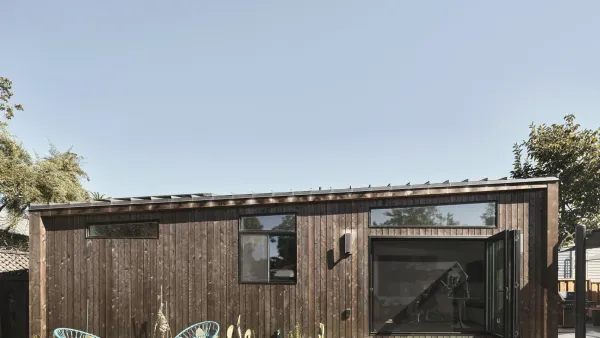
Los Angeles Streamlines ADU Permits with High-Design Templates
Los Angeles' ADU Standard Plan Program will offer homeowners a set of pre-approved designs that will save them time and money.
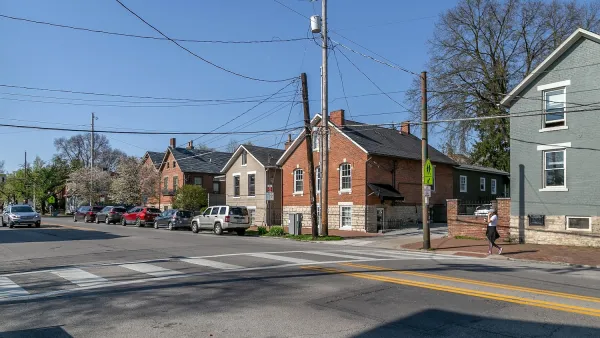
Columbus Introduces New Rules Allowing ADUs in all Residential Districts
The city’s recent zoning code updates include new rules for secondary housing units.
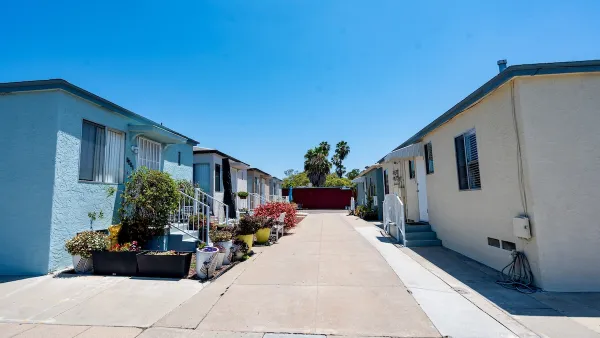
San Diego Begins to See Results of State Housing Law
Homeowners in Southern California are starting to take advantage of a state law that allows lot splitting and higher density in residential areas in an effort to increase housing supply and affordability.

Planetizen Federal Action Tracker
A weekly monitor of how Trump’s orders and actions are impacting planners and planning in America.

‘Going backwards:’ Baltimore mayor, students rally against state's transit funding plan
Maryland's proposed six-year plan provides no funding for Baltimore’s BMORE bus program and reduces its road maintenance funding.

Mamdani sent nearly 6,000 pied-à-terre tax warnings to homes that didn’t qualify
A judge has ordered the administration to cancel thousands of pied-à-terre tax notices after it sent 35% of them erroneously.

Newsom vetoes high-speed rail supervision bill after agency receives condemnatory audit
The audit found the CHSRA approved almost $600,000 in unallowable travel expenses.

Nation sees first electric plane-boat hybrid take off in public demo
The Viceroy Seaglider can fly at speeds of 180mph for up to 180 miles.

One of nation’s poorest counties to receive $6 billion data center
The developers estimate the project will create 200 permanent jobs and 1,000 temporary construction jobs.

FREE Course: Walkable City 1: Why Walkability?
After describing his path towards focusing on walkability as the essence of good planning, Jeff Speck marches through his five principal reasons for making more walkable places.
Reinventing Malls: Planning Alchemy—Turning Gray Fields Into Gold
The course focuses on the opportunities and imperatives that shape reinvention of mall sites.

City of Thousand Oaks
City of Wisconsin Rapids
Harvard University Graduate School of Design
The Architects Foundation
University of Cincinnati Online
Northern Illinois Transit Authority (NITA)
The Pocatello Development Authority
The Urban Renewal Agency of the City of Pocatello