Signal priority is a way to create faster, more regular bus service by adjusting length of stoplights for buses.


The signal priority system reportedly used in Los Angeles County should be a model for cities that want to speed up their public transit around the country, argues Kyle Ryan writes in Active Transportation Alliance. "Seventeen years ago, when Los Angeles County decided to give its buses priority at traffic signals, the buses experienced huge gains in speed and reliability," Ryan writes. The system senses buses coming to a stoplight and can adjust the length of red and green lights.
Cities like Chicago could use this type of system, not only to speed up public transit commutes, but also to space out buses more evenly. "Buses are dispatched every 3-10 minutes and can be instructed to slow down or speed up to avoid bunching with other buses," Ryan argues. This system means less waiting time at bus stops and shorter commute time, making transit more equitable for those not moving in cars.
Read the full story: Los Angeles ‘signals’ the way to better bus service
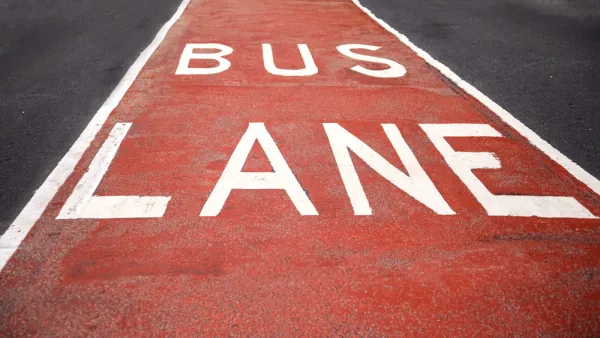
Moment of Zen: Watch L.A.'s New Bus Lane Outperform Car Traffic in Real Time
A pilot bus-only lane, originally intended to replace temporarily closed light rail service, has produced some big wins for transit advocates on social media.
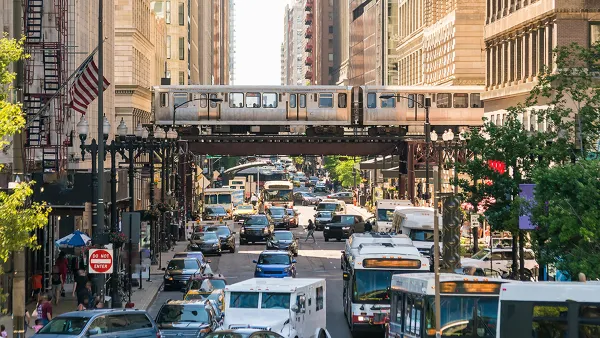
Bus/Bike Lanes Find Support in Chicago
A temporary bus/bike lane experiment could lead to permanent additions around the city.
Chicago Buses Slowing for Years
A new report from Active Transit Alliance outlines plans to get Chicago buses back up to speed.

Planetizen Federal Action Tracker
A weekly monitor of how Trump’s orders and actions are impacting planners and planning in America.

Eastern Nebraska is running out of electricity
Data centers and electrification are straining eastern Nebraska’s grid, throttling economic development.

Move over, LA: St. Louis gears up for Olympics, invests millions in downtown redevelopment
The Missouri city will host the 2028 Olympic soccer group stage and knockout matches.

Dallas releases zoning code overhaul to officials
The drafted overhaul is over 400 pages long.

NYC renovations for dangerous, ‘mercilessly crammed’ street delayed until 2027
Construction was supposed to begin this fall.

San Diego’s Midway Rising project gets greenlight from city council
The project looks to become the largest affordable housing development in California's history.

FREE Course: Walkable City 1: Why Walkability?
After describing his path towards focusing on walkability as the essence of good planning, Jeff Speck marches through his five principal reasons for making more walkable places.
Reinventing Malls: Planning Alchemy—Turning Gray Fields Into Gold
The course focuses on the opportunities and imperatives that shape reinvention of mall sites.

City of Rosemead
Rutgers University, Edward J. Bloustein School of Planning and Public Policy
One Hundred Miles
University of Michigan School for Environment and Sustainability (SEAS)
Hunter College, City University of New York (CUNY)
The Architects Foundation
City of Cambridge
The Pocatello Development Authority
The Urban Renewal Agency of the City of Pocatello