A new report from Active Transit Alliance outlines plans to get Chicago buses back up to speed.


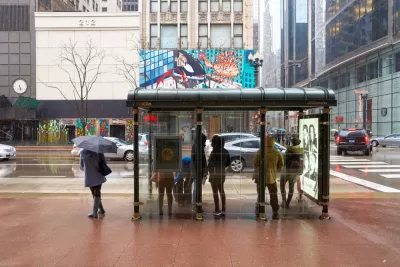
The Active Transit Alliance wrote a study on Chicago bus transit with input from thousands of bus riders, the CTA, CDOT, and the private sector. The news is not good for Chicago busses, which are slowing down and losing ridership. "The study notes that while more than half of CTA trips are made by bus, from 2015 to 2016 bus ridership in Chicago fell by more than 15 million rides (5.8 percent)," reports John Greenfield for Streetsblog Chigago. Meanwhile, the average speed of the bus which was almost 10 mph in 2007 decreased every year and is closer to 9 miles an hour in 2015, the last year studied.
The Active Transit Alliance also outlined ways to improve service and regain ridership, including dedicated bus lanes. Cities like New York, Los Angeles, Miami, and Seattle have between eight and 20 times as many miles of bus lanes; what's more, Chicago doesn't enforce its laws to keep traffic out of the lanes it has built. Other strategies to improve service include, pre-paying, all door boarding, and signal improvement.
FULL STORY: Active Trans Calls for Policies to Reverse Bus Ridership Slump

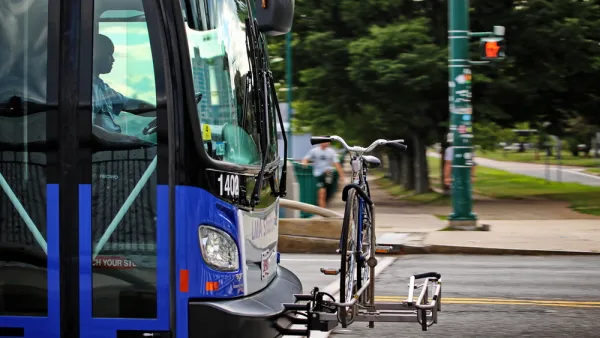
Speeding Up Buses in Boston
Boston's busiest buses are slow and have lost ridership, the LivableStreets Alliance proposes a plan for changing that.
Chicago Transit Authority Buses Inch Toward Prepay
A Chicago Transit Authority pilot program for prepayment is set to expand. Transit advocates can't wait for the agency to adopt the program around the city.
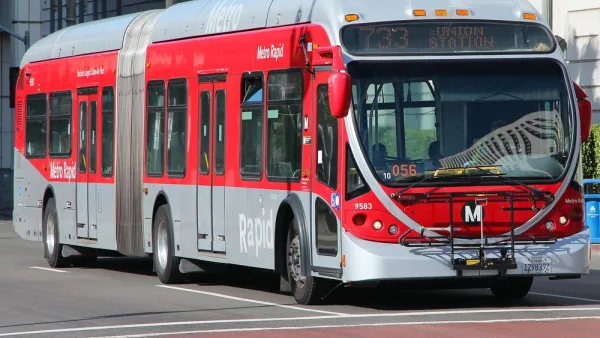
Los Angeles Signal Priority System Should Be a Model for U.S. Transit Systems
Signal priority is a way to create faster, more regular bus service by adjusting length of stoplights for buses.

The state-sanctioned urbicide of Austin
People don’t kill cities. Freeways do.

US to reduce Colorado River water deliveries to Mexico
A new Colorado Treaty amendment reduces Mexico’s Colorado River water allocation by 250,000 acre feet.

New Jersey’s second-largest city bans standalone data centers
Jersey City will continue to allow co-location facilities, such as those meant for research institutions that store their own data.

Amtrak not solely to blame for New Jersey commuter rail's unreliability, report finds
A new study from the Garden State Initiative found that NJ Transit’s budget grew 20% across a 4 year period, but reliability declined significantly over the same period.

EPA erases limits on planet-warming pollution from power plants
Under Monday’s plan, power plants would still have some limits on how much mercury, arsenic and other contaminants they can emit.

Phoenix announces new on-demand transit service, more frequent RAPID buses
Both new services will launch in October, and are part of Phoenix's Project Effective Access Solutions for Easing Congestion.

FREE Course: Walkable City 1: Why Walkability?
After describing his path towards focusing on walkability as the essence of good planning, Jeff Speck marches through his five principal reasons for making more walkable places.
Reinventing Malls: Planning Alchemy—Turning Gray Fields Into Gold
The course focuses on the opportunities and imperatives that shape reinvention of mall sites.

Eagle County Government
Harvard University Graduate School of Design
Nashville Planning Department
The Architects Foundation
University of Cincinnati Online
The Pocatello Development Authority
The Urban Renewal Agency of the City of Pocatello
Journal of the American Planning Association