Developers have announced plans for a $1.5 billion, multi-phase development to be located in Turtlecreek Township, in Warren County, Ohio.


"With plans to build about 50 homes and a commercial plaza resembling a 'town center,' a developer is planting a seed that over the next few decades could grow into essentially a built-from-scratch village in rural Warren County," reports Kaitlin Schroeder.
The developer is Otterbein Senior Lifestyle Choices, the development is called Union Village, and the county is located just northeast of Cincinnati. The price tag for this master-planned mega-project: $1.5 billion.
"The long-term goal is to build out 4,500 homes through a mix of single-family homes, condos and apartments, attracting 12,000 new residents to Turtlecreek Township," adds Schroeder.
The article includes more details about the construction plan and footprint of the project. Also included in the article: the tax incentive package approved by Turtlecreek Township to pave the way for the development. According to Schroeder, "the township approved creating tax increment financing districts that would mean 50 percent tax cuts for 30 years on most of the project where there's a mix of residential and commercial, and would cut all property taxes on smaller areas of commercial development for 30 years."
Read the full story: Warren County developers plan $1.5 billion mixed-use village center

Opinion: When Transit-Oriented Suburban Mega-Projects Go Too Far
The architecture critic for the Globe and Mail finds fault with two massive development proposals in the Toronto suburbs.
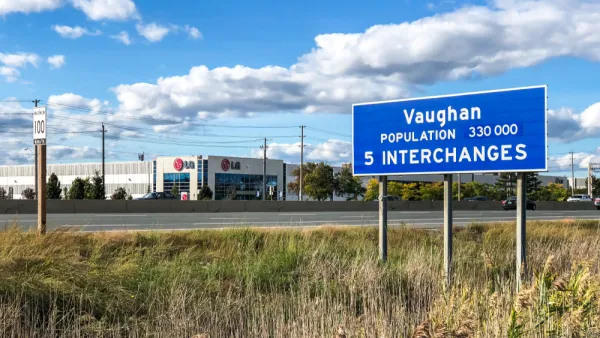
Council Votes to Allow Development on the York Region's Greenbelt
The York Regional Council took a significant step toward allowing development on a large chunk of the area's greenbelt—a move opponents say will set a dangerous precedent.
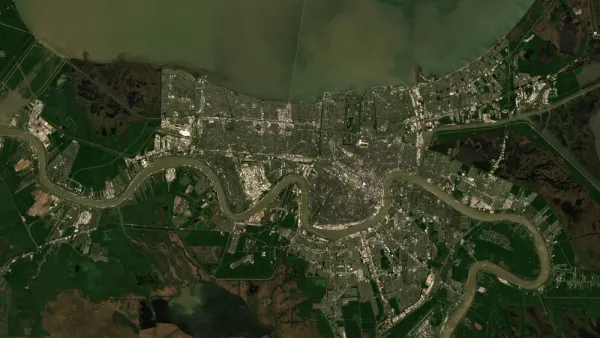
Satellite Imagery of a Decade's Transformation
Trends in land use and development are made obvious with satellite imagery tracking changes during the 2010s.

Planetizen Federal Action Tracker
A weekly monitor of how Trump’s orders and actions are impacting planners and planning in America.

California plans to bury El Niño’s downpour
If the state plays its cards right, it may be able to store a billion acre-feet of El Niño’s water in aquifers.

Desperate measures: Advocates weigh draining Lake Powell to fill Colorado River
Draining the reservoir could reduce evaporation losses by a couple hundred thousand acre-feet.

Los Angeles just elected an urban planner as its mayor
Transportation analysts are optimistic that Raman will be more aggressive in addressing transit issues than Bass.

Mamdani’s pied-à-terre tax survives legal challenge
A panel of judges found that the plaintiffs failed to demonstrate injury as a result of New York City's implementation of the tax.

Eastern Nebraska is running out of electricity
Data centers and electrification are straining eastern Nebraska’s grid, throttling economic development.

FREE Course: Walkable City 1: Why Walkability?
After describing his path towards focusing on walkability as the essence of good planning, Jeff Speck marches through his five principal reasons for making more walkable places.
Reinventing Malls: Planning Alchemy—Turning Gray Fields Into Gold
The course focuses on the opportunities and imperatives that shape reinvention of mall sites.

City of Rosemead
Rutgers University, Edward J. Bloustein School of Planning and Public Policy
One Hundred Miles
University of Michigan School for Environment and Sustainability (SEAS)
Hunter College, City University of New York (CUNY)
The Architects Foundation
City of Cambridge
Montrose County
The Pocatello Development Authority