The Niagara Frontier Transportation Authority would like to expand its 6.4-mile Metro rail line. It's an idea that failed before, due to outcry from the public. Has the public changed enough to allow this change to come to the region?


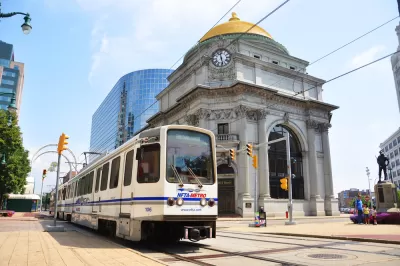
"Plans to expand the Metro rail from the University at Buffalo South Campus in Buffalo to the North Campus in Amherst ran aground in the 1980s and 1990s in the face of stiff community opposition and a lack of funding," according to an article by Stpehen T. Watson.
For the first time since the end of the last century, "government officials are again pushing to extend the region's Metro rail system from Buffalo into Amherst," reports Wtason. The question is whether the same residents who opposed the project before will support it this time around.
"Some critics remain, but the organized opposition that sank the Metro expansion plans a generation ago hasn't developed. In fact, in another dramatic change, some business owners and community leaders are enthusiastically embracing the idea," according to Watson.
The remainder of the article digs into more detail about the past and present politics of transit expansion in Buffalo, and begins to speculate about how the expansion would change the lives of those living and working along the proposed route.
Read the full story: Will Amherst embrace Metro rail extension this time?
Badly Needed Light Rail Funding to the Rescue in Buffalo
State budget wheeling and dealing has yielded $100 million in funding for repairs on the Buffalo Metro Rail system, according to reports.
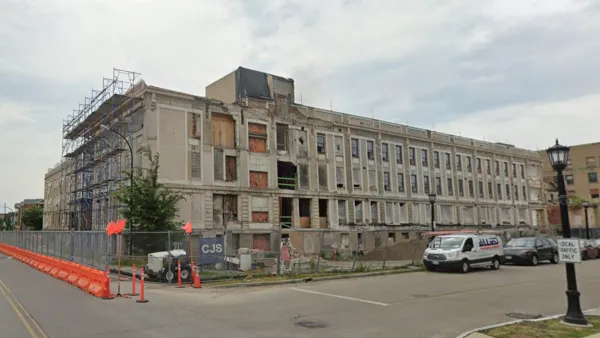
Buffalo Hospital to Become 80 Housing Units
The former Millard Fillmore Gates Circle hospital building is part of a larger development aimed at bringing affordable housing to western New York.
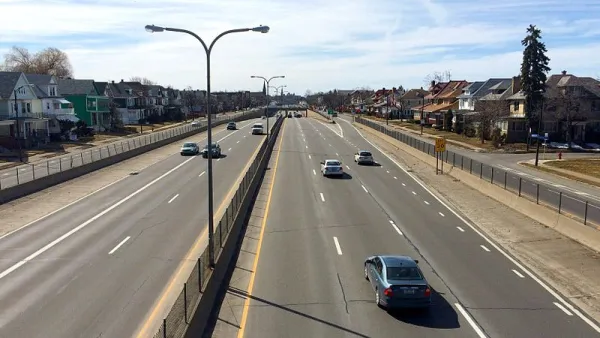
Buffalo Residents Push Back on Proposed Cap Park
State and local officials say the $1 billion project will heal neighborhoods divided by the Kensington Expressway, but community members say the proposed plan will exacerbate already poor air quality in the area.

Planetizen Federal Action Tracker
A weekly monitor of how Trump’s orders and actions are impacting planners and planning in America.

California plans to bury El Niño’s downpour
If the state plays its cards right, it may be able to store a billion acre-feet of El Niño’s water in aquifers.

Desperate measures: Advocates weigh draining Lake Powell to fill Colorado River
Draining the reservoir could reduce evaporation losses by a couple hundred thousand acre-feet.

Mamdani’s pied-à-terre tax survives legal challenge
A panel of judges found that the plaintiffs failed to demonstrate injury as a result of New York City's implementation of the tax.

Eastern Nebraska is running out of electricity
Data centers and electrification are straining eastern Nebraska’s grid, throttling economic development.

Seattle passes record-breaking transit services expansion
Proposition 1 will double the city’s transit tax to add 95,000 more bus trips and preserve 180,000 bus trips annually.

FREE Course: Walkable City 1: Why Walkability?
After describing his path towards focusing on walkability as the essence of good planning, Jeff Speck marches through his five principal reasons for making more walkable places.
Reinventing Malls: Planning Alchemy—Turning Gray Fields Into Gold
The course focuses on the opportunities and imperatives that shape reinvention of mall sites.

City of Rosemead
Rutgers University, Edward J. Bloustein School of Planning and Public Policy
One Hundred Miles
University of Michigan School for Environment and Sustainability (SEAS)
Hunter College, City University of New York (CUNY)
The Architects Foundation
City of Cambridge
Montrose County
The Pocatello Development Authority