So far, the Hyperloop's biggest supporters have made a lot of big promises, but continue to fall short on deliverables.



"The self-proclaimed transportation of the future is running late, short and slow," report Georgia Wells and Eliot Brown.
A public test of the Hyperloo technology, touted by Hyperloop One as its "Kitty Hawk Moment," was originally promised before the end of 2016. Hoperloop One "later put off the deadline to March 31, which it also missed. Last month, Hyperloop One’s general counsel said at a public hearing the company plans to hold a public test of a prototype "by May or June,'" according to the article.
"Meanwhile, [Hyperloop One] has slashed the length of the test track for the prototype by more than 80%, meaning the technology won’t be able to reach the planned top speed of about 750 miles an hour, previously a key feature of the planned public display.
Hyperloop's media momentum picked up last May, when Hyperloop One pulled off a two-second demonstration in the Nevada desert, but very recently national publications have started to push back on the ambitious delivery schedule and fantastical promises made of the still unrealized technology.
[The Wall Street Journal article might be behind a paywall for some readers.]
Read the full story: Hyperloop One Taps the Brakes on Testing

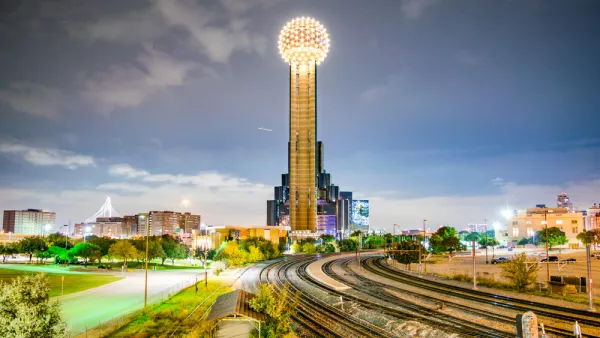
Editorial: Skip the Hyperloop—Texas Should Stick to the Basics
Texas planners are eager for a six-minute trip between Fort Worth and Dallas. But the Dallas Morning News is wary of the hype.
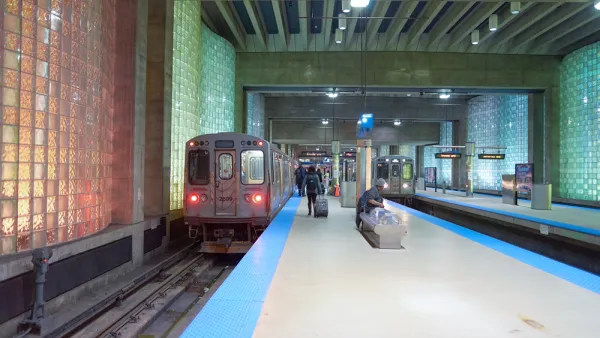
High-Speed Transit Tunnels to O'Hare Airport Could Begin Construction Within Months
The 16-mile route itself from downtown Chicago is still being negotiated. Passengers will be transported in what Elon Musk's Boring Company calls an "electric skate" at speeds up to 150 mph for the 12-minute trip.
Hyperloop Planning Underway in Colorado
Very preliminary studies are underway in Colorado about what it would take to build a 360-mile Hyperloop system in the Denver region.

Planetizen Federal Action Tracker
A weekly monitor of how Trump’s orders and actions are impacting planners and planning in America.

Amtrak, CN end decades-long dispute with eight-year agreement
The new operating agreement establishes an updated framework for the companies to work together, including processes to resolve disputes.

Judges permit Denver to divert 77,000 acre feet from the Colorado River for reservoir expansion
Overuse and climate change have caused the Colorado River’s water levels to plummet.

NYC DOT wants faster, more permanent street upgrades
The city is examining ways to build more concrete infrastructure without getting entangled in 'decades-long' projects.

'Something we’ve never seen before:' rising utility rates could strain city finances nationwide
Data centers, climate change and other factors have caused utility rates in the United States to increase by 38% since 2020.

Trump to overrule local leaders, lease millions of acres of America’s Pacific Island territories’ seafloors to mining companies
International law says that the Indigenous people of America’s territories have a right to prior and informed consent regarding projects that impact their countries.

FREE Course: Walkable City 1: Why Walkability?
After describing his path towards focusing on walkability as the essence of good planning, Jeff Speck marches through his five principal reasons for making more walkable places.
Reinventing Malls: Planning Alchemy—Turning Gray Fields Into Gold
The course focuses on the opportunities and imperatives that shape reinvention of mall sites.

Harvard University Graduate School of Design
KFH Group Inc.
Greater Baltimore Committee
The Architects Foundation
University of Cincinnati Online
The Pocatello Development Authority
The Urban Renewal Agency of the City of Pocatello