Very preliminary studies are underway in Colorado about what it would take to build a 360-mile Hyperloop system in the Denver region.


Tamara Chuang reports on the progress of a feasibility study for a Hyperloop system proposed for the Denver area.
The feasibility study is part of the ongoing "Global Challenge" put on by Hyperloop One. The "Rocky Mountain Hyperloop" team was one of ten global finalists announced in September 2017, as reported on by Chuang at that time.
Now Chuang checks in with the status of the feasibility study, finding the team settling on a station location at Denver International Airport and seeking public comment. "There is much to be done, not to mention finding financing for the 360-mile route connecting DIA to Pueblo, Fort Collins and Vail," writes Chaung. "The state’s initial report put that cost at $24 billion and estimated it could ultimately handle 45 million trips in 2040 and generate $2 billion a year in revenues."
The Rocky Mountain Hyperloop team has backing from the Colorado Department of Transportation and includes employees of Denver-based companies.
Read the full story: Hyperloop’s first stop: DIA, as Colorado enters final leg to study feasibility of $24B transportation project

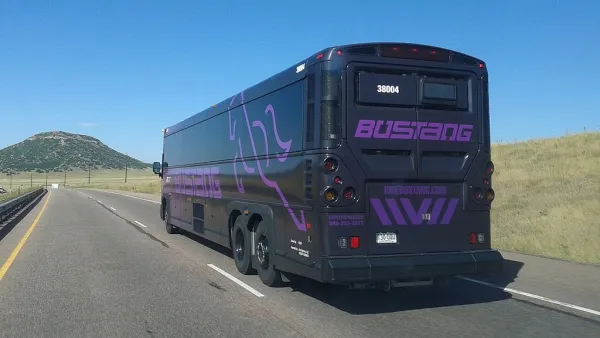
As Colorado Grows, Buses Become More Important for Regional Transportation
Bustang regional bus service is growing fast as people look to navigate a growing state.
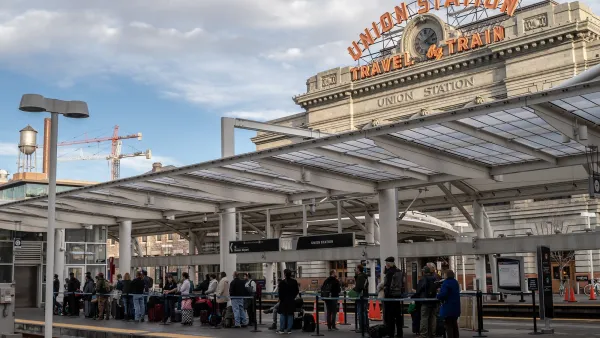
Colorado announces new train between Denver and Fort Collins
The plan requires an agreement with BNSF, which owns the tracks, and Amtrak, which will likely operate the service.
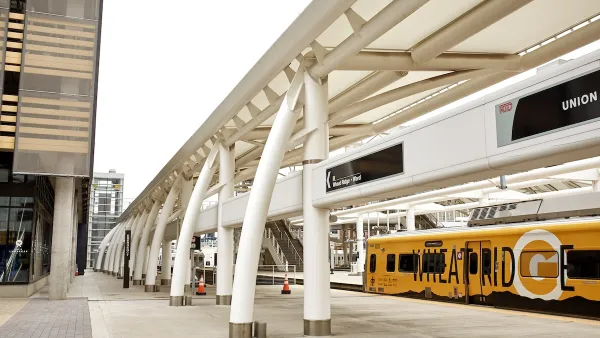
Colorado Officials Plan Denver-Fort Collins Rail Service by 2029
About $40 million a year in state funding from new transportation fees could be the key to getting a short passenger rail line from Denver to Fort Collins up and running in the next four years, Colorado officials said last week.

Planetizen Federal Action Tracker
A weekly monitor of how Trump’s orders and actions are impacting planners and planning in America.

Amtrak, CN end decades-long dispute with eight-year agreement
The new operating agreement establishes an updated framework for the companies to work together, including processes to resolve disputes.

Judges permit Denver to divert 77,000 acre feet from the Colorado River for reservoir expansion
Overuse and climate change have caused the Colorado River’s water levels to plummet.

NYC DOT wants faster, more permanent street upgrades
The city is examining ways to build more concrete infrastructure without getting entangled in 'decades-long' projects.

'Something we’ve never seen before:' rising utility rates could strain city finances nationwide
Data centers, climate change and other factors have caused utility rates in the United States to increase by 38% since 2020.

Trump to overrule local leaders, lease millions of acres of America’s Pacific Island territories’ seafloors to mining companies
International law says that the Indigenous people of America’s territories have a right to prior and informed consent regarding projects that impact their countries.

FREE Course: Walkable City 1: Why Walkability?
After describing his path towards focusing on walkability as the essence of good planning, Jeff Speck marches through his five principal reasons for making more walkable places.
Reinventing Malls: Planning Alchemy—Turning Gray Fields Into Gold
The course focuses on the opportunities and imperatives that shape reinvention of mall sites.

Harvard University Graduate School of Design
KFH Group Inc.
Greater Baltimore Committee
The Architects Foundation
University of Cincinnati Online
The Pocatello Development Authority
The Urban Renewal Agency of the City of Pocatello