Writing that a $320 million transportation finance bill "violates my user-pay, pay-as-you-go philosophy toward transportation funding," Governor C.L. "Butch" Otter explained why he allowed the bill to become law without his signature.


The bill, SB 1206, authorizes Idaho to issue $300 million in Grant Anticipation Revenue Vehicles (GARVEES) bonds, a federal debt-financing tool that allows states to borrow based on anticipated federal gas tax revenue.
It "also extends a provision that takes part of a general fund surplus and devotes it to transportation projects," reports the Idaho Mountain Express. "Finally, it takes 1 percent of the state sales tax and spends it on transportation projects."
Those last two funding sources particularly provoked the ire of Republican Gov. C.L. "Butch" Otter, currently serving his third term as governor.
"I am troubled by the determination...that General Fund revenue now must be an ingredient of any transportation revenue plan," he wrote in his April 11 letter [pdf] to the secretary of state explaining his decision to allow the bill to become law without his signature.
I have said repeatedly and clearly that I oppose putting transportation in direct competition with education and other constitutional and statutory commitments for General Fund revenue.
Beyond what I consider its unwelcome draw on sales tax receipts, I withhold my signature from this legislation because it includes a dicey permanent diversion of funding from other sources.
As for the GARVEE bonds, Otter bemoaned that the state is increasing bonded indebtedness but was glad that they provided a "noncompetitive revenue source" (i.e., they didn't compete with other state needs, for large construction projects).
Otter also opposed the bill eliminating a requirement that some existing revenue be used only for maintenance and repairs.
Otter acknowledged the hard-fought legislative battle in 2015 over raising the 25-cent gas tax, set in 1996, by seven cents [total state gas tax is 33 cents per gallon, just above the national average of 30.1 cents per gallon, per API], but indicated that a wide gap remains. He is not alone, as noted in the post on the surprise signing of the gas hike bill:
Republican Sen. Marv Hagedorn said 7 cents per gallon would only scratch the surface of what Idaho needs to maintain its highways. He urged lawmakers to craft a more ambitious plan.
As written shortly before the California legislature approved an historic 12-cent gas tax increase on April 6, gas tax increases have their limits, and Otter mentioned them in his letter.
"Our transportation streams are tenuous, subject to federal reduction and too dependent on fuel tax revenue that is relatively diminishing as vehicles become more and more efficient."
The "federal reduction" may be a reference to President Trump's favoring the conservative Heritage Foundation's approach to federal transportation funding known as devolution, which calls for either elimination of the federal gas tax or reducing it to 3.7 cents per gallon.
While Idaho has no term limits for governor, Otter's letter implied he may not be seeking a fourth term. He had this message for his successor:
[T]he mission of providing a more fiscally sound and sustainable answer to Idaho's transportation funding need will be passed along to the next governor and legislature.
I hope future deliberations will more broadly consider such measures as a fee on vehicle miles traveled to supplement the fuel tax and vehicle registration fees as we pay for the roads that safely connect us in order [to] effectively grow the economy that sustains us.
It's noteworthy that Otter suggests that VMT fees supplement, as oppose to replace, gas taxes as is now being done in Oregon.
Hat tip to AASHTO Journal.
FULL STORY: Legislature’s $320 million transportation plan becomes law

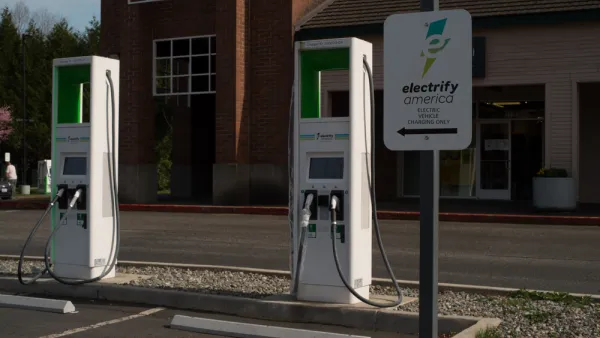
A Green Governor Vetoes Electric Vehicle Legislation
Washington Gov. Jay Insee distinguished himself in the 2020 presidential Democratic primary as the "climate candidate," yet he vetoed a section of a transportation electrification bill that set a goal of ending sales of gas-powered cars by 2030.
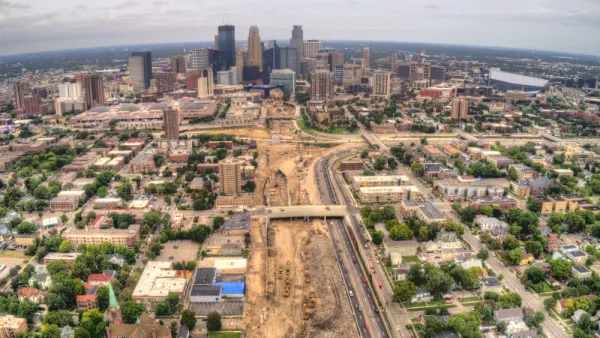
Proposed Gas Tax Hike Exposes Minnesota's Road Subsidy
After Minnesota's new Democratic Gov. Tim Walz proposed a 20-cents gas tax hike over two years, even leaders in his own party were caught off-guard, but one-third of the tax increase will replace the diversion of general funds to roads.
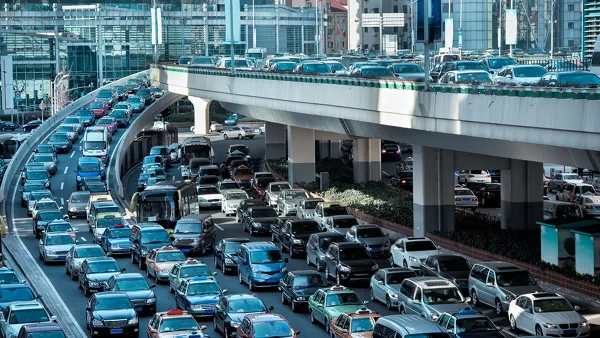
State Transportation Officials Ask Congress to Hike Transportation User Fees
It's not funding Trump's much-talked-about infrastructure package, but the 2020 termination date of the FAST Act has state transportation officials urging Congress to hike fuel taxes to sustain the Highway Trust Fund.

Planetizen Federal Action Tracker
A weekly monitor of how Trump’s orders and actions are impacting planners and planning in America.

The state-sanctioned urbicide of Austin
People don’t kill cities. Freeways do.

US to reduce Colorado River water deliveries to Mexico
A new Colorado Treaty amendment reduces Mexico’s Colorado River water allocation by 250,000 acre feet.

5 New England states march closer to 800 megawatt wind energy project
Securing federal approval for the project may be complicated under the Trump administration, which has historically been hostile towards domestic wind power.

Baltimore to break ground on $50 million Transit Priority Project
The project will bring faster bus trips, safer streets and better bike connections to Baltimore.

Airbnb launches $250 million 'last-dollar financing' housing accelerator, makes first investment in Austin
The company will put $6.4 million towards affordable housing development in Texas’ capital.

FREE Course: Walkable City 1: Why Walkability?
After describing his path towards focusing on walkability as the essence of good planning, Jeff Speck marches through his five principal reasons for making more walkable places.
Reinventing Malls: Planning Alchemy—Turning Gray Fields Into Gold
The course focuses on the opportunities and imperatives that shape reinvention of mall sites.

Eagle County Government
Harvard University Graduate School of Design
Nashville Planning Department
The Architects Foundation
University of Cincinnati Online
The Pocatello Development Authority
The Urban Renewal Agency of the City of Pocatello
Journal of the American Planning Association