Vox offers a feature length article, with lots of visual references, that tells the story of the ecological risks inherent with any plan to build a wall along the border between the United States and Mexico.


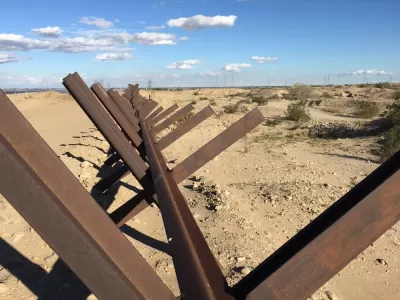
Writing for Vox, Eliza Barclay and Sarah Frostenson have produced a long-read feature article that examines the ecological risks of the Trump Administration's proposed border wall between the United States and Mexico.
While the effectiveness of a border wall in controlling the flow of people or drugs across the border is a subject of heated public debate, less attention has scrutinized the border wall's potential risk to habitat of a varied and unique ecosystems—many of which are populated by already threatened species of animals and plants.
According to Barclay and Frostenson, it's "undeniable" that the 654 miles of walls and fences already lining the US-Mexico border have made a mess of the environment: "They’ve cut off, isolated, and reduced populations of some of the rarest and most amazing animals in North America, like the jaguar and ocelot. They’ve led to the creation of miles of roads through pristine wilderness areas. They’ve even exacerbated flooding, becoming dams when rivers have overflowed."
Normally the potential environmental impacts of any development project would be subject to environmental review, but "ever since the passage of the Real ID Act of 2005, DHS has had the power to waive most environmental reviews in the name of national security."
Hanging in the balance along the 2,000 miles of border not yet separated by a fence or wall is the potential of damage of unprecedented scale and scope to wildlife habitat if the Trump Administration succeeds in its efforts to build its long-promised wall. The article is a detailed look at many of the geographic and natural reasons along the border, and the animals and environments that would be at risk to the effects of the border wall.
Read the full story: The ecological disaster that is Trump’s border wall: a visual guide

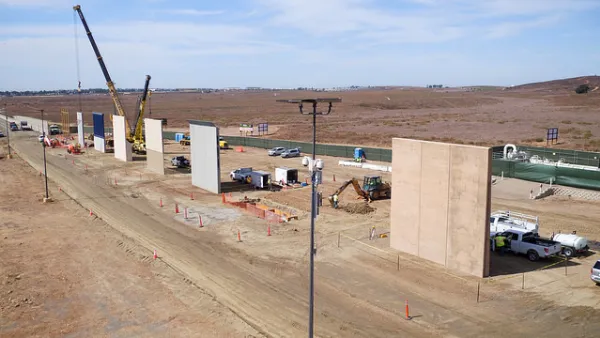
Homeland Security Waives More Than 30 Laws to Expedite Border Wall
In the drive to begin construction in New Mexico, the Trump Administration has bypassed dozens of federal environmental regulations.
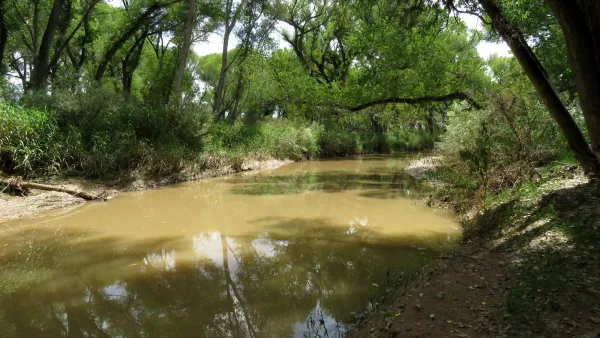
The Environmental Consequences of the Arizona Border Wall
A segment of the planned U.S.-Mexico border wall would cut across the San Pedro River and threaten the area’s wildlife and plants.
Prototypes for Trump's Border Wall Now on View in California
The U.S.-Mexico border between San Diego and Tijuana received eight controversial additions over the weekend.

Planetizen Federal Action Tracker
A weekly monitor of how Trump’s orders and actions are impacting planners and planning in America.

Amtrak, CN end decades-long dispute with eight-year agreement
The new operating agreement establishes an updated framework for the companies to work together, including processes to resolve disputes.

Judges permit Denver to divert 77,000 acre feet from the Colorado River for reservoir expansion
Overuse and climate change have caused the Colorado River’s water levels to plummet.

Alabama scores up to $2.5 billion federal loan for largest infrastructure project in state’s history
The Mobile River Bridge and Bayway Project aims to ease congestion at Alabama’s worst bottleneck.

Trump is considering data centers on 6 states' public land — some state officials say they had no idea
If the administration approves the proposed projects, data center and data center-related developments will cover 17,600 acres of public land.

Despite court ruling, Trump is keeping nearly all wind projects in the US on hold
At least 110 wind energy projects have not heard from the government since a federal judge ruled that the Trump administration's freeze on wind turbine clearances was likely illegal.

FREE Course: Walkable City 1: Why Walkability?
After describing his path towards focusing on walkability as the essence of good planning, Jeff Speck marches through his five principal reasons for making more walkable places.
Reinventing Malls: Planning Alchemy—Turning Gray Fields Into Gold
The course focuses on the opportunities and imperatives that shape reinvention of mall sites.

KFH Group Inc.
Greater Baltimore Committee
Eagle County Government
The Architects Foundation
University of Cincinnati Online
The Pocatello Development Authority
The Urban Renewal Agency of the City of Pocatello