A segment of the planned U.S.-Mexico border wall would cut across the San Pedro River and threaten the area’s wildlife and plants.


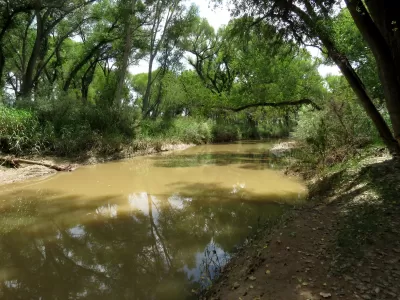
The federal government plans to build a border across the San Pedro River in the San Pedro Riparian National Conservation Area in Arizona. The construction would involve cutting down Freemont cottonwood trees, which residents and experts say are integral to the ecology of the area.
"The cottonwoods not only provide bank stabilization and shade, but safe harbor for the millions of birds which pass through the desert oasis on their annual migrations," writes Shar Porier. A wall would also stop the flow of the river, cause debris backups, and keep wildlife from crossing.
"The Bureau of Land Management (BLM) is charged with the preservation of the SPRNCA which relies on the river and currently awaits a court ruling on a claim for water rights its scientists say is necessary to maintain the 57,000 acre national conservation area and its threatened and endangered species," notes Porier.
Read the full story: Border wall construction to begin on San Pedro
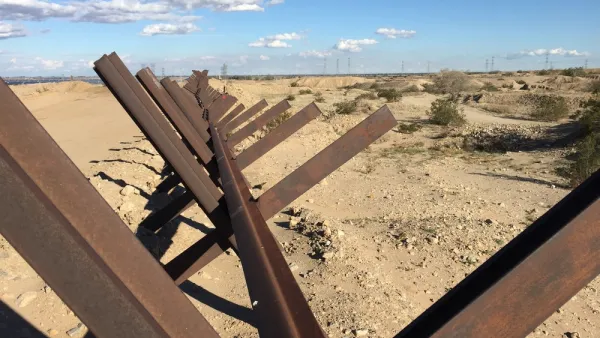
Trump's Border Wall Would Bring 'Ecological Disaster'
Vox offers a feature length article, with lots of visual references, that tells the story of the ecological risks inherent with any plan to build a wall along the border between the United States and Mexico.
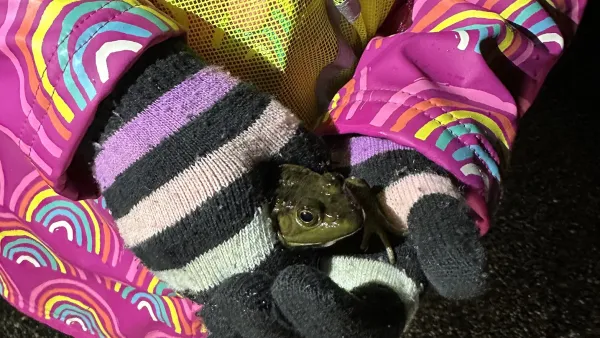
Once a year, Maine roads become highways for amphibians
The 'Big Night' brings out volunteers to help frogs, salamanders, and other migrating amphibians cross roads to reach their breeding grounds.

San Diego Sues DHS, DOD Over Razor Wire Near Mexico Border
The city says U.S. Marines trespassed on city land to install fencing that damages sensitive habitat in an area designated as conservation land.

Planetizen Federal Action Tracker
A weekly monitor of how Trump’s orders and actions are impacting planners and planning in America.

California plans to bury El Niño’s downpour
If the state plays its cards right, it may be able to store a billion acre-feet of El Niño’s water in aquifers.

Desperate measures: Advocates weigh draining Lake Powell to fill Colorado River
Draining the reservoir could reduce evaporation losses by a couple hundred thousand acre-feet.

Chicago voters approve permanent festival grounds, penalty for vacant property owners
Currently, major summer and fall festivals take over public parks for weeks at a time, drawing criticism from nearby residents

NYC votes to cut outdoor dining red tape, speed up permitting
New York City also voted to allow the Department of Transportation to begin work on urgent projects before notifying elected officials.

California appears to reject Prop. 45
The proposition would have expanded the projects that qualify for a streamlined environmental review, effectively paring down the California Environmental Quality Act.

FREE Course: Walkable City 1: Why Walkability?
After describing his path towards focusing on walkability as the essence of good planning, Jeff Speck marches through his five principal reasons for making more walkable places.
Reinventing Malls: Planning Alchemy—Turning Gray Fields Into Gold
The course focuses on the opportunities and imperatives that shape reinvention of mall sites.

City of Rosemead
Rutgers University, Edward J. Bloustein School of Planning and Public Policy
One Hundred Miles
Hunter College, City University of New York (CUNY)
The Architects Foundation
University of Cincinnati Online
City of Cambridge
Montrose County
The Pocatello Development Authority