Lakewood celebrated Arbor Day and its 43rd year as a Tree City USA community with a youth-led tree planting event at O’Kane Park, reinforcing its long-standing commitment to urban forestry and environmental education.


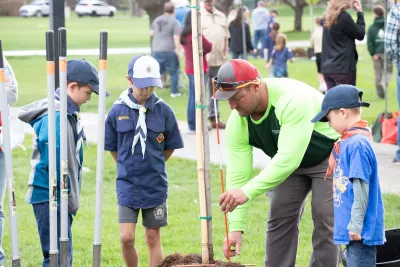
The City of Lakewood, Colorado celebrated Arbor Day on May 1 at O’Kane Park, marking its 43rd year as a Tree City USA community. Local scout troops joined city officials, including Council Member Isabel Cruz and representatives from the Colorado State Forest Service, for a day of tree planting, environmental education, and community engagement. The event began with a proclamation recognizing the importance of trees, followed by remarks on environmental stewardship and a visit from Smokey Bear to inspire the young participants.
Scouts from Packs 437, 537, and 847 worked in teams alongside Lakewood forestry staff to plant deciduous trees throughout the park. As part of the hands-on activity, they learned proper planting techniques and safety practices, applied mulch, and even gave their newly planted trees names. Forestry Supervisor Eric Shardlow provided guidance on long-term tree care and emphasized the ecological, social, and health benefits of a diverse and thriving urban forest.
Lakewood’s Arbor Day event not only promoted environmental education but also reinforced the city’s commitment to sustainable urban forestry practices. In 2024, the city planted more than 500 trees and continues to meet the Arbor Day Foundation’s standards for Tree City USA status, including maintaining a tree board, having a tree ordinance, and investing in urban forestry. The celebration highlighted Lakewood’s ongoing efforts to enhance its green infrastructure and engage the next generation in environmental stewardship.
Read the full story: Lakewood celebrates Arbor Day and 43 years of Tree City USA
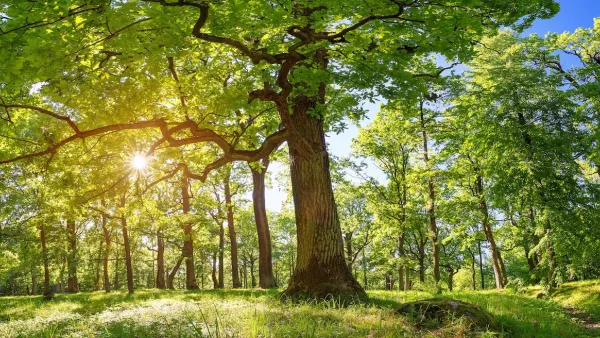
Oak Survival in the Great Lakes: Adapting to a Changing World
Climate change is endangering oaks in the Great Lakes region by increasing their vulnerability to pests, diseases, and extreme weather, threatening their vital ecological role.

Planting for Change: How Trees Are Powering Climate Action
"Combating Climate Change with Trees" highlights how Southern California communities are strategically planting and nurturing urban forests to cool neighborhoods, improve air quality, and advance environmental justice.

LA’s Tree Emergency Goes Beyond Vandalism
After a vandal destroyed dozens of downtown LA trees, Mayor Karen Bass vowed to replace them. Days later, she slashed the city’s tree budget.

Planetizen Federal Action Tracker
A weekly monitor of how Trump’s orders and actions are impacting planners and planning in America.

California plans to bury El Niño’s downpour
If the state plays its cards right, it may be able to store a billion acre-feet of El Niño’s water in aquifers.

Desperate measures: Advocates weigh draining Lake Powell to fill Colorado River
Draining the reservoir could reduce evaporation losses by a couple hundred thousand acre-feet.

Mamdani’s pied-à-terre tax survives legal challenge
A panel of judges found that the plaintiffs failed to demonstrate injury as a result of New York City's implementation of the tax.

Eastern Nebraska is running out of electricity
Data centers and electrification are straining eastern Nebraska’s grid, throttling economic development.

Seattle passes record-breaking transit services expansion
Proposition 1 will double the city’s transit tax to add 95,000 more bus trips and preserve 180,000 bus trips annually.

FREE Course: Walkable City 1: Why Walkability?
After describing his path towards focusing on walkability as the essence of good planning, Jeff Speck marches through his five principal reasons for making more walkable places.
Reinventing Malls: Planning Alchemy—Turning Gray Fields Into Gold
The course focuses on the opportunities and imperatives that shape reinvention of mall sites.

City of Rosemead
Rutgers University, Edward J. Bloustein School of Planning and Public Policy
One Hundred Miles
University of Michigan School for Environment and Sustainability (SEAS)
Hunter College, City University of New York (CUNY)
The Architects Foundation
City of Cambridge
Montrose County
The Pocatello Development Authority