A new one-stop shop for green infrastructure solutions is available to planners and engineers challenged by flooding.


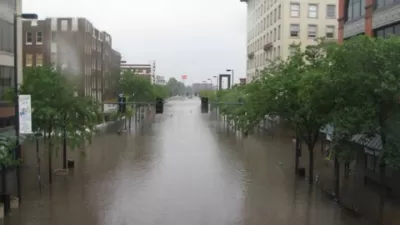
"Naturally Resilient Communities is an interactive tool featuring 30 case studies of places that rely on nature-based solutions to protect themselves against climate threats like flooding and coastal erosion," reports Krutika Pathi in an article for CityLab.
The tool is the work of a partnership between the Nature Conservancy and the American Planning Association, American Society of Civil Engineers, National Association of Counties, and the Association of State Floodplain Managers. The tool's series of case studies "reveal stories of cities that have rebuilt after devastating storms."
The interactive features of the tool allow users to select a risk (e.g., coastal flooding or stormwater flooding), and then review a menu of potential solutions, as already exemplified by relevant case studies.
Read the full story: A Green Infrastructure Guidebook for City Planners

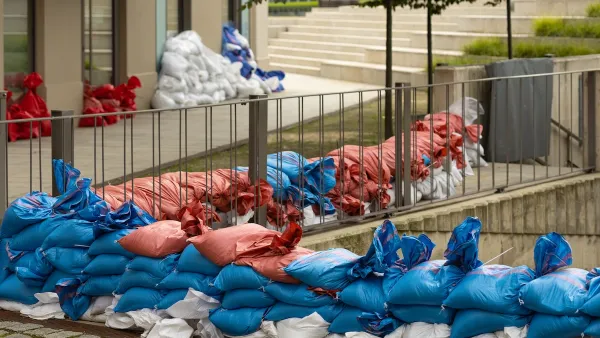
How US Communities Are Building Resilience Against Flooding
Flooding causes over $400 billion in damage in the United States every year.
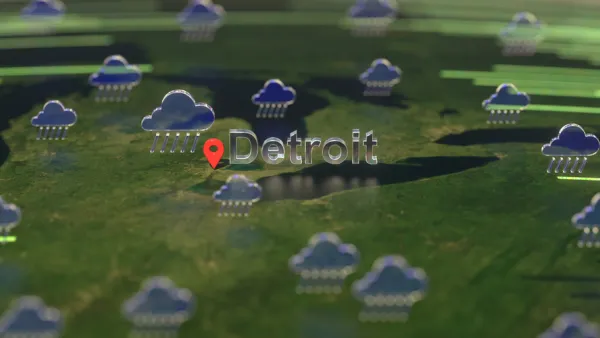
Flooding in the Midwest Shows There's No Refuge From Climate Change
While projections say areas of the U.S. Midwest around the Great Lakes will become more hospitable as the climate changes, stormwater and flooding is still a challenge in a surprising number of locations.

The Great Flood of 2019, Visualized
The New York Times has published a spectacular mapping and data project to show the extent of flooding along the Mississippi River and its tributaries in the winter, spring, and summer of 2019.

Planetizen Federal Action Tracker
A weekly monitor of how Trump’s orders and actions are impacting planners and planning in America.

Amtrak, CN end decades-long dispute with eight-year agreement
The new operating agreement establishes an updated framework for the companies to work together, including processes to resolve disputes.

Judges permit Denver to divert 77,000 acre feet from the Colorado River for reservoir expansion
Overuse and climate change have caused the Colorado River’s water levels to plummet.

Idaho may see an 18% drop in federal surface transit funding — the largest estimated cut in the US
Transit systems in rural communities are much more reliant on federal funding to provide their services.

How ‘post-disaster gentrification’ alters neighborhoods after natural calamities
After hurricanes, fires or other calamities, the original residents of a community are often replaced by younger, wealthier residents.

Maryland local governments examine if they should have more power to raise property taxes
Maryland’s housing market is out of reach for the majority of moderate-income residents.

FREE Course: Walkable City 1: Why Walkability?
After describing his path towards focusing on walkability as the essence of good planning, Jeff Speck marches through his five principal reasons for making more walkable places.
Reinventing Malls: Planning Alchemy—Turning Gray Fields Into Gold
The course focuses on the opportunities and imperatives that shape reinvention of mall sites.

Harvard University Graduate School of Design
KFH Group Inc.
Greater Baltimore Committee
The Architects Foundation
University of Cincinnati Online
The Pocatello Development Authority
The Urban Renewal Agency of the City of Pocatello