Greg David argues that zoning rules limiting Manhattan's Garment District to manufacturers are obsolete. Without them, underutilized space could be put to better use.



New York City is considering changes to 1980s zoning rules restricting the uses possible in the Garment District. Here, Greg David makes the case that the situation has been studied long enough.
Claiming that the area's continued industrial viability amounts to so much fake news, David writes, "myths will need to be abandoned and Manhattan Borough President Gale Brewer must understand that reform isn't being rushed, but rather has been studied forever."
The restrictions date back to Ed Koch's term as mayor. The idea was to clean up then-seedy Times Square and preserve space for apparel businesses. However, "zoning couldn't counteract the global forces sweeping the industry. Today apparel manufacturing jobs in the city have dropped below 14,000, of which about 5,100 are in the district. Buildings are underutilized, and some are deteriorating because landlords have little incentive to invest in them."
Read the full story: Free the Garment District!

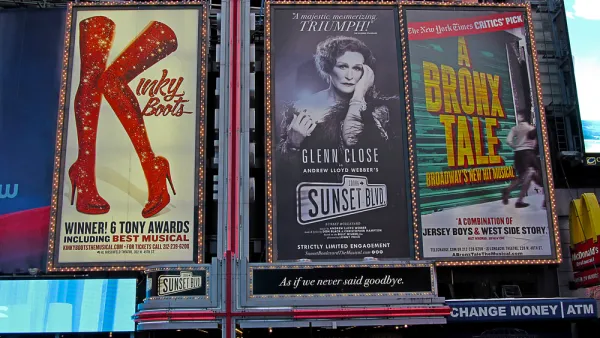
Fits and Starts for New York City's Special Districts
There has been a lot of breaking news originating from both the Garment District and the Theater District in New York City this week.
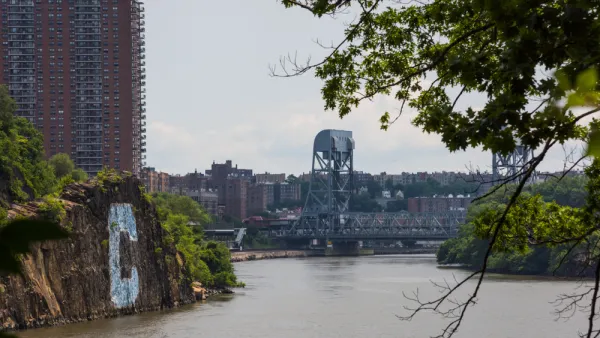
A New Generation of Community-Led Planning in New York
With a benchmark success in demanding rights for the community during an ongoing rezoning process in Inwood, a neighborhood in Manhattan, a new generation of community-led resistance to top-down planning is coalescing in New York City.
Judge Tosses Manhattan Rezoning; Developer Tosses Affordable Housing Project
A court decision to toss a signature rezoning plan of the de Blasio administration in New York City had immediate repercussions for a development proposal that would have added hundreds of new affordable housing units.

Planetizen Federal Action Tracker
A weekly monitor of how Trump’s orders and actions are impacting planners and planning in America.

The state-sanctioned urbicide of Austin
People don’t kill cities. Freeways do.

Colorado’s Largest Data Center Could Rise Next to Homes — Without a Public Hearing
The proposed campus would consume 11 times the power of Denver International Airport; as it has across the country, opposition mounts.

Nation's most wind-powered state turns to coal as data centers increase energy demand
For the first time in decades, Iowa has increased its generation of coal power.

NYC cools commuters with city's first rain garden above a bus stop
New York City officials say the plants in the rain garden can absorb 16 gallons of rainwater during heavy storms.

Brightline West’s future may rely on $6 billion federal loan
The company has until Nov. 2 to make a $400 million equity investment into its proposed high-speed rail line.

FREE Course: Walkable City 1: Why Walkability?
After describing his path towards focusing on walkability as the essence of good planning, Jeff Speck marches through his five principal reasons for making more walkable places.
Reinventing Malls: Planning Alchemy—Turning Gray Fields Into Gold
The course focuses on the opportunities and imperatives that shape reinvention of mall sites.

Greater Baltimore Committee
Eagle County Government
Harvard University Graduate School of Design
The Architects Foundation
University of Cincinnati Online
The Pocatello Development Authority
The Urban Renewal Agency of the City of Pocatello
Journal of the American Planning Association