The Texas Senate has approved Senate Bill 2, which would require a vote to raise property taxes beyond 5 percent—lowered from the current threshold of 8 percent.


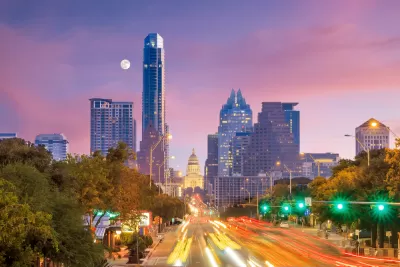
"Texas homeowners could see their property tax grow at a slower rate and local governments would be forced to seek voter approval for higher tax rates under a bill the Senate approved Tuesday," reports Dagney Pruner.
The political support for the property tax reform, led by Texas State Senator Paul Bettencourt (R-Houston), argue that the state already has the fifth-highest property tax rate in the country. "Texas taxpayers know the truth, property taxes are rising too fast," Bettencourt is quoted in the article.
"Bettencourt's measure, Senate Bill 2 [pdf], seeks to reduce property taxes by changing the so-called rollback rate, the maximum amount a city can raise taxes without triggering a public vote, from 8 percent to 5 percent," explains Pruner.
According to Pruner, only one Republican in the Texas State Senate found reason to oppose Senate Bill 2: "Smaller communities without double-digit growth and with modest tax bases "wouldn't raise enough money for a new fire truck or to pave a mile of city street" with a 3 or 4 percent property tax increase, he said." The bill did find plenty of opposition among local elected officials. About 150 local officials showed up to a recent Senate Finance Committee hearing earlier this month. Among those officials, Dallas Mayor Mike Rawlings, who said the bill would cut $20 million worth of services from the city's budget—a figure that translates to 226 police officers.
Read the full story: Senate passes tax relief bill that cities worry will jeopardize local safety and services

New Property Tax Changes Proposed in California
A new bill proposed in the California legislature would cut back on the number of Prop. 13 property tax breaks handed down to heirs—who then live somewhere else.
Home Builders Oppose Changes to Property Tax, Mortgage Interest Deductions
The National Association of Home Builders has decided that the Republican tax reform proposal would lower property values.
State Legislation to Pressure New York City for Property Tax Reform
New York City's property tax system is a growing source of political consternation, and now state legislators have entered the fray.

Planetizen Federal Action Tracker
A weekly monitor of how Trump’s orders and actions are impacting planners and planning in America.

Washington state to charge fee to drivers with fuel-efficient cars
Revenue from the fee will go towards supporting the state’s highways.

Illinois considers spending $1 billion in taxpayer money on data center
A quantum computing campus and data center are currently under construction in Chicago.

Did data centers change how voters cast their ballots?
Texas, Ohio, and Georgia all flipped party control. But in rural counties, the effect of local data centers was mixed.

Amtrak invests in eight new Airo trainsets
The new trainsets will begin serving passengers in 2031.

HUD to end aid for mixed-immigration-status households
The new rule is projected to impact 80,000 people, nearly half of whom are children.

FREE Course: Walkable City 1: Why Walkability?
After describing his path towards focusing on walkability as the essence of good planning, Jeff Speck marches through his five principal reasons for making more walkable places.
Reinventing Malls: Planning Alchemy—Turning Gray Fields Into Gold
The course focuses on the opportunities and imperatives that shape reinvention of mall sites.

City of Charlotte
City of Rosemead
Rutgers University, Edward J. Bloustein School of Planning and Public Policy
University of Michigan School for Environment and Sustainability (SEAS)
Hunter College, City University of New York (CUNY)
The Architects Foundation
University District Partnership