A bill currently in committee in Oregon would raise revenue for the state's housing accounts by ending a subsidy used only by residents who own more than one property around the state.



"Three proposed bills in the Oregon Legislature aim to address housing affordability across the state," reports Whitney M. Woodworth.
The non-traditional approach of these bills, however, will be sure to raise some eyebrows. "Two seek to increase homeownership by providing grants for low-income households and creating a task force to address racial disparities," according to Woodworth. "The other would seriously alter a tax deduction used by hundred of thousands of Oregon homeowners." That third bill would use the additional revenue generated by the end of the subsidy to fund the state's Home Ownership Assistance Accounts, the General Housing Account, and the Emergency Housing Account.
According to Woodworth's account of a recent public hearing held by the Oregon House Committee on Human Services and Housing, the public has already responded to bill that would reform the state's mortgage interest deduction. Perhaps surprisingly, Woodworth says that most at Thursday's meeting favored the change, while only three attendees voiced opposition.
Read the full story: Proposed Oregon bill seeks to exclude second homes, 'well-off' from tax break
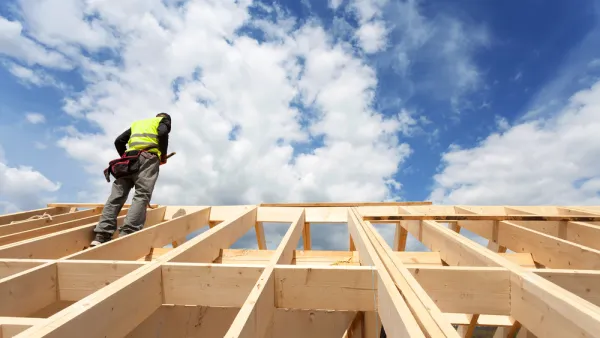
Low-Income Housing Tax Credits Lose Luster in the Post-GOP Tax Reform World
Fewer people investing in low-income housing tax credits means fewer affordable housing units being built—at a time when affordable units are in extremely short supply.

Black Homeownership Still Falling
Black homeownership rates have been slow to recover from the great recession and the gap between whites and blacks in home ownership is bigger today than it was in the 1980s.
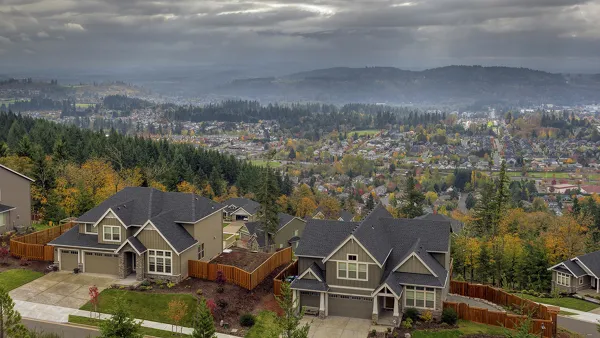
Tax Reform and the Housing Market
Curbed analysis of how local and regional housing markets will react to changes to the country's tax code.

Planetizen Federal Action Tracker
A weekly monitor of how Trump’s orders and actions are impacting planners and planning in America.

Eastern Nebraska is running out of electricity
Data centers and electrification are straining eastern Nebraska’s grid, throttling economic development.

Study reveals best places in the U.S. for cycling, walking
New research from Streetlight Data examines bicycle and pedestrian miles per capita in the 100 largest U.S. cities by population.

DSA members accuse Mamdani of 'abandoning values' over housing redevelopment
New York City's mayor plans to replace about 2,000 units of public housing with private, mixed-income housing.

All sides of BRT debate unhappy with CDOT’s most recent move
The Colorado Department of Transportation is no longer considering center-running bus lanes for Colorado Boulevard.

Massachusetts bogs generate both power, and cranberries
Putting solar panels above farmland is one way Massachusetts is advancing toward its goal of net-zero carbon emissions by 2050.

FREE Course: Walkable City 1: Why Walkability?
After describing his path towards focusing on walkability as the essence of good planning, Jeff Speck marches through his five principal reasons for making more walkable places.
Reinventing Malls: Planning Alchemy—Turning Gray Fields Into Gold
The course focuses on the opportunities and imperatives that shape reinvention of mall sites.

City of Rosemead
Rutgers University, Edward J. Bloustein School of Planning and Public Policy
One Hundred Miles
University of Michigan School for Environment and Sustainability (SEAS)
Hunter College, City University of New York (CUNY)
The Architects Foundation
City of Cambridge
The Pocatello Development Authority
The Urban Renewal Agency of the City of Pocatello