The euphemism refers to a cost-saving measure that's happening even in central districts, to the chagrin of residents. This reversion to gravel roads is one manifestation of a looming local infrastructure deficit.


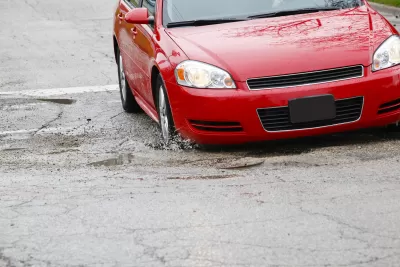
On some streets in Omaha, Mitch Smith writes, the city is simply unpaving heavily potholed streets in response to a $300 million backlog on road repairs. This follows a long period of repair delays. "For years, an uneasy truce persisted: Public works crews would fill potholes and perform other maintenance work on those roads, but insisted that residents pay if they wanted repaving."
City Hall justifies this stance by stating that many of these suburban roads were low-quality to begin with. "Omaha's policy on unimproved roads is a matter of equity. When the houses were built two generations ago with subpar streets [...] the builder and homeowner saved money."
All of this has residents in an uproar, and some have taken legal action. Reputation is one factor: as central Omaha improves in many ways, unpaving streets looks bad.
Omaha's example is extreme, but similar backpedalling is happening elsewhere too. "In Youngstown, Ohio, officials closed off some uninhabited streets. In Gary, Ind., some of the city's parks could close — a process city officials call 'renaturing' — after years of neglect. And in one Michigan county, a deteriorating bridge was torn down, not replaced."
Read the full story: Omaha’s Answer to Costly Potholes? Go Back to Gravel Roads
America's Infrastructural Reckoning
Through the lens of Henry Petroski's new book, Tom Vanderbilt discusses why infrastructure, as we have come to define it, is such a fraught topic in American life.
Crack in Bridge Connecting Arkansas to Tennessee Comes With Consequences, Debate
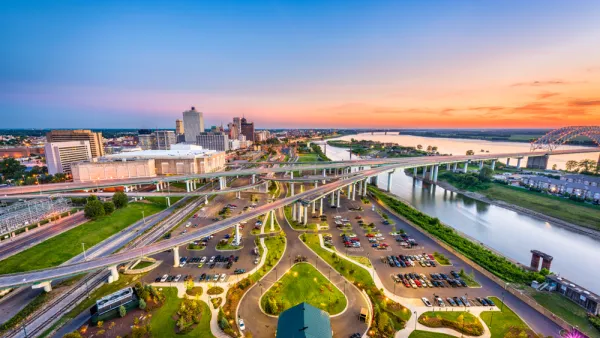
Goods movement on the Mississippi River, as well as truck traffic on a key interstate, has ground to a halt after a crack was discovered last week in a bridge on Interstate 40 connecting to Memphis.
Roads and Bridges Are Not Crumbling
Rebutting the argument that roads and bridges are "crumbling" and should be our first infrastructure priority.

Desperate measures: Advocates weigh draining Lake Powell to fill Colorado River
Draining the reservoir could reduce evaporation losses by a couple hundred thousand acre-feet.

Eastern Nebraska is running out of electricity
Data centers and electrification are straining eastern Nebraska’s grid, throttling economic development.

Malls are becoming the midtowns of the future
Mall and office park redevelopments are a generational opportunity to create new nodes of urbanity.

NYC breaks ground on anti-flooding infrastructure project
New York City's new system will reduce stormwater flows to local sewers by 90%.

One Kentucky town’s secret to affordable housing
The Smoketown Community Land Trust has already built seven affordable homes for community members.

Houston gains petal-shaped cooling infrastructure to make streets more ‘delightful’
The city has installed the pavilions along 15 blocks in Houston.

FREE Course: Walkable City 1: Why Walkability?
After describing his path towards focusing on walkability as the essence of good planning, Jeff Speck marches through his five principal reasons for making more walkable places.
Reinventing Malls: Planning Alchemy—Turning Gray Fields Into Gold
The course focuses on the opportunities and imperatives that shape reinvention of mall sites.

City of Rosemead
Rutgers University, Edward J. Bloustein School of Planning and Public Policy
One Hundred Miles
University of Michigan School for Environment and Sustainability (SEAS)
Hunter College, City University of New York (CUNY)
The Architects Foundation
City of Cambridge
Montrose County
The Pocatello Development Authority