Demolitions in residential neighborhoods have increased quickly in Austin, as property owners upgrade their homes to contemporary layouts. Community Impact newspaper investigates the trend.


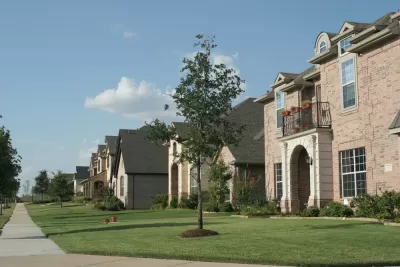
"Under the economic pressure of Austin’s rapid growth, the traditional housing stock in the city’s central neighborhoods is crumbling to bulldozers and wrecking balls at an accelerated rate," according to an article by Christopher Neely.
Neely is reporting an analysis by the Community Impact Newspaper, which found that 1,773 demolitions of residential properties occurred between 2010 and 2017. "By comparison, 1,900 similar demolitions occurred between 1980 and 2009," according to Neely. Demolitions tend to replace smaller homes with larger ones. Included in the article are quotes attributed to Austin Councilmember Kathie Tovo, who describes the demolitions as a "terrible trend." The policy and political landscape of the city, however, makes slowing the pace of demolitions very difficult, according to the article.
Supplementing Neely's explanation of the study is an interactive map illustrating the demolition data.
Read the full story: 7 years’ worth of Central Austin home demolitions on track to exceed numbers for the previous 30

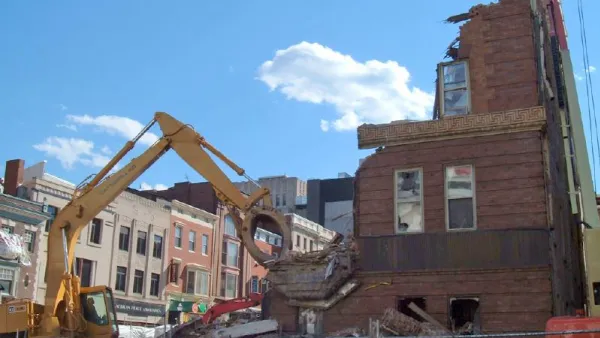
The Pace of Chicago Demolitions Worries Preservationists
In neighborhoods with lots of new development, buildings cited in the Chicago Historic Resources Survey are coming down fast.
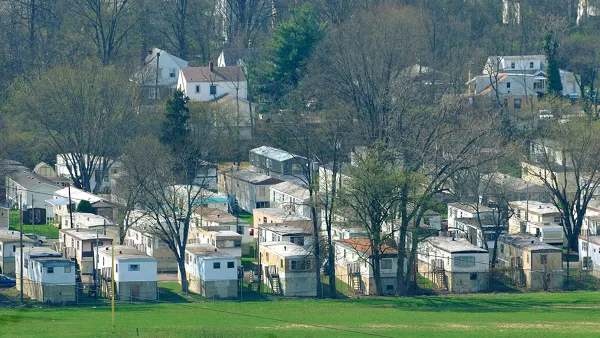
How Mobile Homes Fill a 'Critical Gap' in Affordable Housing
Cities across America have a housing crisis on their hands—should they be talking more about trailer parks?

Portland Updating Regulations for Infill in Single-Family Residential Neighborhoods
Portland is tackling a critical but often controversial issue: how to regulate infill development in residential neighborhoods when growth is pushing landowners and developers to build bigger and denser.

Planetizen Federal Action Tracker
A weekly monitor of how Trump’s orders and actions are impacting planners and planning in America.

Amtrak, CN end decades-long dispute with eight-year agreement
The new operating agreement establishes an updated framework for the companies to work together, including processes to resolve disputes.

Judges permit Denver to divert 77,000 acre feet from the Colorado River for reservoir expansion
Overuse and climate change have caused the Colorado River’s water levels to plummet.

NYC DOT wants faster, more permanent street upgrades
The city is examining ways to build more concrete infrastructure without getting entangled in 'decades-long' projects.

'Something we’ve never seen before:' rising utility rates could strain city finances nationwide
Data centers, climate change and other factors have caused utility rates in the United States to increase by 38% since 2020.

Trump to overrule local leaders, lease millions of acres of America’s Pacific Island territories’ seafloors to mining companies
International law says that the Indigenous people of America’s territories have a right to prior and informed consent regarding projects that impact their countries.

FREE Course: Walkable City 1: Why Walkability?
After describing his path towards focusing on walkability as the essence of good planning, Jeff Speck marches through his five principal reasons for making more walkable places.
Reinventing Malls: Planning Alchemy—Turning Gray Fields Into Gold
The course focuses on the opportunities and imperatives that shape reinvention of mall sites.

Harvard University Graduate School of Design
KFH Group Inc.
Greater Baltimore Committee
The Architects Foundation
University of Cincinnati Online
The Pocatello Development Authority
The Urban Renewal Agency of the City of Pocatello