In neighborhoods with lots of new development, buildings cited in the Chicago Historic Resources Survey are coming down fast.


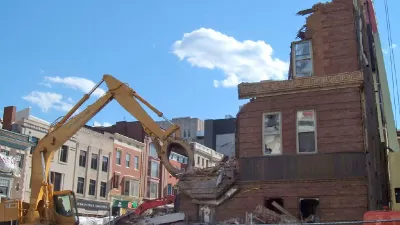
Preservationists in Chicago are concerned that the pace of development is putting historically significant structures at risk before anything can be done to save them. Giving several examples of recent demolitions, including buildings designed by the firm of famed Chicago architect Daniel Burnham, AJ LaTrace writes, "The majority of these buildings were noted as being either architecturally or culturally significant in the Chicago Historic Resources Survey (CHRS), a comprehensive review and tally of historic buildings completed and published by the city in the mid-'90s."
Areas dramatically losing their historic building stock are often the same places undergoing rapid new development. Some of the most affected neighborhoods include Lincoln Park, Lakeview, Logan Square, and the West Loop.
The fear is that "communities and preservation advocates simply do not have enough time to line up a buyer or produce a plan for adaptive reuse when demolition threats surface."
Ward Miller, executive director of Preservation Chicago, "suggests that new development and preservation don't have to be mutually exclusive, but says that the Chicago Historic Resources Survey exists as a tool to help plan for a community's future."
FULL STORY: Is Chicago Experiencing a Historic Preservation Crisis?

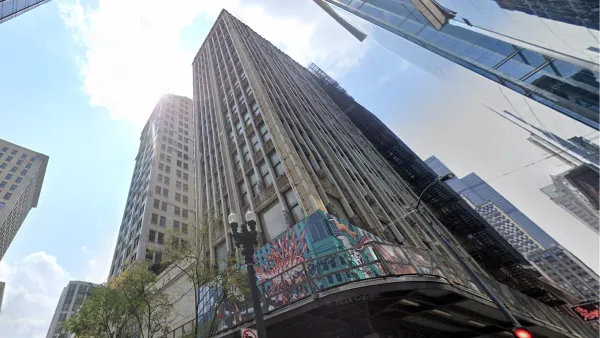
Chicago Towers Recommended for Adaptive Reuse
Once slated for demolition, two historic buildings owned by the federal government will be restored for new uses.
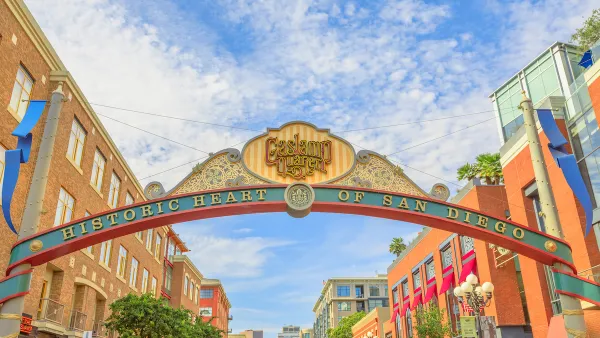
San Diego to Update Historic Preservation Program
The city wants to identify new areas for preservation while streamlining processes to promote adaptive reuse of historic properties.

Op-Ed: A ‘Culture of Preciousness’ Undermines Historic Preservation
A focus on historic materials could foster inequity and obscure the important social and historical meanings of a structure.

Planetizen Federal Action Tracker
A weekly monitor of how Trump’s orders and actions are impacting planners and planning in America.

The state-sanctioned urbicide of Austin
People don’t kill cities. Freeways do.

US to reduce Colorado River water deliveries to Mexico
A new Colorado Treaty amendment reduces Mexico’s Colorado River water allocation by 250,000 acre feet.

5 New England states march closer to 800 megawatt wind energy project
Securing federal approval for the project may be complicated under the Trump administration, which has historically been hostile towards domestic wind power.

Baltimore to break ground on $50 million Transit Priority Project
The project will bring faster bus trips, safer streets and better bike connections to Baltimore.

Airbnb launches $250 million 'last-dollar financing' housing accelerator, makes first investment in Austin
The company will put $6.4 million towards affordable housing development in Texas’ capital.

FREE Course: Walkable City 1: Why Walkability?
After describing his path towards focusing on walkability as the essence of good planning, Jeff Speck marches through his five principal reasons for making more walkable places.
Reinventing Malls: Planning Alchemy—Turning Gray Fields Into Gold
The course focuses on the opportunities and imperatives that shape reinvention of mall sites.

Eagle County Government
Harvard University Graduate School of Design
Nashville Planning Department
The Architects Foundation
University of Cincinnati Online
The Pocatello Development Authority
The Urban Renewal Agency of the City of Pocatello
Journal of the American Planning Association