City officials in Houston have shown little regard for the safety of its people when they're walking outside, argues an op-ed in the Houston Chronicle.


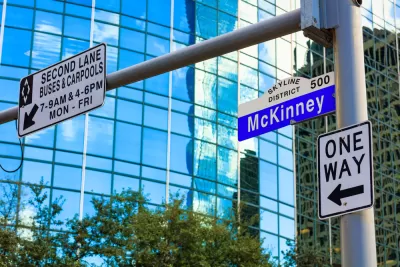
In Houston, politicians continue to prioritize moving cars, trucks and trains quickly, over pedestrian safety, argues an editorial in the Houston Chronicle. The piece claims that, despite a long history of danger, the city continues to ignore the problem.
"Our city streets grow deadlier with every passing year. Car crashes, cyclist deaths and pedestrian accidents increased 10 percent between 2014 and 2015. The Houston region ranks in the top 15 for the most dangerous communities for pedestrians, according to a study by Smart Growth America's National Complete Streets Coalition," the piece contends.
While some may call the problem a natural consequence of having a sprawling city, the Chronicle argues the city has missed opportunities to improve, not just in some trouble spots, but in new construction and all around the city. "Even dense, walkable neighborhoods like downtown and Midtown suffer from a lack of bike lanes, unsafe pedestrian crossings and an excess of curb cuts that interrupt sidewalks with dangerous driveways," the Chronicle points out.
Read the full story: Unsafe Streets
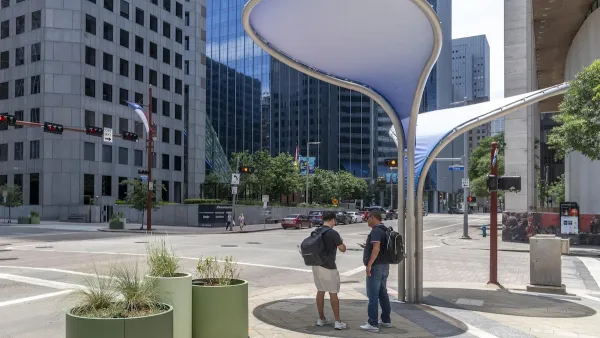
Houston gains petal-shaped cooling infrastructure to make streets more ‘delightful’
The city has installed the pavilions along 15 blocks in Houston.
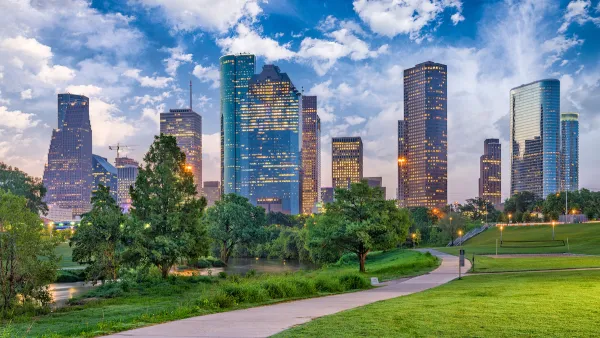
Promoting Infill Development for a Denser Houston
An advocacy group is calling for ‘sustainable, vertical’ mixed-use urbanism in the famously sprawling city.
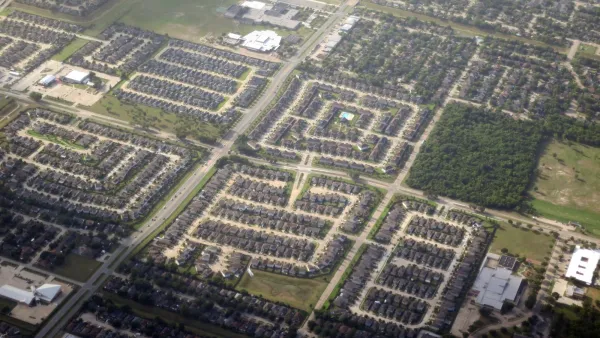
Houston Area's Center of Gravity Shifts Outside the Loop
The population center of Harris County is now outside central Houston, a shift that occurred over the last two decades as the region's suburbs blossomed.

Planetizen Federal Action Tracker
A weekly monitor of how Trump’s orders and actions are impacting planners and planning in America.

Eastern Nebraska is running out of electricity
Data centers and electrification are straining eastern Nebraska’s grid, throttling economic development.

Move over, LA: St. Louis gears up for Olympics, invests millions in downtown redevelopment
The Missouri city will host the 2028 Olympic soccer group stage and knockout matches.

Dallas releases zoning code overhaul to officials
The drafted overhaul is over 400 pages long.

NYC renovations for dangerous, ‘mercilessly crammed’ street delayed until 2027
Construction was supposed to begin this fall.

San Diego’s Midway Rising project gets greenlight from city council
The project looks to become the largest affordable housing development in California's history.

FREE Course: Walkable City 1: Why Walkability?
After describing his path towards focusing on walkability as the essence of good planning, Jeff Speck marches through his five principal reasons for making more walkable places.
Reinventing Malls: Planning Alchemy—Turning Gray Fields Into Gold
The course focuses on the opportunities and imperatives that shape reinvention of mall sites.

City of Rosemead
Rutgers University, Edward J. Bloustein School of Planning and Public Policy
One Hundred Miles
University of Michigan School for Environment and Sustainability (SEAS)
Hunter College, City University of New York (CUNY)
The Architects Foundation
City of Cambridge
The Pocatello Development Authority
The Urban Renewal Agency of the City of Pocatello