An overview of the projects in the L.A. County Department of Parks and Recreation pipeline, by L.A. County park planner Clement Lau.


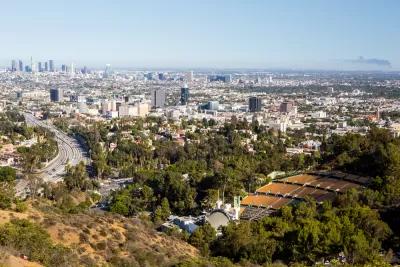
At over 10 million residents and 4,084 square miles, Los Angeles County is the most populous county in the country, and geographically one of the largest. L.A. County administers over 70,000 acres of park, open space, and recreation facilities. As such, it has both many needs and many opportunities to provide park and recreation facilities. With future funding made more secure by the passage of Ballot Measure A, which replaced previous funding measures, the county is now moving forward with several projects identified in its recent Parks Needs Assessment and in its Community Parks and Recreation Plans, writes LA County Planner Clement Lau. These projects include:
Implementation of the [Community Parks and Recreation] Plans is underway, with examples of projects including: a park-plaza project at a local library in partnership with County Public Library; acquisition of a property in West Athens-Westmont for the development of a pocket park; tree plantings in East Los Angeles, Walnut Park, and West Athens-Westmont; and development of a new 9-acre park in an utility corridor in East Los Angeles. . .
The Castaic Area Multi-Use Trails Plan includes approximately 100 miles of proposed multi-use (hiking, mountain biking, equestrian) trails and trail related or support facilities. . .
[D]evelop a portion of the Puente Hills Landfill which was formerly the largest landfill in the western U.S. into the County’s newest regional park. Specifically, the newly created "park for all" will offer diverse, healthy, passive, and active recreational and educational experiences and programming for residents living in park-poor areas in the San Gabriel Valley, Gateway Cities, and Southeast Cities. . .
[T]ransform the existing Earvin “Magic” Johnson Park in Willowbrook into a 120-acre regional facility offering a variety of amenities to meet the community and region’s growing and diverse recreation needs. The park is located on the entire former Athens Tank Farm which was a petroleum products storage and distribution facility that consisted of two large crude oil reservoirs, 22 above ground storage tanks, absorption plants, and pipelines. The revitalized park will consist of the following primary components: community event center, gymnasium, equestrian center, south agency headquarters, aquatic center, multi-purpose stadium, amphitheater, skate park, water features, wedding pavilion, walking trails and exercise amenities, dog park, sculpture garden and civic plaza, restrooms, group picnic areas, children's play areas, and circulation and parking.
For more information about the county's process and plans, please read the source article.
Read the full story: Park and Trail Planning in America’s Most Populous County

Denver mayor announces 'Mile High Line' vision for interconnected bike and transit routes
The mayor emphasized building more housing near transit lines and bike paths, but failed to address planned transit service cuts.
Atlanta could add dedicated bike lane to Beltline
A city councilmember says a dedicated lane would prevent conflicts between cyclists and pedestrians, but others worry it would impede efforts to build transit along the Beltline.
A New Urbanist’s roadtrip guide to Northwest Arkansas
Heading to the CNU conference next month? A Northwest Arkansas urban planner has custom designed a roadtrip just for you.

Planetizen Federal Action Tracker
A weekly monitor of how Trump’s orders and actions are impacting planners and planning in America.

California plans to bury El Niño’s downpour
If the state plays its cards right, it may be able to store a billion acre-feet of El Niño’s water in aquifers.

Desperate measures: Advocates weigh draining Lake Powell to fill Colorado River
Draining the reservoir could reduce evaporation losses by a couple hundred thousand acre-feet.

California city breaks ground on transit connector
The project includes three mobility hubs and a pedestrian bridge.

After public outcry, Massachusetts city releases housing development tracker
Cambridge’s tracker currently shows 250 housing projects in various stages of development.

40 years after approval, Chicago breaks ground on new park
The park honors Jean Baptiste Point du Sable, the city’s first permanent non-native settler.

FREE Course: Walkable City 1: Why Walkability?
After describing his path towards focusing on walkability as the essence of good planning, Jeff Speck marches through his five principal reasons for making more walkable places.
Reinventing Malls: Planning Alchemy—Turning Gray Fields Into Gold
The course focuses on the opportunities and imperatives that shape reinvention of mall sites.

City of Rosemead
Rutgers University, Edward J. Bloustein School of Planning and Public Policy
One Hundred Miles
Hunter College, City University of New York (CUNY)
The Architects Foundation
University of Cincinnati Online
City of Cambridge
Montrose County
The Pocatello Development Authority