Atlanta's quickly growing region means many communities are seeking to incorporate. Several controversial processes, however, have compelled the state to reform the incorporation process.


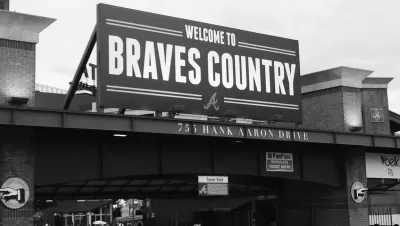
"Don’t expect any more new cities to pop up in metro Atlanta this year," writes Mark Niesse in breaking the news about a new rule approved by the Georgia Senate State and Local Government Operations Committee.
The new rule will require proposed municipalities to undertake a two-year review process before lawmakers can consider them for incorporation. "The rule could put a pause on incorporations after three cities — South Fulton, Stonecrest and Tucker — were created in the last two years. In all, 10 cities have formed in DeKalb, Fulton and Gwinnett counties since 2005," adds Nieese.
The new rules approved by the committee follow several years of contentious debates and failed attempts at legislation on the incorporation process for communities around Atlanta. Most recently, in March 2016, a bill that would have implemented deeper feasibility studies and a formal legislative process passed the Senate 55-1 but failed to get a hearing in the House.
Read the full story: Senators slow down cityhood creation in metro Atlanta

Learning loss and urban schools, part 2
Did test scores in progressive cities drop more post-COVID than test scores in moderate ones?

Atlanta City Council unanimously backs $3.5 billion Beltline light rail project
The resolution was drafted after Atlanta Mayor Andre Dickens pulled support for the Atlanta Streetcar extension last year.
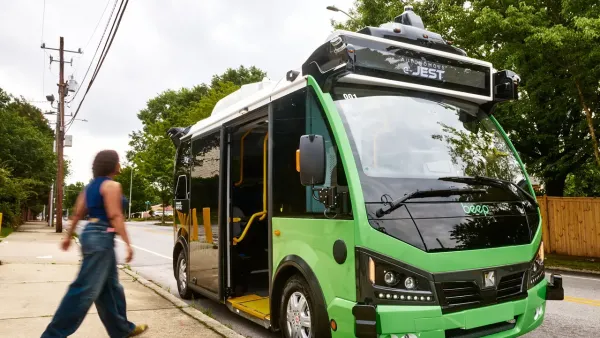
Atlanta Beltline’s free automated shuttle expands service
A $1.75 million grant funded the autonomous shuttle service’s growth.

Planetizen Federal Action Tracker
A weekly monitor of how Trump’s orders and actions are impacting planners and planning in America.

Eastern Nebraska is running out of electricity
Data centers and electrification are straining eastern Nebraska’s grid, throttling economic development.

Study reveals best places in the U.S. for cycling, walking
New research from Streetlight Data examines bicycle and pedestrian miles per capita in the 100 largest U.S. cities by population.

DSA members accuse Mamdani of 'abandoning values' over housing redevelopment
New York City's mayor plans to replace about 2,000 units of public housing with private, mixed-income housing.

All sides of BRT debate unhappy with CDOT’s most recent move
The Colorado Department of Transportation is no longer considering center-running bus lanes for Colorado Boulevard.

Massachusetts bogs generate both power, and cranberries
Putting solar panels above farmland is one way Massachusetts is advancing toward its goal of net-zero carbon emissions by 2050.

FREE Course: Walkable City 1: Why Walkability?
After describing his path towards focusing on walkability as the essence of good planning, Jeff Speck marches through his five principal reasons for making more walkable places.
Reinventing Malls: Planning Alchemy—Turning Gray Fields Into Gold
The course focuses on the opportunities and imperatives that shape reinvention of mall sites.

City of Rosemead
Rutgers University, Edward J. Bloustein School of Planning and Public Policy
One Hundred Miles
University of Michigan School for Environment and Sustainability (SEAS)
Hunter College, City University of New York (CUNY)
The Architects Foundation
City of Cambridge
The Pocatello Development Authority
The Urban Renewal Agency of the City of Pocatello