Smart Growth America surveyed five examples of transit oriented developments from around the country and found a common characteristics: all of the projects have way too much parking.


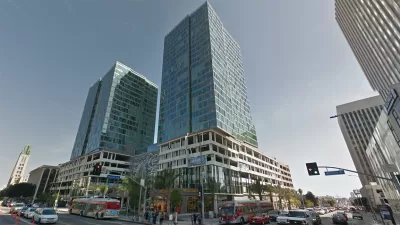
"Auto-centric standards and zoning requirements have led to too much parking being built around transit stations, leaving many parking spaces empty and wasting valuable land that could be better used," reports Katherine Shaver.
Shaver is sharing information from a new study released by Smart Growth America, titled "Empty Space: Real parking needs at five TODs."
The study examined five transit-oriented developments, in Washington, Los Angeles, Oakland, and near Seattle and Denver. None of the developments "generated enough parking to fill even half the number that planning industry standards would have suggested," explains Shaver. Moreover, "in some cases, about one-third of the parking spaces that would be recommended for a new development under industry standards were actually used, even at peak times."
Angie Schmitt also details the new report in a post for Streetsblog USA.
Read the full story: Cities, suburbs are requiring too much parking near transit stations, study says

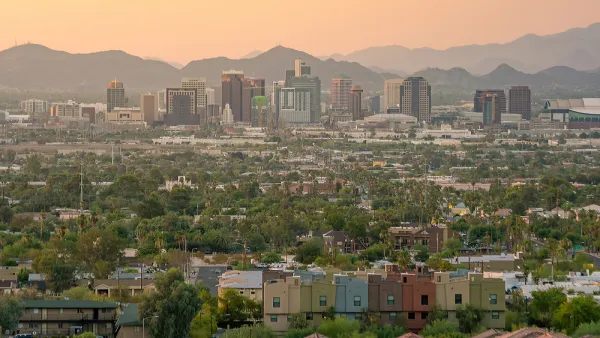
Phoenix Could Ease Parking Requirements to Support Transit, Affordable Housing
In addition to lower citywide parking requirements on residential properties, a proposed law in Phoenix would lower minimum parking requirements even further for affordable housing developments near the city’s light rail system.
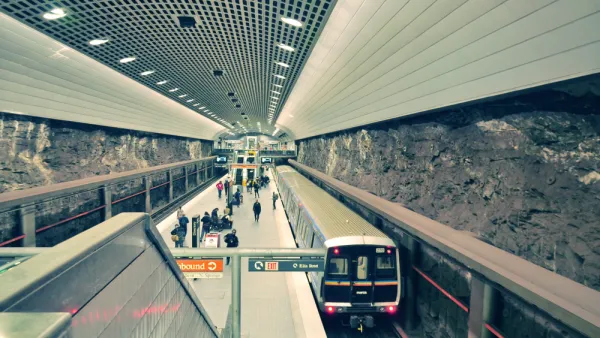
MARTA an Amenity for Office Developers in Atlanta—But Not by Choice
The amenity in highest demand for companies looking to develop office space in Atlanta might surprise people: it's access to public transit.
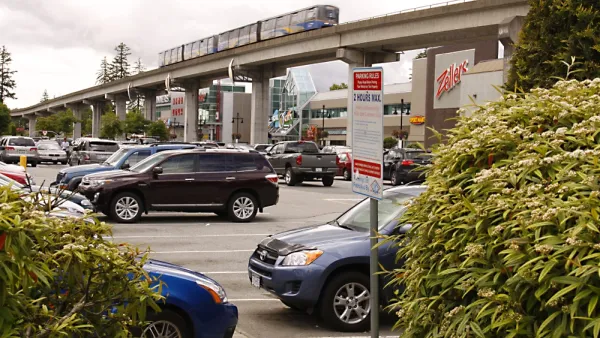
Parking Requirements at TOD Projects Remain Stubbornly Out of Sync
Transit Oriented Development projects around the country are still facing suburban-style parking requirements.

Planetizen Federal Action Tracker
A weekly monitor of how Trump’s orders and actions are impacting planners and planning in America.

California plans to bury El Niño’s downpour
If the state plays its cards right, it may be able to store a billion acre-feet of El Niño’s water in aquifers.

Chicago breaks ground on $3 billion megadevelopment
The new neighborhood, titled Foundry Park, will one day host 3,700 residences.

This road in NYC is infamously dangerous — and Mamdani can't fix it
New York City's Ocean Parkway is known for reckless driving, but the power to implement safety measures lies with the state rather than the city.

One of Denver’s busiest corridors to gain BRT
The project will span 18 miles and contain 74 bus rapid transit stations.

275,000 bus trips are at stake on Seattle's ballot
If passed, the Seattle Transit Measure would trigger a 0.3% sales tax and raise an average of $138 million per year to maintain and expand Seattle’s bus services.

FREE Course: Walkable City 1: Why Walkability?
After describing his path towards focusing on walkability as the essence of good planning, Jeff Speck marches through his five principal reasons for making more walkable places.
Reinventing Malls: Planning Alchemy—Turning Gray Fields Into Gold
The course focuses on the opportunities and imperatives that shape reinvention of mall sites.

City of Rosemead
Rutgers University, Edward J. Bloustein School of Planning and Public Policy
One Hundred Miles
Hunter College, City University of New York (CUNY)
The Architects Foundation
University of Cincinnati Online
City of Cambridge
Montrose County
The Pocatello Development Authority