As seas rise, San Francisco is looking to shore up its costal protection against earthquakes and extreme weather events.


The city of San Francisco is looking to repair its seawall, a $350 million bond could start the process, but it won't cover the total cost. How much will it cost to repair the wall that stretches along the city's bayside? No one knows. The $350 million would, in part, pay for a study to find the best ways to improve the hundred-year-old structure.
"It would be an enormous boost for a project that eventually could cost anywhere from $2 billion to $5 billion," John King reports for the San Francisco Chronicle on what has been an ongoing concern in the city for years. "Under the current timeline, design work and environmental studies would begin in 2018, with construction on key stretches starting in 2021. The budget for these phases, billed as '…immediate life safety upgrades,' is $500 million," King continues.
FULL STORY: $350 million bond would start process of fixing SF’s seawall

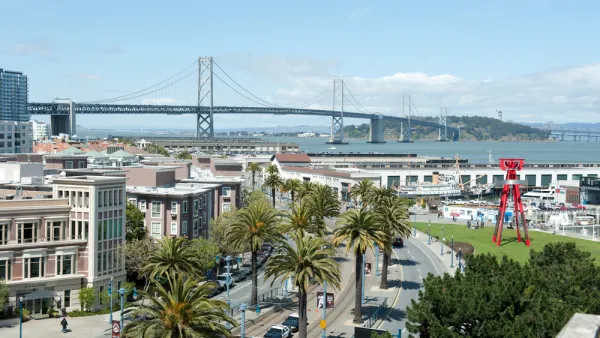
San Francisco's Mission Bay Provides a Case Study for Sea-Level Rise
The San Francisco Chronicle's John King continues his ongoing, in-depth coverage of sea-level rise and its potential impacts on local and regional concerns in the San Francisco Bay Area.
Two Things People Hate: Density and Sprawl
We’ve been conducting public meetings for years. And it used to be easier. Present the plan. Discuss the plan. Talk about how your plan is better for the neighborhood/community/city/region and provide the conclusion. But things have changed.
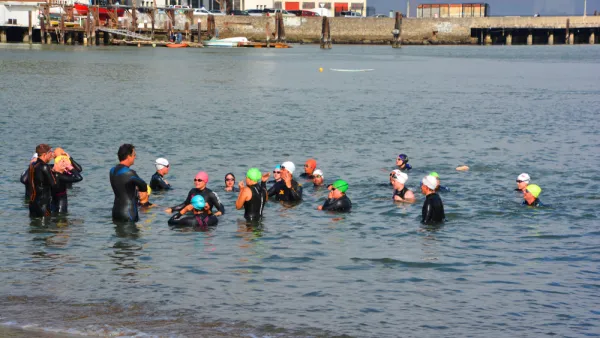
Proposed Pool Would Make an Olympic-Sized Play Area in the San Francisco Bay
The San Francisco Bay is usually an undesirable place to swim, except for a hearty few. A development proposal seeking assistance at the state level would add a pool to the Bay’s waters to make the idea of going for a swim more appealing.

The state-sanctioned urbicide of Austin
People don’t kill cities. Freeways do.

US to reduce Colorado River water deliveries to Mexico
A new Colorado Treaty amendment reduces Mexico’s Colorado River water allocation by 250,000 acre feet.

New Jersey’s second-largest city bans standalone data centers
Jersey City will continue to allow co-location facilities, such as those meant for research institutions that store their own data.

Amtrak not solely to blame for New Jersey commuter rail's unreliability, report finds
A new study from the Garden State Initiative found that NJ Transit’s budget grew 20% across a 4 year period, but reliability declined significantly over the same period.

EPA erases limits on planet-warming pollution from power plants
Under Monday’s plan, power plants would still have some limits on how much mercury, arsenic and other contaminants they can emit.

Phoenix announces new on-demand transit service, more frequent RAPID buses
Both new services will launch in October, and are part of Phoenix's Project Effective Access Solutions for Easing Congestion.

FREE Course: Walkable City 1: Why Walkability?
After describing his path towards focusing on walkability as the essence of good planning, Jeff Speck marches through his five principal reasons for making more walkable places.
Reinventing Malls: Planning Alchemy—Turning Gray Fields Into Gold
The course focuses on the opportunities and imperatives that shape reinvention of mall sites.

Eagle County Government
Harvard University Graduate School of Design
Nashville Planning Department
The Architects Foundation
University of Cincinnati Online
The Pocatello Development Authority
The Urban Renewal Agency of the City of Pocatello
Journal of the American Planning Association