Mexico began deregulation of gasoline prices to the dismay of motorists, as gas prices jumped about 20 percent on New Year's Day. People are so upset that pundits suggest the decision may imperil President Enrique Peña Nieto's re-election next year.


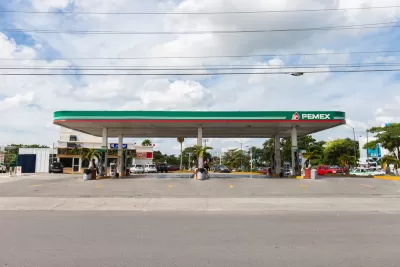
"Mexican motorists awoke to a shock as gasoline prices at the pump shot up by more than 20 percent in some corners of the country on the first day of the year, sparking panic buying, street protests and even a call by one prominent lawmaker for a 'peaceful revolution'," reports David Agren for The Washington Post.
Regular gas is scheduled to sell for 15.99 pesos per liter in Mexico City (about $2.85 per gallon), though prices will vary across the country.
That's over 20 percent higher that U.S. gas prices which averaged $2.353 on Jan.4, according to AAA. However, gasoline prices in Mexico are set by government for historic reasons, explains Agren.
Mexicans have long been used to low prices at the pump. Mexico expropriated the country's oil industry in 1938 and kicked out foreign oil companies, a move celebrated by Mexicans as a seminal act of sovereignty. Most Mexicans associate its nationalized oil industry with cheap gas.
However, Mexico now imports about half the gasoline it consumes. In a separate article, Maria Verza of the Associated Press reports on what Jorge Pinon, an energy expert at the University of Texas, Austin, described as "a total collapse of the refining system of Pemex."
The deregulation was prompted by budgetary reasons resulting from low oil prices. When oil prices were higher, the government would subsidize gas prices, which Mexicans had grown accustomed, notwithstanding some criticism.
"Some even pointed to the unfairness of the subsidies — which totaled approximately $20 billion in 2008 — saying the government spends more on cheap fuel for rich motorists (who collected much of the money) than on the budget for the National Autonomous University of Mexico," notes Agren.
This is not the first major energy change instituted by President Enrique Peña Nieto who proposed energy reforms in 2013 that allowed foreign investment in its state-owned oil company, Pemex for the first time since the expropriation in 1938. More recently, Planetizen correspondent Elana Eden reported on a carbon pricing demonstration project that was scheduled to begin in November 2016 "before launching a national carbon market in 2018."
FULL STORY: Mexicans are outraged over a big hike in gas prices on Jan. 1


The state-sanctioned urbicide of Austin
People don’t kill cities. Freeways do.

US to reduce Colorado River water deliveries to Mexico
A new Colorado Treaty amendment reduces Mexico’s Colorado River water allocation by 250,000 acre feet.

New Jersey’s second-largest city bans standalone data centers
Jersey City will continue to allow co-location facilities, such as those meant for research institutions that store their own data.

Amtrak not solely to blame for New Jersey commuter rail's unreliability, report finds
A new study from the Garden State Initiative found that NJ Transit’s budget grew 20% across a 4 year period, but reliability declined significantly over the same period.

EPA erases limits on planet-warming pollution from power plants
Under Monday’s plan, power plants would still have some limits on how much mercury, arsenic and other contaminants they can emit.

Phoenix announces new on-demand transit service, more frequent RAPID buses
Both new services will launch in October, and are part of Phoenix's Project Effective Access Solutions for Easing Congestion.

FREE Course: Walkable City 1: Why Walkability?
After describing his path towards focusing on walkability as the essence of good planning, Jeff Speck marches through his five principal reasons for making more walkable places.
Reinventing Malls: Planning Alchemy—Turning Gray Fields Into Gold
The course focuses on the opportunities and imperatives that shape reinvention of mall sites.

Eagle County Government
Harvard University Graduate School of Design
Nashville Planning Department
The Architects Foundation
University of Cincinnati Online
The Pocatello Development Authority
The Urban Renewal Agency of the City of Pocatello
Journal of the American Planning Association