Before this week, President Obama added more acreage to national monuments than any previous president. The final 1.35 million acres, designated this week, are a controversial final flourish.


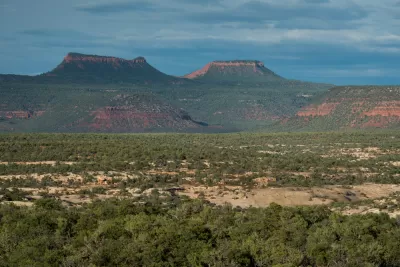
Juliet Eilperin and Brady Dennis report: "President Obama on Wednesday created new national monuments in a sacred tribal site in southeastern Utah and in a swath of Nevada desert, after years of political fights over the fate of the areas."
The new national monuments culminate a substantial record for the protection of public lands. President Obama "has invoked his executive power to create national monuments 29 times during his tenure, establishing or expanding protections for more than 553 million acres of federal lands and waters."
The article details the political fight over each of the swaths of lands designated by Obama. In Utah, Obama designated 1.35 million acres to create the Bears Ears National Monument. That new monument also includes a unique management structure that includes an inter-tribal commission.
For the second new monument, Obama designated 300,000 acres for the Gold Butte National Monument in Nevada, which is under threat, according to environmentalists, from the expansion of the Las Vegas metropolitan area.
Read the full story: With new monuments in Nevada, Utah, Obama adds to his environmental legacy
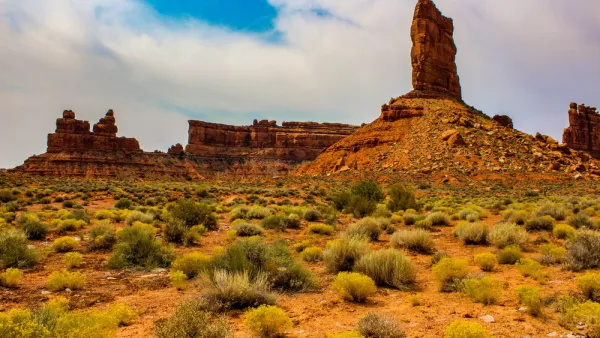
How President Biden Can Act To Protect Environmental and Cultural Sites
A new report highlights the mechanisms the President and his Cabinet could use to protect U.S. land and water resources without going through Congress.
Inside the Interior Department's Review of National Monuments
The fate of 26 national monuments hangs in the balance, as the Interior Department holds a review process. Public comment is open until July 10.
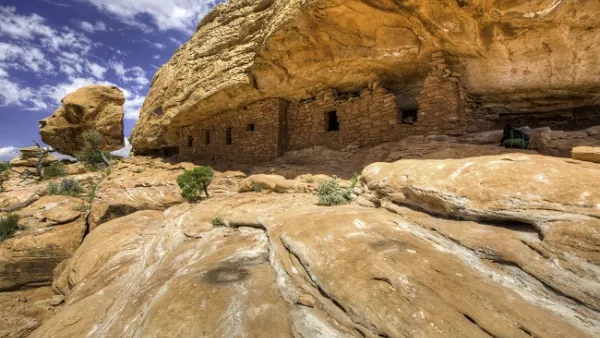
Antiquities Act Executive Order Calls for Review of Large Designations
The Executive Order does not roll back the Antiquities Act nor rescind any designations made by presidents Clinton, George W. Bush, or Obama, but does call for their review if over 100,000 acres. President Trump feels that the act has been misused.

Desperate measures: Advocates weigh draining Lake Powell to fill Colorado River
Draining the reservoir could reduce evaporation losses by a couple hundred thousand acre-feet.

Eastern Nebraska is running out of electricity
Data centers and electrification are straining eastern Nebraska’s grid, throttling economic development.

Malls are becoming the midtowns of the future
Mall and office park redevelopments are a generational opportunity to create new nodes of urbanity.

NYC breaks ground on anti-flooding infrastructure project
New York City's new system will reduce stormwater flows to local sewers by 90%.

One Kentucky town’s secret to affordable housing
The Smoketown Community Land Trust has already built seven affordable homes for community members.

Houston gains petal-shaped cooling infrastructure to make streets more ‘delightful’
The city has installed the pavilions along 15 blocks in Houston.

FREE Course: Walkable City 1: Why Walkability?
After describing his path towards focusing on walkability as the essence of good planning, Jeff Speck marches through his five principal reasons for making more walkable places.
Reinventing Malls: Planning Alchemy—Turning Gray Fields Into Gold
The course focuses on the opportunities and imperatives that shape reinvention of mall sites.

City of Rosemead
Rutgers University, Edward J. Bloustein School of Planning and Public Policy
One Hundred Miles
University of Michigan School for Environment and Sustainability (SEAS)
Hunter College, City University of New York (CUNY)
The Architects Foundation
City of Cambridge
Montrose County
The Pocatello Development Authority