The city of Monterey has been compelled by a new state law to loosen prohibitions on accessory dwelling units after failing to so earlier in the year.


"Monterey City Council revisited a half-century-old ban on building and renting out second units in 2016, and despite a well-documented housing shortage, voted to uphold that ban," according to an article by Nick Rahaim.
But a new state law, signed into law in September of this year, "is forcing the city to change course," reports Rahaim. Now "the Monterey Planning Commission will hold public comment on a proposed ordinance to accommodate the new state law" in November, with council action expected before the end of the year. Liam Dillon reported at the time of the bill's approval that it was "aimed at forcing local governments to approve the secondary housing units."
Monterey's new ordinance, resulting from the state law's influence, "would allow accessory dwellings in homes and existing detached structures in single-family neighborhoods to be converted to residences then rented out. A building permit and water credits would be required, but not additional parking…."
Read the full story: Monterey forced to revisit ban on granny units.
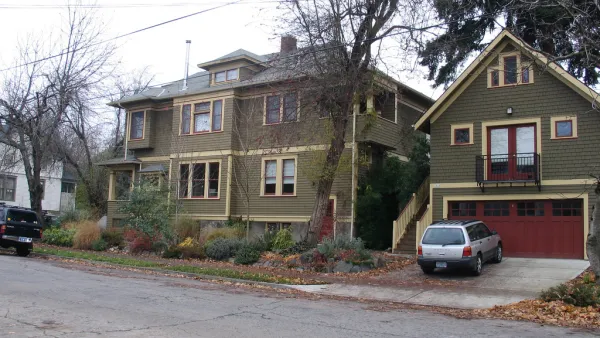
State Law Paves the Way for More Granny Flats in California
The state of California stepped into to make it easier for local governments to approve permissive regulations of accessory dwelling units.
ADUs Are Having a Moment
Granny flats, mother-in-law units, accessory dwelling units (ADUs), or secondary units—whatever you call them, more and more cities, regions, and states are making it easier to deliver subtle density in the backyard.
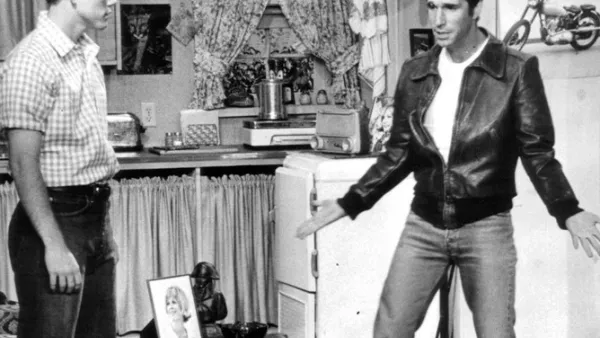
What do the Gilmore Girls, Happy Days, and Full House have in common? ADUs.
American sitcoms are full of garage apartments, attic rooms, and pool houses. Why aren't our cities?

Planetizen Federal Action Tracker
A weekly monitor of how Trump’s orders and actions are impacting planners and planning in America.

California plans to bury El Niño’s downpour
If the state plays its cards right, it may be able to store a billion acre-feet of El Niño’s water in aquifers.

Desperate measures: Advocates weigh draining Lake Powell to fill Colorado River
Draining the reservoir could reduce evaporation losses by a couple hundred thousand acre-feet.

Housing is the top priority of Seattle’s sole new councilmember
Jenks campaigned on building 1,000 new units of affordable housing.

New tax cuts may slash $1.5 billion in funding for Miami transit, public parks
Amendment 3 will save Miami-Dade homeowners $2,700 in 2028.

Arizona, Wisconsin, Pennsylvania hope to finally advance climate goals post-midterms
The three states have spent years under Republican or divided control.

FREE Course: Walkable City 1: Why Walkability?
After describing his path towards focusing on walkability as the essence of good planning, Jeff Speck marches through his five principal reasons for making more walkable places.
Reinventing Malls: Planning Alchemy—Turning Gray Fields Into Gold
The course focuses on the opportunities and imperatives that shape reinvention of mall sites.

City of Rosemead
Rutgers University, Edward J. Bloustein School of Planning and Public Policy
One Hundred Miles
University of Michigan School for Environment and Sustainability (SEAS)
Hunter College, City University of New York (CUNY)
The Architects Foundation
City of Cambridge
Montrose County
The Pocatello Development Authority