The New Jersey Transit system, with an operating budget reduced to 10 percent of its 2009 total, has become more of a vessel for nepotism than a provider of safe transit service, according to a recent editorial.


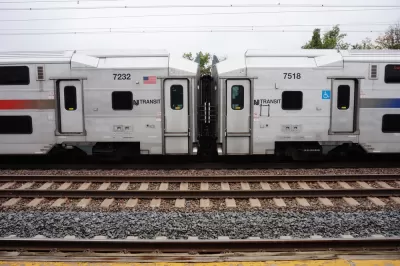
"On Oct. 21, the commissioner for the state's Department of Transportation told lawmakers that all those economic sob stories were exaggerated, and that New Jersey Transit has 'sufficient money to fund its operations,'" begins an editorial by the New Jersey Star-Ledger. Yes, there's a "but" coming: "Two weeks later, the new executive director of NJ Transit established that Chris Christie's man in charge is clueless," writes the editorial board.
The executive director who dropped the truth bombs on the situation at New Jersey Transit is Steven Santoro, who recently spent four hours testifying that the administration of Governor Chris Christie "allowed a $3 billion agency to deteriorate into an industry disgrace," now "used as a cushy stopover for the governor's political cronies."
According to Santoro's testimony, the Christie Administration has had no trouble filling six-figure executive positions at New Jersey Transit, but has "neglected to fill 305 job vacancies related to safety needs."
This news is all of critical relevance due to the crash of New Jersey train #1614 at Hoboken Terminal in September. The New York Times published an article in October detailing the depths of the New Jersey Transit system's decline in October.
Back to the editorial, which makes a larger argument that budget cuts to transit operations have dire consequences. The Christie Administration has decreased the state subsidy for New Jersey Transit's operating budget from $348 million in 2009 to $33 million last year.
Read the full story: N.J. Transit: It's worse than anyone thought | Editorial
New Jersey Transit Board Hasn't Met in Over 100 Days
There's a major transportation showdown underway in New Jersey, but that doesn't excuse the New Jersey Transit Board from holding public meetings.
The Other Reasons He Cancelled the Tunnel
With political pressure from both sides of the aisle palpable, Gov. Christie discusses how he analyzed and justified the ARC tunnel's cancellation.
Facing Federal Funding Freeze, NJ Transit Revises Zero-emission Plan
The agency is retooling a plan to modernize its aging bus depots after the Trump administration decided to freeze nearly $324 million in grants.

Planetizen Federal Action Tracker
A weekly monitor of how Trump’s orders and actions are impacting planners and planning in America.

California plans to bury El Niño’s downpour
If the state plays its cards right, it may be able to store a billion acre-feet of El Niño’s water in aquifers.

Desperate measures: Advocates weigh draining Lake Powell to fill Colorado River
Draining the reservoir could reduce evaporation losses by a couple hundred thousand acre-feet.

Los Angeles just elected an urban planner as its mayor
Transportation analysts are optimistic that Raman will be more aggressive in addressing transit issues than Bass.

Mamdani’s pied-à-terre tax survives legal challenge
A panel of judges found that the plaintiffs failed to demonstrate injury as a result of New York City's implementation of the tax.

Eastern Nebraska is running out of electricity
Data centers and electrification are straining eastern Nebraska’s grid, throttling economic development.

FREE Course: Walkable City 1: Why Walkability?
After describing his path towards focusing on walkability as the essence of good planning, Jeff Speck marches through his five principal reasons for making more walkable places.
Reinventing Malls: Planning Alchemy—Turning Gray Fields Into Gold
The course focuses on the opportunities and imperatives that shape reinvention of mall sites.

City of Rosemead
Rutgers University, Edward J. Bloustein School of Planning and Public Policy
One Hundred Miles
University of Michigan School for Environment and Sustainability (SEAS)
Hunter College, City University of New York (CUNY)
The Architects Foundation
City of Cambridge
Montrose County
The Pocatello Development Authority