Renewable Energy regulations in Ohio may get the axe in the state's next congressional session and corporate leaders are urging restraint.



Some of Ohio's largest employers are pleading with the state's lawmakers not to weaken or eliminate the state's Renewable Energy standards. "GOP lawmakers both in the Ohio Senate and House last spring introduced bills that would either extend the two-year freeze on Ohio's renewable energy mandates or make them voluntary, in other words pretty much end them as standards that had to be met," reports John Funk in The Cleveland Plain Dealer. These standards, which have been bitterly contested in previous legislative sessions seem no safer after November 8th's election left the GOP in power in the state.
"Nine corporations, including manufacturers Whirlpool and Owens Corning and food giants Nestle and Campbell Soup, released statements Tuesday urging state lawmakers to bring back rules requiring power companies to provide annually increasing amounts of electricity generated by wind, solar and other renewable technologies," Funk details. Corporate leaders from these companies insisted that Ohio's economic future depends on maintaining environmental standards that don't fall behind the rest of the country. Environmental groups, the Nature Conservancy in Ohio and the Environmental Defense Fund insist that delaying the growth of renewable energy will have serious consequences for the states air, water and carbon footprint.
Read the full story: Corporate leaders urge GOP to reinstate renewable energy

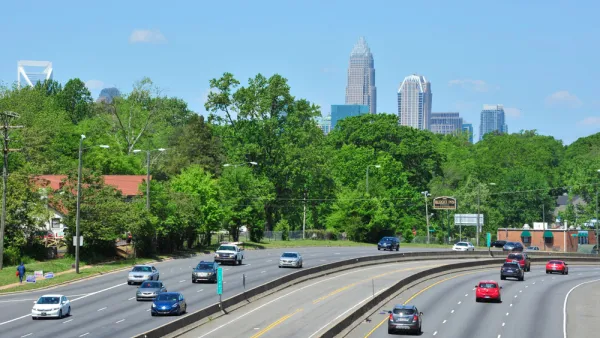
State Gubernatorial Elections Have Environmental Consequences
The environment and climate change may not be top issues in the nation's hotly contested gubernatorial contests next Tuesday, but their outcomes can cause policy changes. Take North Carolina and the election of Roy Cooper, a Democrat, two years ago.

Offshore Wind Lands on Lake Erie
By 2019, a multi-million dollar project developed by a former "big energy" guy might make Cleveland the new U.S. leader in renewable energy.

Learning loss and urban schools, part 2
Did test scores in progressive cities drop more post-COVID than test scores in moderate ones?

Planetizen Federal Action Tracker
A weekly monitor of how Trump’s orders and actions are impacting planners and planning in America.

California plans to bury El Niño’s downpour
If the state plays its cards right, it may be able to store a billion acre-feet of El Niño’s water in aquifers.

Desperate measures: Advocates weigh draining Lake Powell to fill Colorado River
Draining the reservoir could reduce evaporation losses by a couple hundred thousand acre-feet.

Metra may invest $9.1 billion in regional rail
The agency released a draft of a study examining potential ways to offer more frequent train service.

California city breaks ground on transit connector
The project includes three mobility hubs and a pedestrian bridge.

After public outcry, Massachusetts city releases housing development tracker
Cambridge’s tracker currently shows 250 housing projects in various stages of development.

FREE Course: Walkable City 1: Why Walkability?
After describing his path towards focusing on walkability as the essence of good planning, Jeff Speck marches through his five principal reasons for making more walkable places.
Reinventing Malls: Planning Alchemy—Turning Gray Fields Into Gold
The course focuses on the opportunities and imperatives that shape reinvention of mall sites.

City of Rosemead
Rutgers University, Edward J. Bloustein School of Planning and Public Policy
One Hundred Miles
Hunter College, City University of New York (CUNY)
The Architects Foundation
University of Cincinnati Online
City of Cambridge
Montrose County
The Pocatello Development Authority