In an effort to curb traffic accidents, which typically increase with longer nights, New York is launching a 'dusk and darkness' ad campaign.


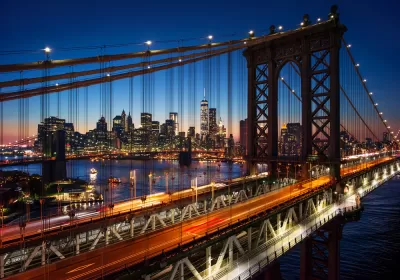
With winter coming to the northern hemisphere, the days are getting shorter and that means more danger for New York City pedestrians. Winnie Hu of The New York Times reports, "The weekday hourly average rate of severe injuries and fatalities involving pedestrians rose to 2.44 in mid-December, or nearly triple the average rate of 0.84 in August."
To address the issue, New York is embarking on a, "$ 1.5 million dollar 'dusk and darkness' safety campaign that will include radio and television advertisements." Hu describes how this ad campaign is part of New York's Vision Zero effort to curb traffic fatalities.
The problem of traveling after sundown strikes this author as one better solved through design than advertisements. Especially as it is an old, predictable, and universal issue that's unlikely to go away. This is the same safety campaign that inspired Alissa Walker to write a strong argument against "pedestrian shaming."
FULL STORY: As Evening Commute Gets Darker, It Also Gets More Dangerous, Officials Warn

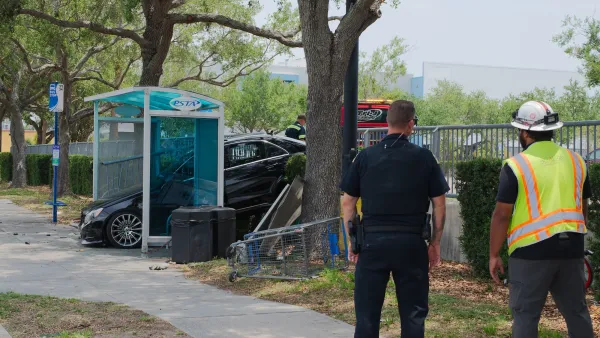
Buses are very safe. The walk to and from stations, not so much.
A disproportionate number of crashes involving pedestrians happen near transit stops.
NYC Pedestrian Deaths Rose in 2024
The city’s Vision Zero efforts seem to have stalled.
NYC Sees 127 Traffic Deaths in First Half of 2024
The number is the highest since the city pledged to end traffic deaths through Vision Zero policies a decade ago.

Planetizen Federal Action Tracker
A weekly monitor of how Trump’s orders and actions are impacting planners and planning in America.

The state-sanctioned urbicide of Austin
People don’t kill cities. Freeways do.

US to reduce Colorado River water deliveries to Mexico
A new Colorado Treaty amendment reduces Mexico’s Colorado River water allocation by 250,000 acre feet.

Mamdani overhauls NYC's Vision Zero plan with 100 new policy goals
The overhaul aims to reduce traffic deaths and make streets safer for pedestrians, cyclists and drivers through lower speed limits, new safety infrastructure and more.

Amtrak not solely to blame for New Jersey commuter rail's unreliability, report finds
A new study from the Garden State Initiative found that NJ Transit’s budget grew 20% across a 4 year period, but reliability declined significantly over the same period.

EPA erases limits on planet-warming pollution from power plants
Under Monday’s plan, power plants would still have some limits on how much mercury, arsenic and other contaminants they can emit.

FREE Course: Walkable City 1: Why Walkability?
After describing his path towards focusing on walkability as the essence of good planning, Jeff Speck marches through his five principal reasons for making more walkable places.
Reinventing Malls: Planning Alchemy—Turning Gray Fields Into Gold
The course focuses on the opportunities and imperatives that shape reinvention of mall sites.

Eagle County Government
Harvard University Graduate School of Design
Nashville Planning Department
The Architects Foundation
University of Cincinnati Online
The Pocatello Development Authority
The Urban Renewal Agency of the City of Pocatello
Journal of the American Planning Association