A disproportionate number of crashes involving pedestrians happen near transit stops.


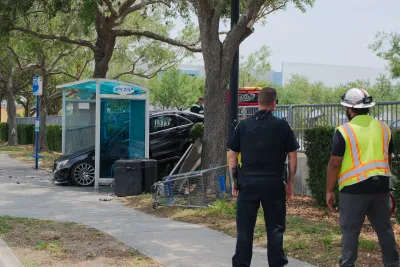
Getting to and from bus stops is the most dangerous part of the trip, according to research from the University of Tennessee-Knoxville for the Center for Pedestrian and Bicyclist Safety.
According to a study, traffic crashes involving pedestrians are five times more likely to occur near transit stops than at intersections. "The Minnesota data of 38 crashes showed that 43% occurred while people were walking to or from the transit stop. Although the sample size was small, Rewalt said they read each crash narrative from the reporting law enforcement officer and used Google Street View to understand the context of each crash better."
The report recommends several avenues for improvements, such as making crosswalks near transit stops more visible and accessible, addressing issues that cause midblock collisions, and implementing safety measures on roads with higher speed limits.
Read the full story: It’s the most dangerous part of a transit bus trip. These experts have ideas to make it safer.

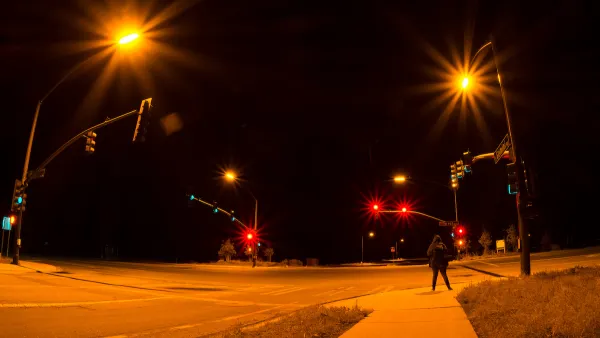
Three-Quarters of U.S. Pedestrian Deaths Happen at Night
Unlike in comparable countries, U.S. pedestrians are most likely to die in traffic crashes during nighttime hours.
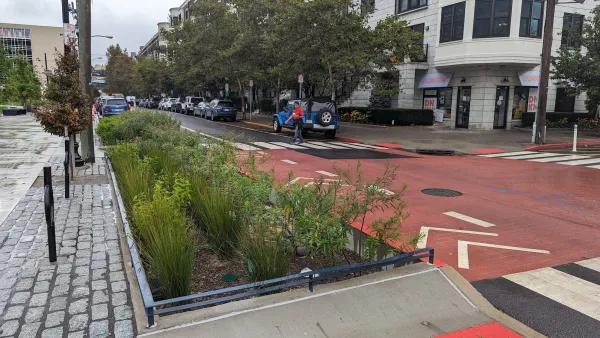
Hoboken's $20 Vision Zero fix
The New Jersey city eliminated traffic deaths for the last nine years in a row.
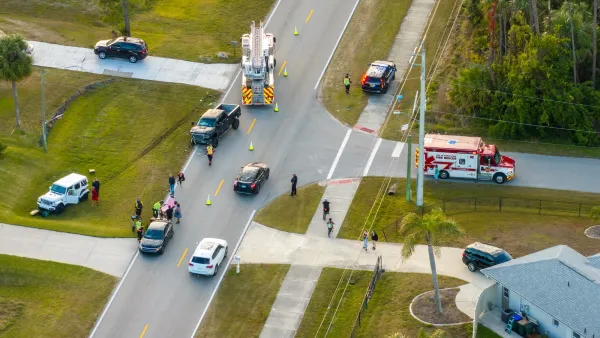
Pedestrian Deaths Fell by Largest Percentage in 15 Years, but Remain Above Pre-Pandemic Levels
After a spike in deaths during the Covid-19 years, road deaths fell to 3,024 in the first half of 2025.

Planetizen Federal Action Tracker
A weekly monitor of how Trump’s orders and actions are impacting planners and planning in America.

California plans to bury El Niño’s downpour
If the state plays its cards right, it may be able to store a billion acre-feet of El Niño’s water in aquifers.

Chicago breaks ground on $3 billion megadevelopment
The new neighborhood, titled Foundry Park, will one day host 3,700 residences.

California High-Speed Rail Authority CEO resigns after $600,000 scandal
Under Ian Choudri, the authority used taxpayer dollars to fund first class flights and trips to nightclubs.

Want to study the Missouri River? Soon, you may need unanimous approval from 10 states
Legislation would require 10 governors’ permission to study or build projects moving water outside the basin.

Desperate measures: Advocates weigh draining Lake Powell to fill Colorado River
Draining the reservoir could reduce evaporation losses by a couple hundred thousand acre-feet.

FREE Course: Walkable City 1: Why Walkability?
After describing his path towards focusing on walkability as the essence of good planning, Jeff Speck marches through his five principal reasons for making more walkable places.
Reinventing Malls: Planning Alchemy—Turning Gray Fields Into Gold
The course focuses on the opportunities and imperatives that shape reinvention of mall sites.

City of Rosemead
Rutgers University, Edward J. Bloustein School of Planning and Public Policy
One Hundred Miles
Hunter College, City University of New York (CUNY)
The Architects Foundation
University of Cincinnati Online
City of Cambridge
Montrose County
The Pocatello Development Authority