Scientists are racing to identify the effects of climate change on the environment of California.


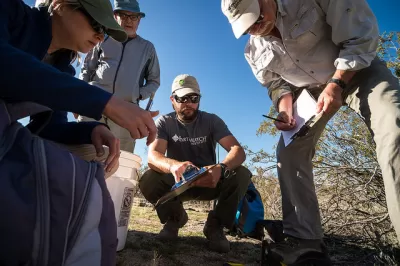
Tim Stephens reports on the work of scientists in the University of California to track the effects of climate change, specifically the work of the UC Natural Reserve System, which is coordinated by the Institute for the Study of Ecological and Evolutionary Climate Impacts (ISEECI).
As scientists deploy their instruments at research sites throughout the UC Natural Reserve System, networked cameras will monitor changes in the vegetation, snapping photos every half hour, while lasers track carbon flow in coastal redwood forests and environmental sensors monitor the microclimates experienced by plants and animals in different habitats. Researchers are also working to reconstruct historical climate variation and changes in land use patterns, assessing the effects of reduced rainfall, and studying the linkages between land and sea along the California coast.
In recent news, researchers in the UC Natural Reserve System recently won a major new grant from the National Science Foundation for research on the interactions between fog, climate change, and redwood forests.
Changing Climate: Studying Climate Change in the University of California Natural Reserve System by Nicholas Weiler / 2015 from SciCom Slugs on Vimeo.
Read the full story: High-tech sensors monitor ecosystems in climate change research program
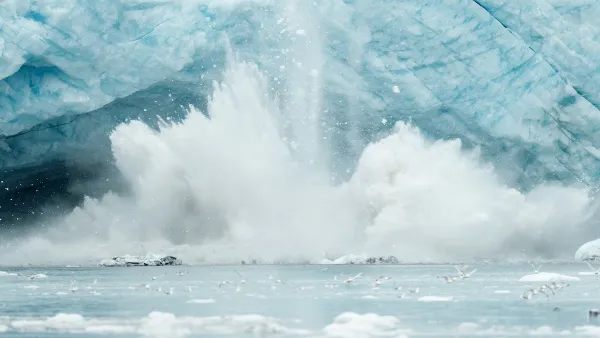
Who pays when a remote Alaska village can no longer stay?
A year after ex-Typhoon Halong, the struggle for two communities to find safer ground has become part of a national debate over who should bear the costs of the climate crisis.

'Something we’ve never seen before:' rising utility rates could strain city finances nationwide
Data centers, climate change and other factors have caused utility rates in the United States to increase by 38% since 2020.
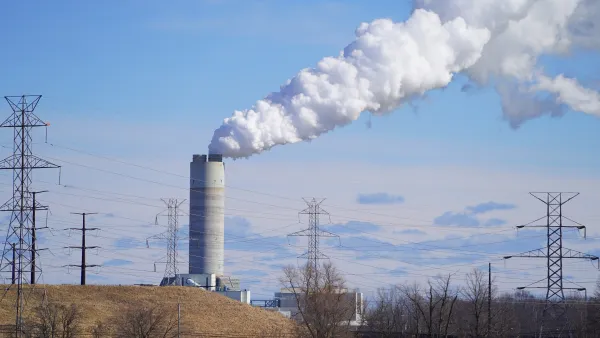
EPA erases limits on planet-warming pollution from power plants
Under Monday’s plan, power plants would still have some limits on how much mercury, arsenic and other contaminants they can emit.

Desperate measures: Advocates weigh draining Lake Powell to fill Colorado River
Draining the reservoir could reduce evaporation losses by a couple hundred thousand acre-feet.

Eastern Nebraska is running out of electricity
Data centers and electrification are straining eastern Nebraska’s grid, throttling economic development.

Move over, LA: St. Louis gears up for Olympics, invests millions in downtown redevelopment
The Missouri city will host the 2028 Olympic soccer group stage and knockout matches.

Mass. votes against statewide minimum lot size for single-family homes
Over 2 million residents voted on Question 7; it was decided by just over 30,000 votes.

Maryland’s $15 billion bridge project gains key approval
The Maryland Transit Authority said the project will create over 60,000 jobs and add $23 billion to the local economy.

‘No clear next steps’ for Chicago's permanent festival grounds
Eleventh Ward Ald. Nicole Lee has suggested Soldier Field as a possible location for the permanent event space.

FREE Course: Walkable City 1: Why Walkability?
After describing his path towards focusing on walkability as the essence of good planning, Jeff Speck marches through his five principal reasons for making more walkable places.
Reinventing Malls: Planning Alchemy—Turning Gray Fields Into Gold
The course focuses on the opportunities and imperatives that shape reinvention of mall sites.

City of Rosemead
Rutgers University, Edward J. Bloustein School of Planning and Public Policy
One Hundred Miles
University of Michigan School for Environment and Sustainability (SEAS)
Hunter College, City University of New York (CUNY)
The Architects Foundation
City of Cambridge
The Pocatello Development Authority
The Urban Renewal Agency of the City of Pocatello