The architectural firm SCAPE plans new paths through Lexington, Kentucky’s downtown using the city's buried water and karst formations as its key features.


There's water flowing underground. Not just in Talking Heads songs, but all over Kentucky. Porous limestone is shaped and passed through by water. This topology is called karst, and it's going to be a key feature in a new series of bike and walking paths in Lexington, Kentucky.
In an article for The Architects Newspaper, Zach Edelson reports the multi-use path, "Will carve pedestrian and bike paths through the heart of Lexington, creating new green spaces and linking with regional trails at both ends. To create freshwater pools—SCAPE calls them “karst windows,” in reference to similar naturally occurring formations—the design will tap old culverts (essentially large pipes) that previously kept Lexington’s karst water out of sight."
While the project is yet to break ground, the designers hope to gain support for the project by tying it to a key feature of Kentucky, the karst topology is what bluegrass sits atop.
Read the full story: SCAPE turns Lexington, Kentucky’s long-buried water into an asset

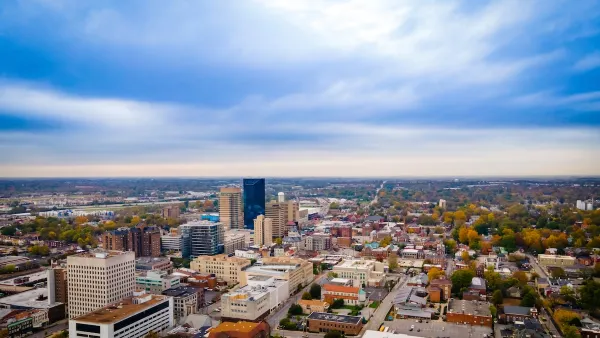
Lexington, Kentucky Passes Urban Growth Plan
The city’s new master plan sets out requirements for mixed-use development.

Support for Shrinking the Nation's Oldest Growth Boundary
Lexington, Kentucky's growth boundary survived a comprehensive plan update in 2019, after years of controversy. A housing crisis, a growing city, and a broken land use system are rearranging the political arithmetic behind the greenbelt.
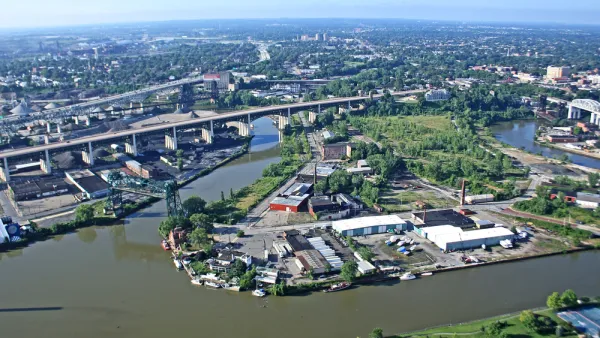
Cleveland Bike Path Plan Leaves Some Locals Unhappy
Change was slow to come to a neighborhood in Cleveland, but not everyone is pleased with what a new riverside bike path will bring with it.

Planetizen Federal Action Tracker
A weekly monitor of how Trump’s orders and actions are impacting planners and planning in America.

Amtrak, CN end decades-long dispute with eight-year agreement
The new operating agreement establishes an updated framework for the companies to work together, including processes to resolve disputes.

Judges permit Denver to divert 77,000 acre feet from the Colorado River for reservoir expansion
Overuse and climate change have caused the Colorado River’s water levels to plummet.

'Something we’ve never seen before:' rising utility rates could strain city finances nationwide
Data centers, climate change and other factors have caused utility rates in the United States to increase by 38% since 2020.

Trump to overrule local leaders, lease millions of acres of America’s Pacific Island territories’ seafloors to mining companies
International law says that the Indigenous people of America’s territories have a right to prior and informed consent regarding projects that impact their countries.

A ‘shady’ deal: Chicagoans rally against planned Amtrak maintenance facility
The $900 million facility would allow Amtrak to maintain entire trains in one building, which the company says will reduce delays.

FREE Course: Walkable City 1: Why Walkability?
After describing his path towards focusing on walkability as the essence of good planning, Jeff Speck marches through his five principal reasons for making more walkable places.
Reinventing Malls: Planning Alchemy—Turning Gray Fields Into Gold
The course focuses on the opportunities and imperatives that shape reinvention of mall sites.

KFH Group Inc.
Greater Baltimore Committee
Eagle County Government
The Architects Foundation
University of Cincinnati Online
The Pocatello Development Authority
The Urban Renewal Agency of the City of Pocatello