The Department of Mobility and Infrastructure will be up and running by 2017.



After being passed over in the U.S. DOT's $50-million Smart City Challenge, Pittsburgh is launching a new department to implement innovative transportation ideas on its own.
The Department of Mobility and Infrastructure will prioritize the integration of new technology in transportation planning. Some proposals from the Smart City application have already been identified as initial goals, including "solar-powered autonomous vehicles and smart traffic signals that prioritize buses and trucks," PGH City Paper reports.
The new department will also be expected to collaborate with other city departments, academic institutions, residents, and private partners to streamline the project delivery process and incorporate equity into future planning.
The city is currently seeking a director for the new department, requesting applicants with technical knowledge in engineering or planning.
Read the full story: Pittsburgh to launch new mobility and infrastructure department in 2017


Tech Trends for Cities and States
Smart cities technology is well behind schedule, but the technology industry hasn’t given up on new digital solutions, self-driving cars, curb management, and AI-powered systems.
Rethinking Downtown Streets in a Revitalizing Pittsburgh
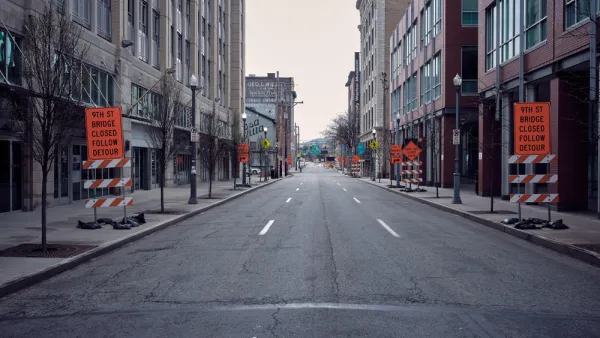
With $5.2 billion of investment in the past 10 years, and another $3.5 billion in the development pipeline, Pittsburgh planning organizations are considering ways to rethink the streets of the city's downtown.

$4.9 Billion Planned for Transportation Investments in Southwest Pennsylvania
The public had a chance to review the substance of the Southwestern Pennsylvania Commission's Transportation Improvement Program this week.

Planetizen Federal Action Tracker
A weekly monitor of how Trump’s orders and actions are impacting planners and planning in America.

California plans to bury El Niño’s downpour
If the state plays its cards right, it may be able to store a billion acre-feet of El Niño’s water in aquifers.

Desperate measures: Advocates weigh draining Lake Powell to fill Colorado River
Draining the reservoir could reduce evaporation losses by a couple hundred thousand acre-feet.

Chicago Avenue bridge construction delays enrages city leaders
The bridge has been closed since 2025. The city originally aimed to re-open it in December, and now expects to finish construction in 2027.

NYC bus network redesign speeds up Queens buses
Rush routes have seen a 4.6% speed increase after the redesign.

California High-Speed Rail Authority picks trainset manufacturer
The California High-Speed Rail Authority aims to start servicing passengers by 2033.

FREE Course: Walkable City 1: Why Walkability?
After describing his path towards focusing on walkability as the essence of good planning, Jeff Speck marches through his five principal reasons for making more walkable places.
Reinventing Malls: Planning Alchemy—Turning Gray Fields Into Gold
The course focuses on the opportunities and imperatives that shape reinvention of mall sites.

City of Rosemead
Rutgers University, Edward J. Bloustein School of Planning and Public Policy
One Hundred Miles
Hunter College, City University of New York (CUNY)
The Architects Foundation
University of Cincinnati Online
City of Cambridge
Montrose County
The Pocatello Development Authority