The public had a chance to review the substance of the Southwestern Pennsylvania Commission's Transportation Improvement Program this week.


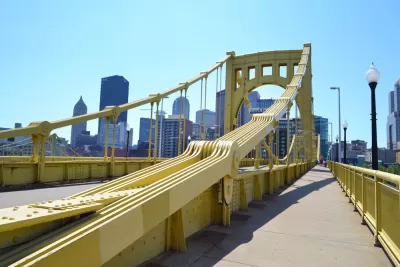
Ed Blazina reports on the regional Transportation Improvement Program announced by the Southwestern Pennsylvania Commission, which proposes $4.9 billion in funding over the next four years.
According to Blazina, the proposal reflects a changing region around Pittsburgh—in terms of traditional construction projects like bridge rehabilitation, intersection construction, and freeway extensions, and also in terms of more innovative projects, like:
- "Pittsburgh’s 'smart spines' — seven major traffic corridors that will have adaptive lights installed at all intersections to improve the flow of traffic
- "[C]onstruction of the Port Authority’s Bus Rapid Transit system to link Oakland and Downtown Pittsburgh with electric buses using dedicated lanes to provide rush-hour service every 4 minutes or less.
Blazina also breaks down the categories of spending included in the proposal:
- $2 billion on public transit
- $1.7 billion on roads and bridges
- $1.3 billion in intermodal projects
There's also $1.87 billion for the Port Authority of Allegheny County in the 2019-2022 plan, up from $130 million from the 2017-2020 version of the plan.
All of that money isn't just coming from state coffers—the proposal recommends spending from federal, state, and local sources. The proposal got a public hearing in Pittsburgh this week.
FULL STORY: Southwest Pa. Commission proposes $4.9 billion in transportation projects over next 4 years

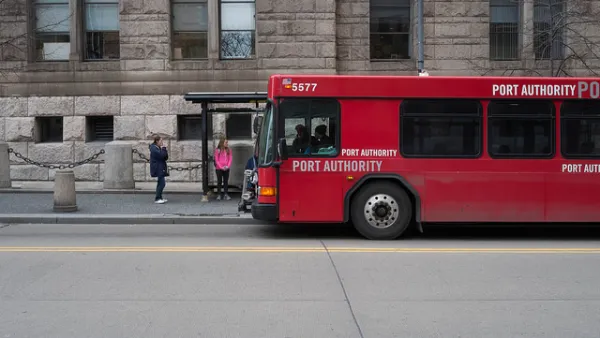
New Long-Range Transit Plan Adopted for Pittsburgh Area
A long list of transit projects is included in the NEXTransit long-range plan approved recently by the Port Authority of Allegheny County.
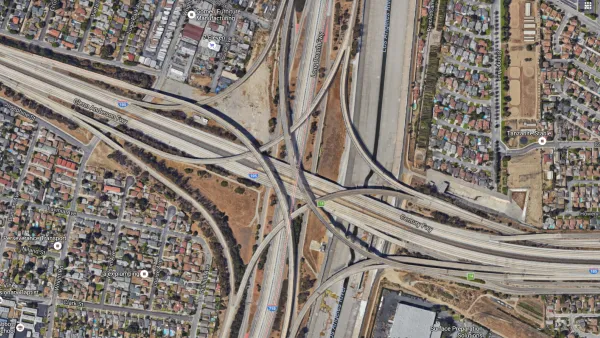
Metropolitan Planning Organizations, Explained and Evaluated
Knowing is half the battle, and most people have a lot to learn about metropolitan planning organizations (MPOs) and how they maintain the status quo of transportation planning and spending in the United States.
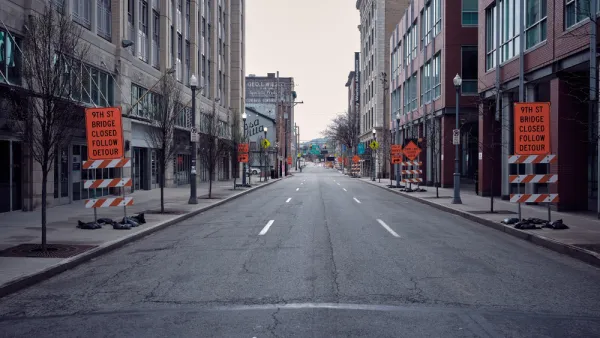
Rethinking Downtown Streets in a Revitalizing Pittsburgh
With $5.2 billion of investment in the past 10 years, and another $3.5 billion in the development pipeline, Pittsburgh planning organizations are considering ways to rethink the streets of the city's downtown.

Planetizen Federal Action Tracker
A weekly monitor of how Trump’s orders and actions are impacting planners and planning in America.

The state-sanctioned urbicide of Austin
People don’t kill cities. Freeways do.

US to reduce Colorado River water deliveries to Mexico
A new Colorado Treaty amendment reduces Mexico’s Colorado River water allocation by 250,000 acre feet.

5 New England states march closer to 800 megawatt wind energy project
Securing federal approval for the project may be complicated under the Trump administration, which has historically been hostile towards domestic wind power.

Baltimore to break ground on $50 million Transit Priority Project
The project will bring faster bus trips, safer streets and better bike connections to Baltimore.

Airbnb launches $250 million 'last-dollar financing' housing accelerator, makes first investment in Austin
The company will put $6.4 million towards affordable housing development in Texas’ capital.

FREE Course: Walkable City 1: Why Walkability?
After describing his path towards focusing on walkability as the essence of good planning, Jeff Speck marches through his five principal reasons for making more walkable places.
Reinventing Malls: Planning Alchemy—Turning Gray Fields Into Gold
The course focuses on the opportunities and imperatives that shape reinvention of mall sites.

Eagle County Government
Harvard University Graduate School of Design
Nashville Planning Department
The Architects Foundation
University of Cincinnati Online
The Pocatello Development Authority
The Urban Renewal Agency of the City of Pocatello
Journal of the American Planning Association