A project to fill-in the Inner Loop in Rochester, New York is underway. It took a lot of contemporary planning to undo this mistake of mid-century planning.


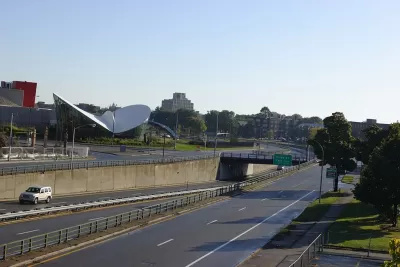
"Realizing the devastating effect urban freeways have had on downtowns across the U.S., many cities are now contemplating some form of freeway removal," according to an article by Norman Garrick. "Most of these discussions haven’t gotten very far, but in Rochester, New York, officials have moved beyond the talking phase and are actually taking action."
Work is already underway in covering over the ditch that once gave cars access to the Inner Loop at the expense of Rochester's neighborhoods.
Garrick relates a history of the planning and political work that preceded the demise of I-490—dating back to the 1990s. "This two-decade long effort culminated in the city finally winning a TIGER grant for over $17 million from the USDOT for the removal of a 2/3-mile long stretch of the Inner Loop," adds Garrick. "The total cost of the project: $22 million."
Garrick (who was one of the researchers behind a study that made news earlier this year for finding the strongest evidence yet "that parking is a 'likely cause' of increased driving") also provides a few lessons in overthrowing the 20th century paradigms that put cars first.
FULL STORY: Burying a 1950s Planning Disaster

Ten 'Freeways Without Futures'
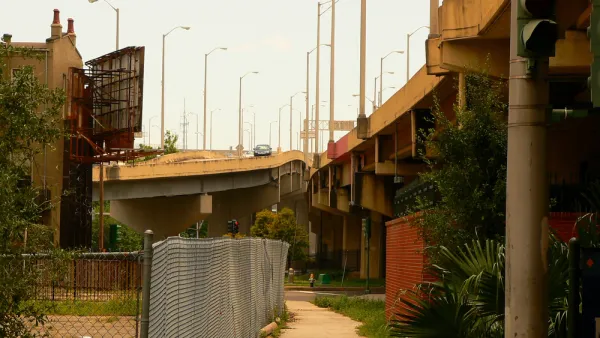
The Congress for New Urbanism has once again released on if its signature efforts: the Freeways Without Futures report that assumes urban freeways were a mistake of 20th century planning and engineering and advocates for a new approach.
Economic Justice Includes Highway Removals
A $435 billion "economic justice" bill proposed by Democrats in the U.S. Senate includes $10 billion for projects that remove highways and build community-oriented assets in their place.
Rochester Shows Possible Future for Former Highways
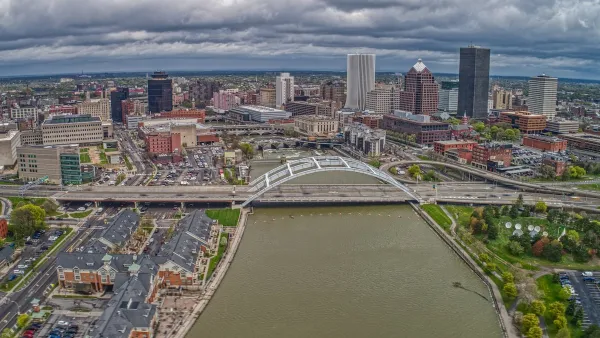
A former freeway is undergoing a massive redevelopment that goes beyond highway removal to reconnect and revitalize surrounding areas.

Planetizen Federal Action Tracker
A weekly monitor of how Trump’s orders and actions are impacting planners and planning in America.

The state-sanctioned urbicide of Austin
People don’t kill cities. Freeways do.

US to reduce Colorado River water deliveries to Mexico
A new Colorado Treaty amendment reduces Mexico’s Colorado River water allocation by 250,000 acre feet.

5 New England states march closer to 800 megawatt wind energy project
Securing federal approval for the project may be complicated under the Trump administration, which has historically been hostile towards domestic wind power.

Baltimore to break ground on $50 million Transit Priority Project
The project will bring faster bus trips, safer streets and better bike connections to Baltimore.

Airbnb launches $250 million 'last-dollar financing' housing accelerator, makes first investment in Austin
The company will put $6.4 million towards affordable housing development in Texas’ capital.

FREE Course: Walkable City 1: Why Walkability?
After describing his path towards focusing on walkability as the essence of good planning, Jeff Speck marches through his five principal reasons for making more walkable places.
Reinventing Malls: Planning Alchemy—Turning Gray Fields Into Gold
The course focuses on the opportunities and imperatives that shape reinvention of mall sites.


Eagle County Government
Harvard University Graduate School of Design
Nashville Planning Department
The Architects Foundation
University of Cincinnati Online
The Pocatello Development Authority
The Urban Renewal Agency of the City of Pocatello
Journal of the American Planning Association